
Tokenization of Hybrid Renewable Energy Assets: A Catalyst for EaaS Market Disruption and Democratized Investment
Blockchain as a Democratizing Force
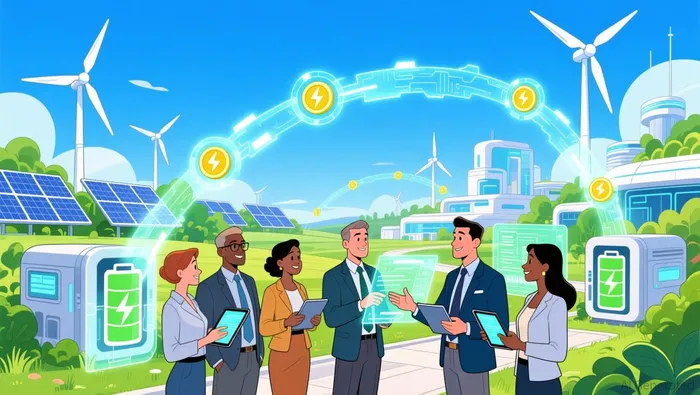
Tokenization breaks down traditional barriers to renewable energy investment by allowing assets like solarSXP-- farms, wind turbines, and battery storage systems to be represented as digital tokens. These tokens can be fractionalized, enabling smaller investors to participate in projects that once required institutional capital. For instance, a StockTitan report notes that Turbo EnergyTURB--, Taurus, and StellarXLM-- recently launched a pilot project in Spain to tokenize debt financing for hybrid solar+storage projects using the Stellar blockchain. This initiative leverages Turbo's SUNBOX battery-integrated Power Purchase Agreement (PPA) model to fractionalize investment, lowering entry barriers for retail investors while accelerating project deployment.
The implications are profound. By 2025, platforms like Zoniqx and Toucan Protocol have already demonstrated how tokenization can democratize access to carbon credits and green energy projects. Zoniqx's Web3 infrastructure supports liquidity and regulatory compliance for ESG-focused investments, while Toucan Protocol bridges voluntary carbon markets with blockchain by converting Verra-registered credits into tradable TCO2 tokens, according to a . These platforms not only diversify investor bases but also align with global sustainability goals by making clean energy investments more accessible.
Unlocking Revenue Streams for Energy Firms
For energy firms, tokenization introduces innovative revenue models. CleanCapital, a leader in distributed energy, has capitalized on tokenization by transforming underutilized brownfield sites into productive solar hubs. Projects like Yeoman Solar and Little Elk Solar generate stable revenue through long-term community solar agreements, offering discounted electricity credits to low-income households while leveraging government programs like Illinois' Solar for All, according to a . Similarly, , as noted in a SimplyWall report.
Blockchain also enhances operational efficiency. 's peer-to-peer energy trading platform, which tokenizes renewable energy certificates (RECs), . by 2025, according to a Zoniqx resource. These cost savings, , per a Zoniqx resource), position energy firms to monetize sustainability efforts directly.
Challenges and the Path Forward
Despite its promise, tokenization faces hurdles. Regulatory uncertainties, particularly around securities laws and carbon credit verification, remain significant. Greenwashing-where environmental claims are exaggerated or misleading-also threatens to erode trust. As noted in a Sustainability Directory scenario, robust verification standards and transparent frameworks are essential to ensure tokenization supports energy justice and equitable access.
However, the market's trajectory is clear. The blockchain solutions for energy market, , , driven by digitization and operational efficiency needs, according to a Market Research report. Energy firms that adopt tokenization early-while navigating regulatory landscapes and prioritizing transparency-will likely dominate the next phase of the EaaS revolution.
Conclusion
The tokenization of hybrid renewable energy assets is not just a technological innovation but a paradigm shift in how energy is financed and consumed. By democratizing access, reducing costs, and creating new revenue streams, blockchain-enabled models are set to redefine the EaaS market. For investors and energy firms alike, the key lies in embracing this transformation while addressing its challenges head-on.







Comentarios
Aún no hay comentarios