
Tokenization as the Next Frontier in Business Liquidity and Capital Access
BUIDL: A Case Study in Institutional Tokenization
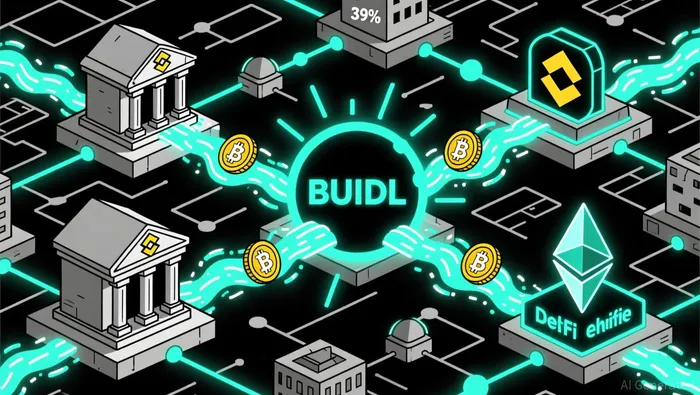
BlackRock's USD Institutional Digital Liquidity Fund (BUIDL) exemplifies the transformative potential of tokenization at scale. As of November 2025, BUIDL has expanded to the BNBBNB-- Chain, one of the largest blockchain ecosystems, and is now accepted as off-exchange collateral on Binance according to The Block. This move underscores the fund's role in bridging traditional finance and decentralized infrastructure. BUIDL's tokenization framework, managed by Securitize and facilitated by cross-chain protocols like WormholeW--, ensures compliance, custody, and interoperability across seven blockchains, including EthereumETH-- and SolanaSOL--.
The fund's success is staggering: it has amassed $2.5 billion in assets under management (AUM), capturing nearly 39% of the global tokenized treasury market. This growth is fueled by partnerships with DeFi protocols and stablecoin reserves, such as Ethena Labs' USDtb, which allocates over 90% of its reserves to BUIDL tokens. By tokenizing U.S. Treasury securities, BUIDL has demonstrated that institutional-grade assets can be made accessible to a broader range of investors while maintaining regulatory compliance.
Fractional Ownership and Democratized Access
Beyond institutional treasuries, tokenization is unlocking new markets by enabling fractional ownership of high-value assets. In real estate, for instance, a luxury hotel in New York was tokenized, allowing investors to purchase fractional stakes for as little as $1,000. This model transforms traditionally illiquid assets into tradable units, broadening access to global markets. Automated income distribution via smart contracts and enhanced transparency further reduce barriers to entry, making real estate investment more efficient and inclusive.
Similarly, private credit and debt instruments are being tokenized to streamline capital formation. Santander's $20 million blockchain-issued bond and Kin Capital's $100 million tokenized real estate debt fund highlight how businesses can bypass traditional intermediaries to tap into global investor bases. These innovations are not limited to large institutions: Hamilton Lane's tokenization of a private equity fund reduced the minimum investment from $5 million to $20,000, democratizing access to a previously exclusive asset class.
SMEs and the Tokenization Revolution
Small and medium enterprises (SMEs) are also leveraging tokenization to unlock liquidity. Platforms like Centrifuge enable SMEs to tokenize accounts receivable and invoices, converting them into tradable tokens that can be sold to DeFi lenders or investors. This approach provides immediate capital while allowing investors to earn yields from real-world economic activities. For example, an SME in manufacturing might tokenize its invoice receivables, securing financing within hours instead of waiting weeks for traditional bank approval.
Tokenization's programmability and transparency further reduce costs and risks. By automating compliance and ownership tracking via blockchain, SMEs can access capital with minimal intermediation, a critical advantage in competitive markets.
The Urgency to Act
The pace of adoption is accelerating. BUIDL's multi-chain strategy and partnerships with Ripple, Frax Finance, and Hidden Road signal a future where tokenized assets dominate capital markets. Meanwhile, regulatory frameworks are beginning to catch up, with BlackRock advocating for policies that balance innovation and investor protection.
For businesses, the imperative is clear: tokenization is not a distant possibility but a present-day opportunity. Companies that delay adoption risk being outpaced by competitors who leverage token-centric models to secure liquidity, reduce costs, and access global investor pools. The window to act is narrowing.
Conclusion
Tokenization is reshaping the rules of capital access and liquidity generation. From institutional treasuries to SME invoices, the ability to tokenize assets and fractionalize ownership is democratizing finance and redefining value exchange. As BlackRock's BUIDL fund and real-world use cases demonstrate, the future belongs to businesses that embrace tokenization as a strategic tool. The question is no longer if to act-but how soon.





Comentarios
Aún no hay comentarios