
Tokenization of U.S. Equities and the Future of Crypto Regulation: Blockchain's Role in Sustainability Markets and Institutional Treasuries
Tokenization as a Regulatory Catalyst
Samani's thesis hinges on the idea that tokenization will force regulators to clarify ambiguous frameworks, particularly around securities law and cross-jurisdictional oversight, as Yahoo Finance reported. The recent closed-door roundtable between crypto firms and Senate Democrats, led by Kirsten Gillibrand, underscores this dynamic. By aligning stablecoin regulations with traditional financial standards, policymakers aim to address overlapping SEC and CFTC jurisdictions while fostering innovation, as a Coinotag article notes. This shift is critical for sustainability markets, where tokenized assets require clear legal definitions to attract institutional capital.
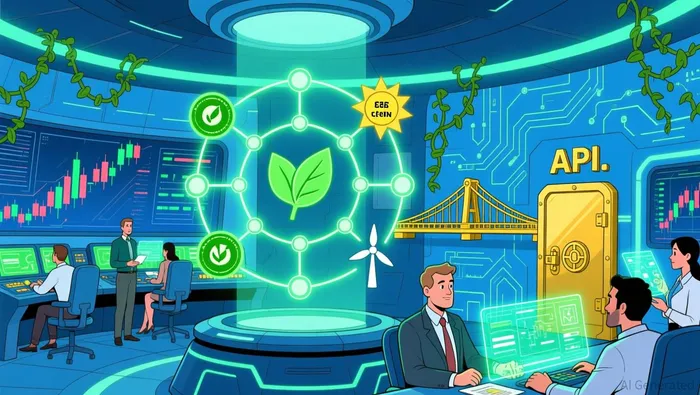
DevvStream's 2025 case study exemplifies this trend. The company staked 12,185 SOL at a 6.29% annualized yield, using the proceeds to fund its tokenization platform for verified environmental assets, as noted in the StockTitan article. By integrating real-world assets (RWAs) with blockchain-based systems via standardized APIs, DevvStream is creating a blueprint for how sustainability markets can achieve the liquidity and transparency demanded by institutional investors.
Sustainability Markets and Institutional Treasuries
The tokenization of sustainability assets is not just about environmental impact-it's about financial infrastructure. DevvStream's digital-asset treasury, which includes BitcoinBTC-- and Solana, highlights how institutional players are reallocating capital to high-yield, blockchain-secured assets, as the StockTitan article notes. This strategy mirrors the broader trend of tokenizing U.S. equities, where traditional brokers are being incentivized to join blockchain liquidity networks, as Samani notes in the Yahoo Finance article.
For institutional-grade treasuries, the advantages are clear: programmable smart contracts reduce settlement times, while immutable ledgers enhance auditability. DevvStream's acquisition of DevvE ($DEVVE) tokens further illustrates this, as the company seeks to monetize environmental assets through tokenized derivatives, as the StockTitan article notes. Such innovations are particularly relevant in a regulatory climate where clarity on asset classification is still emerging.
Regulatory Challenges and Global Alignment
Despite progress, challenges persist. The Independent Community Bankers of America (ICBA) recently opposed Coinbase's bank charter application, arguing it creates an unfair precedent, as a Markets.com article reported. Meanwhile, Senator Cynthia Lummis's proposal for a strategic Bitcoin reserve-aligned with Trump-era fiscal policies-highlights the political stakes in defining crypto's role in national economies, as the Markets.com article notes.
Globally, the UK's decision to synchronize its stablecoin regulations with U.S. developments by November 10, 2025, signals a broader effort to harmonize rules and maintain competitiveness, as a Cryptopolitan article notes. This alignment is crucial for cross-border sustainability projects, where tokenized assets must navigate multiple regulatory regimes.
Conclusion: A New Era for Institutional Capital
The tokenization of U.S. equities and sustainability assets is accelerating a paradigm shift in how capital is allocated and managed. As Samani predicts, this shift will force regulators to act decisively, creating a framework that balances innovation with investor protection, as Yahoo Finance reported. For institutions, the rewards are clear: higher yields, enhanced transparency, and access to previously illiquid markets. DevvStream's Solana staking strategy and RWA integration demonstrate that the future of digital treasuries is already here-now it's a matter of scaling.





Comentarios
Aún no hay comentarios