
Tokenization-Driven Capital Inflows in Emerging Markets: How CMB International's $3.8B BNB Chain Fund Signals a New Era for Blockchain-Based Global Investment
The financial landscape in emerging markets is undergoing a seismic shift, driven by the convergence of blockchain technology and institutional-grade asset tokenization. At the forefront of this transformation is CMB International's $3.8 billion USD Money Market Fund on BNBBNB-- Chain, a landmark initiative that bridges traditional finance with decentralized infrastructure. This fund, represented by tokenized assets CMBMINT and CMBIMINT, not only democratizes access to institutional investments but also signals a broader trend: tokenization is redefining how capital flows into economies historically constrained by liquidity, regulatory complexity, and infrastructure gaps, as described in the CMB International and BNB Chain announcement.
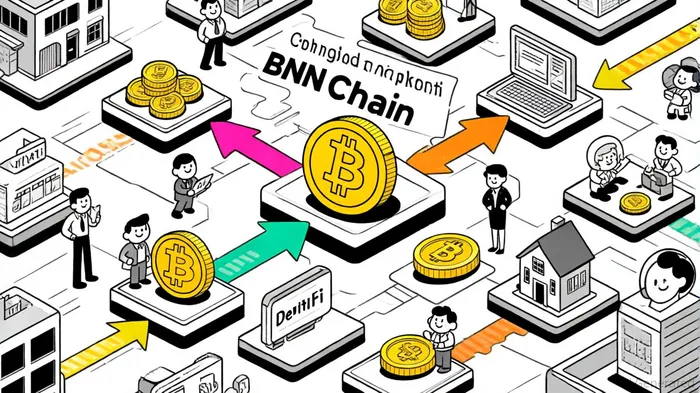
CMB International's BNB Chain Fund: A Blueprint for Institutional Tokenization
CMB International's fund, managed by CMB International Asset Management, is a pioneering example of how blockchain can tokenize real-world assets (RWAs) to create scalable, liquid investment vehicles. Deployed on BNB Chain-a blockchain known for its low transaction costs and DeFi ecosystem-the fund allows accredited investors to subscribe using fiat or stablecoins and redeem holdings in real time via DigiFT's liquidity management smart contracts. This structure eliminates traditional settlement delays, reduces counterparty risk, and enables 24/7 trading, aligning with the needs of a globalized investor base.
The fund's investment strategy is equally noteworthy. At least 70% of its net asset value (NAV) is allocated to USD-denominated short-term deposits and high-quality money market instruments issued by governments, quasi-government entities, and top-tier financial institutions. By tokenizing these assets, CMB International is bringing institutional-grade security and diversification to a blockchain-native audience. Furthermore, the integration with DeFi protocols like VenusXVS-- Protocol and ListaDAO unlocks secondary use cases, such as collateralized lending and yield farming, amplifying the utility of tokenized assets, according to an Asia Pacific tokenization report.
This initiative is not merely a technological experiment but a strategic move to align with BNB Chain's strengths. As a blockchain with over 300 million monthly active users and a thriving DeFi ecosystem, BNB Chain offers the scalability and interoperability required to onboard institutional capital to Web3. For emerging markets, where access to stable, liquid assets is often limited, this represents a paradigm shift.
Tokenization as a Catalyst for Emerging Market Growth
CMB International's fund is emblematic of a larger trend: tokenization is becoming a critical driver of capital inflows into emerging markets. By enabling fractional ownership and programmable assets, tokenization reduces barriers to entry for both investors and issuers. For instance, tokenized gold products have gained traction in high-inflation economies, allowing individuals to hedge against currency devaluation with low-cost, easily tradable assets. Similarly, tokenized real estate platforms in regulatory sandboxes are demonstrating how liquidity and transparency can be injected into traditionally illiquid markets.
Regulatory progress in Asia, Africa, and Latin America further underscores the potential of tokenization. In 2025, Singapore's Monetary Authority (MAS) is advancing standardization in fixed income and fund management through Project Guardian, while Hong Kong's Ensemble Sandbox is fast-tracking innovation in digital bonds. Japan's Payment Services Act (PSA) has also enabled stablecoins to hold government bonds as reserves, fostering trust in tokenized assets, as covered in Asia's tokenization leadership. These developments are attracting global investors, with institutions establishing operations in Asia-Pacific to capitalize on the region's tokenization leadership.
However, challenges persist. Legal ambiguity, limited secondary market liquidity, and interoperability gaps remain hurdles to widespread adoption. For example, divergent regulatory approaches between the U.S. (favoring stablecoins) and the EU (prioritizing CBDCs) complicate cross-border transactions. Yet, as CMB International's fund illustrates, collaboration between traditional institutions and blockchain ecosystems can mitigate these risks. By leveraging BNB Chain's infrastructure and DeFi integrations, the fund demonstrates how tokenization can harmonize regulatory compliance with technological innovation.
The Future of Tokenization-Driven Capital Flows
The implications of CMB International's initiative extend beyond its $3.8B fund. As tokenized assets transition from pilot projects to mainstream adoption, they are reshaping capital allocation in emerging markets. Tokenized mutual funds, bonds, and securitization products are already attracting significant assets under management (AUM), with McKinsey estimating that tokenization could unlock $16 trillion in value across financial markets by 2030 (as reported in Asia's tokenization leadership).
For investors, the key opportunities lie in:
1. Liquidity Provision: Tokenized RWAs enable instant trading and collateralization, reducing the friction associated with traditional asset classes.
2. Global Accessibility: Blockchain-based platforms allow emerging market assets to reach a global audience, bypassing geographic and regulatory silos.
3. Yield Optimization: Integration with DeFi protocols like Venus and ListaDAO allows token holders to generate yields through lending and staking, enhancing returns, as noted in the Asia Pacific tokenization report.
Yet, success hinges on continued regulatory alignment and infrastructure development. As noted by S&P Global, the transition to fully realizing tokenization's potential will require cross-stakeholder coordination, including harmonizing technical standards and expanding secondary markets.
Conclusion
CMB International's $3.8B BNB Chain Fund is more than a financial product-it is a harbinger of a new era in global investment. By tokenizing institutional-grade assets on a scalable blockchain, the fund demonstrates how emerging markets can access capital flows previously reserved for developed economies. As regulatory frameworks mature and DeFi ecosystems expand, tokenization will continue to bridge the gap between traditional finance and decentralized innovation, unlocking unprecedented opportunities for growth and financial inclusion.






Comentarios
Aún no hay comentarios