
Token Communities (TKCM): A Strategic Play on Florida Luxury Markets and the Asia Pacific Opportunity Zone
The real estate sector is never static, but Token Communities (TKCM) is positioning itself as a bold player in two high-potential arenas: Florida's luxury waterfront market and a groundbreaking industrial park in Texas targeting Asian manufacturers. For investors willing to look beyond traditional real estate plays, TKCM's dual focus on coastal opulence and cross-border manufacturing synergy could offer asymmetric upside—if the execution holds.
Florida's Waterfront Boom: A Niche Niche
Florida's luxury real estate market has long been a magnet for high-net-worth buyers, but Token Communities is narrowing its focus to a specific subset: canal-front homes with direct Gulf access. Their “Summit” model in Northport (Sarasota County) and Port Charlotte (Charlotte County) exemplifies this strategy. These 3,600-square-foot homes, priced between $1.35 million and $1.9 million, are designed to appeal to buyers seeking both privacy and water-centric living. Each sits on 10,000–20,000-square-foot lots, with 2.5-car garages, playrooms, and sun-deck balconies overlooking boat docks—a blend of grandeur and functionality.
The company's partnership with Coldwell Bankers to list these properties signals a strategic play on local expertise, but the real question is: Can TKCM price these homes at a premium in a market where affordability concerns are rising? Florida's median home price has surged to $450,000 in 2025, but the luxury segment remains resilient for those with capital. The Summit model's proximity to open water—a rarity in crowded Florida—could justify its premium.
The Asia Pacific Opportunity Zone: A Manufacturing Moonshot
While Florida's luxury homes are tactical, the Asia Pacific Opportunity Zone (APOZ) in Texas is TKCM's strategic Hail Mary. The 436-acre mixed-use industrial park in Chambers County aims to attract Asian manufacturers looking to bypass U.S. tariffs by moving production stateside. The first phase targets sectors like EV components, solar tech, and modular housing—industries where Asian firms have global dominance.
The APOZ's potential is staggering: 10,000 jobs and $500 million in annual revenue, with TKCM projecting $50 million in annual income from rentals and services. But this hinges on execution. Over a dozen companies have LOIs, including EV RV manufacturers and solar innovators, but none are locked in yet.
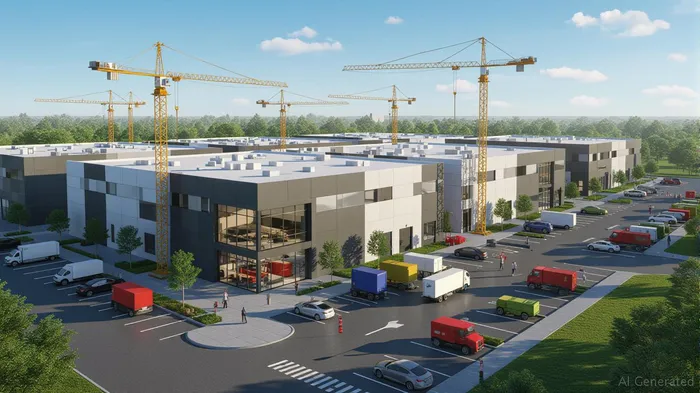
The project's geographic location—near Houston's port and energy corridor—adds strategic value. However, risks abound. Securing financing, navigating zoning hurdles, and convincing Asian firms to uproot operations in a protectionist political climate are all existential tests.
Financials: A Low-Bar Stock with Ambitious Upside
At $0.055 per share and a $50.3 million market cap, TKCM is a speculative bet. Its business model—divided into short-term home flips, mid-term luxury builds, and long-term industrial parks—is designed to generate cash flow at different time horizons. But the balance sheet must support the APOZ's massive capital needs.
The company's expansion into China's health-tech market—via subsidiaries like the Kunming-based wellness venture—adds diversification. Yet, the real catalyst remains the APOZ. If even a fraction of the projected revenue materializes, TKCM's valuation could soar.
Risks: Execution and Market Volatility
The elephant in the room is execution risk. Real estate projects often face delays, cost overruns, or demand shocks. Florida's luxury market could cool if interest rates rise further or recession fears grow. Meanwhile, the APOZ's success depends on geopolitical factors: U.S.-China trade tensions, manufacturing costs in Texas, and corporate appetite for relocation.
Investment Takeaway: A High-Reward, High-Risk Bet
For risk-tolerant investors, TKCM offers a unique angle: exposure to both coastal luxury and cross-border industrial trends. The Florida projects provide near-term cash flow, while the APOZ represents a multiyear moonshot.
At current valuations, TKCM's stock is cheap enough to justify a small speculative position. However, investors should demand two things before doubling down: (1) concrete evidence of APOZ tenant commitments, and (2) consistent sales traction in Florida's luxury segment. Without these, TKCM risks remaining a story stock.
In short: TKCM is a “put it on your radar” play. For those willing to bet on Florida's elite buyers and the reshoring of Asian manufacturing, the rewards could be outsized—if the company delivers on its promises.







Comentarios
Aún no hay comentarios