
Why TJX's Q1 Earnings Signal a Buying Opportunity in a Sluggish Retail Landscape
The U.S. retail sector is facing a slowdown, but one company is thriving: The TJX Companies (TJX). Its Q1 FY2025 results, released last month, delivered a 22% EPS beat to $0.93 and 3% comp sales growth—proof of its off-price model’s resilience. This performance isn’t just a blip; it’s a catalyst for sustained growth in an environment where most retailers are struggling. Here’s why investors should act now.
Margin Resilience: Outperforming in a Cost-Pressure Era
TJX’s pretax margin expanded to 11.1% in Q1, up 0.8 percentage points from a year earlier, defying the headwinds of rising store wages and inflation. This margin strength stems from three key factors:
- Operational Leverage: Lower freight costs and a one-time reserve release boosted profitability, but management also highlighted disciplined inventory management. Per-store inventory fell 5% year-over-year, ensuring fresh, high-turnover merchandise keeps customers coming back.
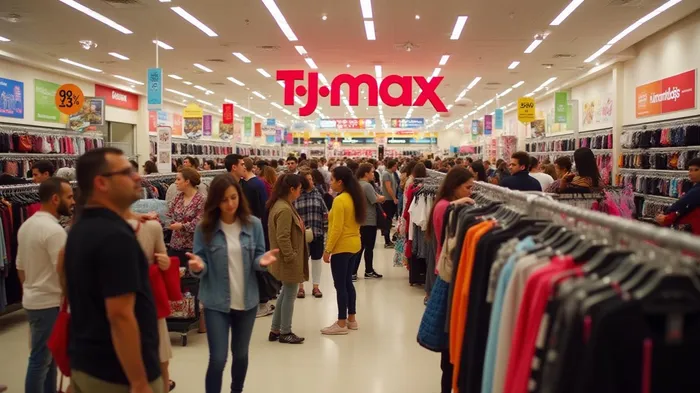
- Transaction Growth: Comp sales rose 3%—driven entirely by increased customer visits—not price hikes. This reflects TJX’s unmatched ability to deliver "treasure-hunt shopping experiences", where value-driven buyers find name-brand goods at 20-50% discounts.
- Global Diversification: While U.S. divisions like Marmaxx saw slower growth, HomeGoods (up 4%) and TJX Canada (4%) thrived. Europe and Australia also grew 2%, proving TJX’s model works across regions.
The result? A 24% jump in net income to $1.1 billion, far outpacing peers like Ross Stores (down 2% in Q1 EPS) and Target (which reported flat margins).
Valuation: A Bargain in a Defensive Play
TJX trades at just 13.5x forward earnings, a 30% discount to its five-year average and a stark contrast to Ross Stores (18x) and Nordstrom (22x). This undervaluation ignores two critical factors:
- Dividend Growth: TJX raised its dividend by 13% this year, yielding 1.4%—a rare combination of growth and income in a sector where 70% of retailers cut payouts in 2024.
- Share Buybacks: The company returned $886 million to shareholders in Q1 alone, with plans to repurchase $2–2.5 billion in FY2025. This reduces shares outstanding, supercharging EPS growth over time.
Even as TJX’s stock rose 3% post-earnings, it remains 15% below its 52-week high—a gap that could close as investors refocus on its fundamentals.
Long-Term Catalysts: Growth Isn’t Over
TJX isn’t just surviving—it’s scaling. Key drivers include:
- U.S. Store Expansion: Adding 18 locations in Q1, TJX now operates 4,972 stores globally. With 1,338 T.J. Maxx and 1,235 Marshalls stores in the U.S., there’s room to expand in underserved markets.
- International Upside: Europe and Australia divisions grew 2%, but penetration remains low. For example, TK Maxx in the UK has 75 stores—compare that to 1,338 in the U.S.
- E-commerce Synergy: While TJX’s online sales are small today, its offline inventory gives it a "digital warehouse" to fuel growth without overbuilding infrastructure.
Why Act Now?
The Q1 results aren’t just a one-quarter win. Management raised FY2025 EPS guidance to $4.03–$4.09, up from prior expectations, and reaffirmed its long-term goals of 10% EPS growth annually. In a retail sector where 60% of companies missed earnings in Q1, TJX’s execution is a secular advantage.
Final Take: Buy Before the Momentum Builds
TJX’s Q1 results are a buy signal for three reasons:
1. It’s a defensive play with a recession-resistant model.
2. Its undervalued multiple leaves room for upside as peers falter.
3. The dividend + buyback combo ensures shareholder returns even as growth accelerates.
With shares at $80—well below analysts’ average target of $92—and a balance sheet flush with $2.6 billion in cash, now is the time to act. TJX isn’t just surviving the retail slowdown—it’s winning.
Recommendation: Buy TJX now. The Q1 beat is just the start.





Comentarios
Aún no hay comentarios