
Tiptree's Q3 2025 Performance: Navigating High-Interest-Rate Challenges Through Strategic Divestitures and Capital Discipline
Revenue Growth and Strategic Rebalancing
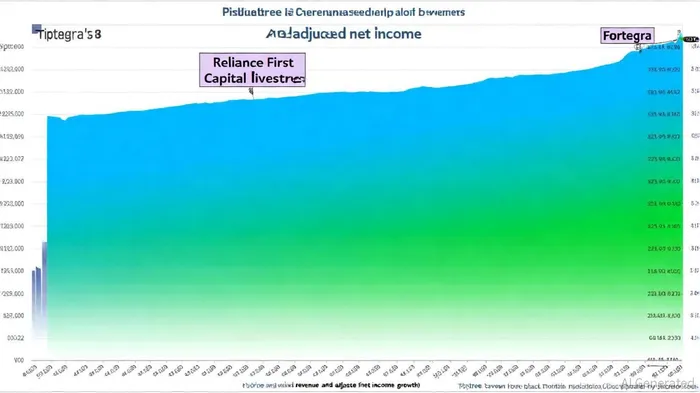
Tiptree's revenue growth reflects its focus on high-margin insurance and financial services, particularly through Fortegra. Yet, the company's broader strategy has shifted toward asset rationalization. In September 2025, TiptreeTIPT-- agreed to sell Fortegra for $1.65 billion, with $1.12 billion in gross proceeds expected, pending regulatory approvals, according to the same press release. Separately, it announced the sale of its mortgage business, Reliance First Capital, for $51 million-93.5% of its tangible book value, the press release reported. These transactions, slated to close in mid-2026 and Q1 2026, respectively, will generate approximately $1.17 billion in proceeds, significantly boosting Tiptree's pro-forma book value to $930 million as of September 30, 2025, the release stated.
The decision to divest these units aligns with Tiptree's long-term capital allocation framework, which prioritizes shareholder returns through dividends and share buybacks. The company declared a $0.06-per-share dividend for Q3 2025, reflecting its commitment to distributing capital despite near-term profitability pressures, the company said.
Profitability Pressures and Interest Rate Sensitivity
While Tiptree's adjusted return on average equity dipped to 22.9% in Q3 2025 from 24.8% in the prior-year period, the company's ability to maintain adjusted net income growth suggests disciplined cost management. However, the lack of explicit details on its interest rate risk management strategies raises questions about its preparedness for prolonged high-rate environments. Unlike peers in the insurance sector-such as China Pacific Insurance Group, which leveraged digital tools to boost efficiency and profitability, according to a China Pacific transcript-Tiptree has not disclosed hedging mechanisms or portfolio adjustments to mitigate rate volatility.
The insurance industry as a whole is adapting to high rates through technological innovation, including AI-driven underwriting and IoT-enabled risk assessment, according to a Market.us report. Tiptree's reliance on strategic divestitures rather than operational transformation may limit its agility in a shifting rate environment. For instance, Fortegra's sale could free up capital for reinvestment, but without clear plans to redeploy funds into rate-insensitive assets or high-growth sectors, the company risks underperforming peers that are actively optimizing their portfolios, as noted in a Yahoo Finance article.
Sustainability in a High-Rate World
Tiptree's Q3 results highlight a tension between short-term profitability and long-term strategic clarity. The company's adjusted net income growth and dividend continuity are positives, but the decline in GAAP net income and lack of interest rate risk transparency are red flags. In contrast, insurers like China Pacific have leveraged digitalization and product diversification to sustain growth amid rate uncertainty, as the transcript shows. Tiptree's approach-focused on asset sales and capital returns-may provide near-term liquidity but lacks the innovation needed to future-proof its operations.
For investors, the key question is whether Tiptree's divestitures will unlock value or merely delay necessary reinvestment. The Fortegra sale, in particular, could provide a liquidity windfall, but the company must demonstrate a clear plan to allocate proceeds effectively. Until then, its ability to sustain profitability in a high-rate environment remains contingent on external factors and disciplined execution.





Comentarios
Aún no hay comentarios