
Tin's Volatile Resurgence: Betting on Myanmar's Wa State Recovery Amid Risks
The global tin market is at a crossroads. With Wa State's Man Maw tin mine—responsible for 25% of global supply—still shuttered since 2022, traders face a high-stakes dilemma: bet on a recovery that could unleash a price collapse, or brace for prolonged shortages that sustain a historic bull market? This article dissects the timing mismatch between market optimism and grim realities, mapping out a tactical strategy for investors to profit from tin's volatility while hedging against geopolitical and operational headwinds.
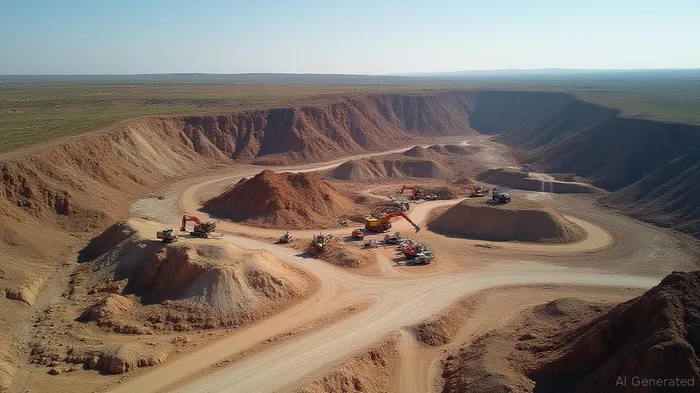
The Timing Trap: Why “Imminent” Production May Be Years Away
Market consensus assumes Wa State's tin will flood the market in late 2024, but reality is far grimmer. The March 2024 earthquake destroyed power grids and roads critical to mining operations, with repairs now projected to stretch until mid-2025. Even if permits are secured (a big “if”—UWSA approvals are notoriously opaque), the Man Maw mine requires 6–9 months of de-watering and rehiring Chinese laborers, pushing meaningful output to early 2026 at best.
This lag has already dented optimism: LME tin prices peaked at $38,395/ton in April 2024 but have since drifted down to $25,000/ton as traders price in delays. The mismatch between Wall Street's “2025 restart” narrative and on-the-ground realities creates a short-term shorting opportunity, while long-term bulls must wait for tangible progress.
Positioning Playbook: Long Tin with a Bulletproof Hedge
For investors willing to navigate this volatility, here's how to stack the odds in your favor:
Go Long on Tin Futures (LME Contracts)
The structural deficit—projected at 10,000–15,000 tons in 2024—remains intact. Even with Man Maw's eventual restart, global supply will struggle to keep pace with demand from EVs and AI chips. Positioning in LME tin futures (e.g., 3-month contracts) offers direct exposure to price swings.ETFs for Easier Access: IGE and VanEck Natural Resources
For those avoiding futures, the Global X Silver Miners ETF (SIL) or VanEck Natural Resources ETF (NLR)—which hold tin-exposed miners like Tin Mountain Resources (TINM)—offer diversification. However, avoid pure tin ETFs (e.g., Tin ETF (TIN)) until production restarts are confirmed.Hedge with Inverse ETFs or Options
The risks are too great to bet the farm. Pair long positions with inverse ETFs like the ProShares Short Basic Materials (SMN) or put options on tin futures to mitigate downside from delays or geopolitical shocks. A 50/50 long-inverse strategy balances exposure to recovery potential while capping losses.
Risks vs. Catalysts: When to Panic—and When to Double Down
Bearish Triggers to Monitor
- UWSA Policy Shifts: A sudden ban on exports or tax hikes (possible under new environmental rules) could stall progress. Track UWSA's quarterly economic reports for clues.
- Congolese Supply Disruptions: M23 rebels near Congo's Bisie tin mines (10% of global supply) remain active. A rebel advance could send prices soaring.
- Infrastructure Delays: Power plant repairs are behind schedule—follow Wa State's EPC approval timelines for critical projects.
Bullish Catalysts to Watch
- Permit Approval Milestones: A UWSA greenlight for Man Maw's dewatering (expected Q3 2025) would validate the recovery timeline.
- China's Restocking: Beijing's reliance on Wa tin (70% of imports) means even small production gains could trigger panic buying. Track Chinese tin ore imports monthly data.
- Indonesia's Export Rules: Jakarta's 2025 ban on unprocessed tin exports will tighten global supply, backing prices regardless of Wa's output.
Actionable Takeaways for Traders
- Short-Term (1–3 Months): Sell LME futures on rallies above $28,000/ton, leveraging SMN or inverse ETFs. Focus on geo-risk catalysts (e.g., UWSA meetings, Congolese violence).
- Medium-Term (6–12 Months): Buy dips below $23,000/ton in LME tin, pairing with NLR. Rebalance hedges as UWSA permits progress.
- Long-Term (1+ Years): Tin's structural deficit (projected to widen to 20,000 tons by 2026) makes it a “buy the dip” asset. Hold 5–10% of a portfolio in tin-linked ETFs.
Final Call: Act Now, but Stay Vigilant
Wa State's tin is the ultimate high-risk, high-reward trade. Investors must act decisively on technical signals (e.g., LME inventory lows) and geopolitical cues (UWSA's next move), while hedging relentlessly against delays. The stakes are clear: miss this window, and the next tin boom may be years away. Seize it, and you'll be positioned to profit from one of the most volatile—and essential—commodities of the 2020s.







Comentarios
Aún no hay comentarios