
Tilray's Strategic Gambits Offset Losses Amid Regulatory Crosswinds
The cannabis and craft beer conglomerate Tilray Brands (NASDAQ:TLRY) has carved out a complex narrative in its latest earnings report: rapid top-line growth juxtaposed with persistent profitability hurdles. While the company reported a net loss of $105 million for Q3 2024—a stark improvement from the staggering $1.2 billion loss in the prior-year period—the figures underscore both ambition and execution challenges in its dual-play strategy. Let’s dissect the interplay of Tilray’s expansion, regulatory constraints, and financial evolution.
The Growth Engine: Craft Beer and Global Cannabis
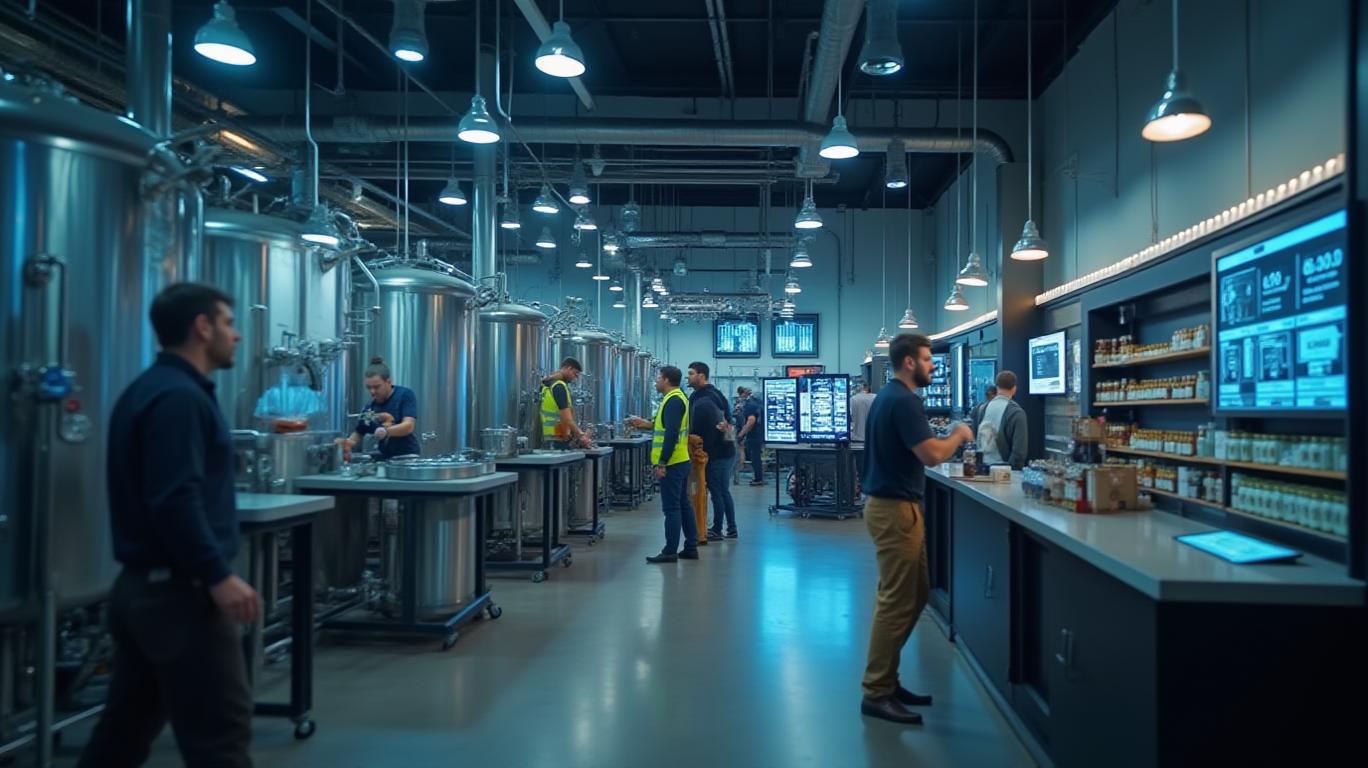
Tilray’s $188.3 million in Q3 revenue reflects a 30% year-over-year surge, driven by its craft beer acquisition spree. The September 2023 purchase of Anheuser-Busch’s craft portfolio—brands like Shock Top and Widmer Brothers—propelled beverage-alcohol revenue to $54.7 million, a 165% YoY jump. This move solidified Tilray’s position as the fifth-largest craft beer brewer in the U.S., commanding a 4.5% market share. Notably, regional brands like 10 Barrel Brewing and Redhook Brewing saw volume gains of 8.5% and 7%, respectively, signaling effective post-acquisition integration.
In cannabis, Tilray maintains dominance in Canada (11.6% market share) and Germany’s medical market, with global cannabis revenue climbing 33% to $63.4 million. The HEXO and Truss Beverage acquisitions bolstered distribution efficiency, while international sales surged 44% YoY. Yet, the U.S. remains a dormant frontier: federal restrictions continue to bar Tilray from operating cannabis businesses there, though its MedMen stake positions it to pounce if legalization occurs.
Margins Under Pressure, Synergies at Play
Despite revenue momentum, Tilray’s profitability metrics faltered. Adjusted EBITDA dipped to $10.2 million from $13.3 million a year earlier, while gross margins contracted sharply—beverage-alcohol margins fell to 34% (from 48%) and cannabis margins to 33% (from 47%). The dilution stemmed from lower-margin acquired brands and the loss of HEXO’s advisory services revenue, which had skewed prior-year results.
Cost discipline, however, offers hope. Tilray slashed $205.5 million in convertible debt year-to-date and expects $27.5 million in annualized synergies from HEXO. Management’s focus on operational efficiency is clear, but the path to positive free cash flow remains bumpy: the company now forecasts no adjusted free cash flow positivity due to delayed asset-sale proceeds.
Regulatory Crosscurrents and Strategic Gambles
Regulatory headwinds persist. A $65.4 million revenue hit from distribution segment issues—such as rebate policy changes and IT outages—last quarter highlights the fragility of Tilray’s supply chain. Meanwhile, U.S. cannabis legalization remains a distant catalyst, though Tilray’s craft beer portfolio could pivot if federal policy shifts. The company’s wellness segment, driven by Manitoba Harvest’s fiber products and relaunched HiBall Energy drinks, grew 12% to $13.4 million, suggesting diversification beyond core markets.

Investment Considerations: Risk vs. Reward
Tilray’s story hinges on two variables: execution in high-growth segments and regulatory tailwinds. On the positive side, its craft beer dominance and international cannabis leadership position it to capitalize on secular trends in adult-use cannabis (where global sales are projected to hit $100 billion by 2030) and the craft beverage boom. Debt reduction and synergy targets also signal fiscal discipline.
Yet, the risks are manifold. Gross margin pressures persist, and the U.S. cannabis market—potentially worth billions—remains locked behind federal barriers. Tilray’s revised guidance for $60–63 million in adjusted EBITDA falls short of earlier expectations, and its stock (TLRY) has underperformed peers like Canopy Growth (CGC) and Curaleaf (CURLF) over the past year.
Conclusion: A Long Game With Uncertain Payoffs
Tilray’s Q3 results reveal a company in transition: aggressively expanding its footprint in craft beer and global cannabis while wrestling with the financial scars of rapid acquisitions. The 30% revenue growth and narrowed net loss suggest progress, but the path to profitability remains fraught with regulatory and operational risks.
Investors must weigh Tilray’s strategic strengths—#1 market positions in key regions, a diversified portfolio, and debt reduction—against its margin challenges and reliance on policy changes. The stock’s current valuation, trading at roughly 3x forward revenue, reflects skepticism about near-term returns. Yet, for those willing to bet on Tilray’s execution and eventual U.S. cannabis legalization, the company’s scale and ambition could yet deliver outsized rewards. The question remains: can Tilray turn its top-line momentum into sustainable profitability before the next regulatory storm hits?








Comentarios
Aún no hay comentarios