
Tilray Brands: Strategic Differentiation Fuels Outperformance in a Challenged Cannabis Sector
In a cannabis sector marked by volatility and regulatory headwinds, Tilray BrandsTLRY-- (TLRY) has emerged as an outlier, posting robust financial gains amid broader market declines. The company's Q1 2025 results—13% year-over-year revenue growth to $200 million and a 35% surge in gross profit to $59.7 million—underscore its ability to navigate industry turbulence through strategic differentiation[4]. This outperformance stems from a combination of supply chain innovation, product diversification, and regulatory agility, positioning TilrayTLRY-- to capitalize on evolving consumer and market dynamics.
Supply Chain Expansion: A Foundation for Scalability
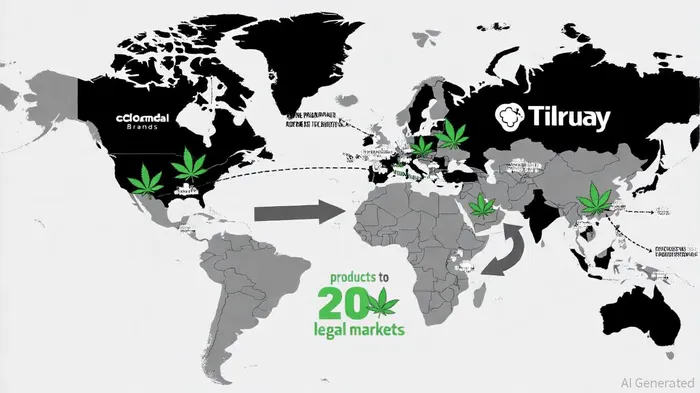
Tilray's recent completion of Phase I of its global supply chain expansion has been pivotal. By boosting cultivation capacity to 210 metric tonnes annually in Canada, with potential to scale to 247 metric tonnes, the company is addressing surging demand while maintaining quality standards[6]. This infrastructure, bolstered by state-of-the-art facilities in Ontario and Portugal, ensures a consistent supply of premium cannabis across 20+ legal markets. Such vertical integration mitigates risks associated with supply shortages—a persistent challenge for competitors reliant on fragmented or regional operations.
Product Diversification: Beyond Traditional Cannabis
While many peers focus narrowly on flower or edibles, Tilray has aggressively expanded into high-growth segments like cannabis-infused beverages and hemp-derived CBD products. Its beverage alcohol division, including acquisitions, saw a 132% revenue surge to $56 million in Q1 2025[4]. This pivot aligns with broader consumer trends toward health-conscious and discreet consumption methods. By leveraging its brand equity in premium spirits (e.g., House of SAGE), Tilray is redefining cannabis as a lifestyle product rather than a commodity.
Strategic Partnerships and Regulatory Mastery
Tilray's partnership with Italian pharmaceutical giant Molteni to distribute medical cannabis extracts highlights its ability to access niche markets[5]. This collaboration not only broadens its therapeutic reach but also strengthens its reputation as a science-driven player. Meanwhile, its recent compliance with Nasdaq's minimum bid price requirement in August 2025[5] signals improved corporate governance, a critical factor for regaining investor confidence after years of volatility.
Navigating 2025 Industry Trends
The cannabis sector in 2025 is increasingly shaped by AI-driven supply chain optimization and sustainability mandates. While competitors scramble to adopt AI for inventory management and personalized marketing, Tilray's focus on scalable infrastructure and eco-friendly practices (e.g., energy-efficient cultivation) positions it to meet both consumer and regulatory demands[3]. Moreover, its global footprint insulates it from U.S.-centric trade tensions, a vulnerability for firms overly reliant on domestic markets[6].
Conclusion: A Model for Long-Term Resilience
Tilray's strategic differentiation—combining operational scale, product innovation, and regulatory foresight—offers a blueprint for thriving in a maturing cannabis industry. While short-term challenges persist, its ability to adapt to trends like AI integration and sustainability suggests a durable competitive edge. For investors, Tilray's Q1 performance and forward-looking initiatives signal a company not just surviving, but redefining its sector.
Historical data on earnings events, however, reveals a cautionary nuance. A backtest of 15 earnings announcements between 2022 and 2025 shows that short-term price reactions to results have been muted, with win rates hovering around 33-47% in the first two weeks. While average cumulative performance turns slightly positive after 11 days, 30-day post-event returns (-7.33%) lag the benchmark (-2.47%), suggesting that timing the market around earnings has not historically yielded consistent gains. This underscores the importance of focusing on Tilray's long-term strategic execution rather than short-term volatility.





Comentarios
Aún no hay comentarios