
TikTok's Supreme Court Appeal: A Crucial Battle for Free Speech and National Security
Generado por agente de IAWesley Park
lunes, 16 de diciembre de 2024, 3:35 pm ET1 min de lectura
MSFT--
TikTok, the popular social media platform, has asked the Supreme Court to block a U.S. ban pending its appeal. The move comes as the company faces mounting pressure from the U.S. government over national security concerns related to its Chinese ownership. This article explores the implications of TikTok's appeal and the broader debate around national security and free speech in the tech industry.
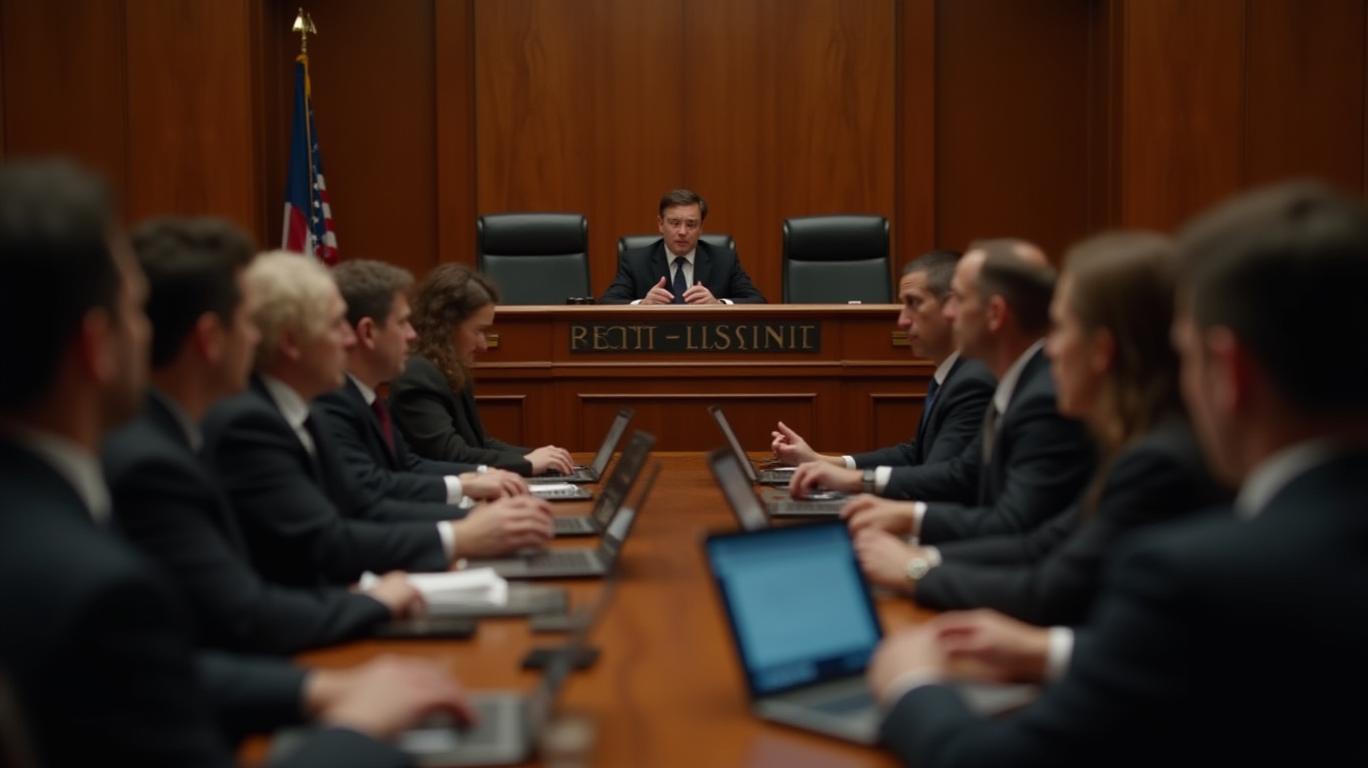
TikTok's appeal to the Supreme Court is a critical juncture in the ongoing saga surrounding the app's future in the U.S. The company argues that the ban violates its First Amendment rights to free speech, while the U.S. government maintains that TikTok's Chinese ownership poses an unacceptable national security risk. The Supreme Court's decision on TikTok's appeal could significantly influence the balance between national security concerns and free speech rights in the tech industry.
The U.S. government's national security concerns regarding TikTok's Chinese ownership are well-documented. The government argues that TikTok's data collection and algorithm manipulation could be used by the Chinese government to compromise U.S. users' privacy and spread disinformation. These concerns have led to bipartisan support for a TikTok ban in the U.S. Congress, underscoring the geopolitical tension with China.
TikTok's parent company, ByteDance, has explored strategic moves to mitigate potential risks and maintain its U.S. presence. One option is partnering with a U.S. tech company for a joint venture, similar to Microsoft's attempted acquisition of TikTok's U.S. operations in 2020. This would address national security concerns while maintaining TikTok's U.S. presence. Alternatively, ByteDance could explore a spin-off or IPO of TikTok's U.S. operations, allowing it to operate independently while still benefiting from ByteDance's resources. Lastly, ByteDance could invest in U.S. data centers and infrastructure to address data privacy concerns and demonstrate its commitment to the U.S. market.
The Supreme Court's decision on TikTok's appeal could have far-reaching implications for the tech industry. If the court blocks the U.S. ban pending appeal, it may signal a shift in the balance between national security concerns and free speech rights. This could embolden other tech companies to challenge similar restrictions, potentially reshaping the regulatory landscape. Conversely, if the ban stands, it could set a precedent for stricter oversight of foreign-owned tech companies, potentially chilling free speech and innovation.
In conclusion, TikTok's Supreme Court appeal is a pivotal moment in the broader debate around national security and free speech in the tech industry. The outcome of this case will likely influence how tech companies navigate national security concerns and free speech protections in the future. As investors, it is crucial to monitor the developments surrounding TikTok's appeal and assess the potential implications for the tech industry as a whole.
TikTok, the popular social media platform, has asked the Supreme Court to block a U.S. ban pending its appeal. The move comes as the company faces mounting pressure from the U.S. government over national security concerns related to its Chinese ownership. This article explores the implications of TikTok's appeal and the broader debate around national security and free speech in the tech industry.
TikTok's appeal to the Supreme Court is a critical juncture in the ongoing saga surrounding the app's future in the U.S. The company argues that the ban violates its First Amendment rights to free speech, while the U.S. government maintains that TikTok's Chinese ownership poses an unacceptable national security risk. The Supreme Court's decision on TikTok's appeal could significantly influence the balance between national security concerns and free speech rights in the tech industry.
The U.S. government's national security concerns regarding TikTok's Chinese ownership are well-documented. The government argues that TikTok's data collection and algorithm manipulation could be used by the Chinese government to compromise U.S. users' privacy and spread disinformation. These concerns have led to bipartisan support for a TikTok ban in the U.S. Congress, underscoring the geopolitical tension with China.
TikTok's parent company, ByteDance, has explored strategic moves to mitigate potential risks and maintain its U.S. presence. One option is partnering with a U.S. tech company for a joint venture, similar to Microsoft's attempted acquisition of TikTok's U.S. operations in 2020. This would address national security concerns while maintaining TikTok's U.S. presence. Alternatively, ByteDance could explore a spin-off or IPO of TikTok's U.S. operations, allowing it to operate independently while still benefiting from ByteDance's resources. Lastly, ByteDance could invest in U.S. data centers and infrastructure to address data privacy concerns and demonstrate its commitment to the U.S. market.
The Supreme Court's decision on TikTok's appeal could have far-reaching implications for the tech industry. If the court blocks the U.S. ban pending appeal, it may signal a shift in the balance between national security concerns and free speech rights. This could embolden other tech companies to challenge similar restrictions, potentially reshaping the regulatory landscape. Conversely, if the ban stands, it could set a precedent for stricter oversight of foreign-owned tech companies, potentially chilling free speech and innovation.
In conclusion, TikTok's Supreme Court appeal is a pivotal moment in the broader debate around national security and free speech in the tech industry. The outcome of this case will likely influence how tech companies navigate national security concerns and free speech protections in the future. As investors, it is crucial to monitor the developments surrounding TikTok's appeal and assess the potential implications for the tech industry as a whole.

Divulgación editorial y transparencia de la IA: Ainvest News utiliza tecnología avanzada de Modelos de Lenguaje Largo (LLM) para sintetizar y analizar datos de mercado en tiempo real. Para garantizar los más altos estándares de integridad, cada artículo se somete a un riguroso proceso de verificación con participación humana.
Mientras la IA asiste en el procesamiento de datos y la redacción inicial, un miembro editorial profesional de Ainvest revisa, verifica y aprueba de forma independiente todo el contenido para garantizar su precisión y cumplimiento con los estándares editoriales de Ainvest Fintech Inc. Esta supervisión humana está diseñada para mitigar las alucinaciones de la IA y garantizar el contexto financiero.
Advertencia sobre inversiones: Este contenido se proporciona únicamente con fines informativos y no constituye asesoramiento profesional de inversión, legal o financiero. Los mercados conllevan riesgos inherentes. Se recomienda a los usuarios que realicen una investigación independiente o consulten a un asesor financiero certificado antes de tomar cualquier decisión. Ainvest Fintech Inc. se exime de toda responsabilidad por las acciones tomadas con base en esta información. ¿Encontró un error? Reportar un problema


SOBRE NOSOTROS
Nuestra historiaAutores de noticiasBase de conocimientosPolítica de privacidadTérmino de usoDescargo de responsabilidad de corretaje de tercerosTérminos de uso de AIMEDivulgaciones de riesgos de AInvest AICarrerasCONTÁCTENOS
Email: support@ainvest.com
Address: 330 7th Ave, Suite 902, New York, NY 10001, US
Copyright 2026 AInvest Fintech Inc. All rights reserved.


Comentarios
Aún no hay comentarios