
TikTok Ban: Supreme Court Hearing Could Boost Meta, Snap, Oracle Stock
Generado por agente de IAWesley Park
sábado, 11 de enero de 2025, 8:29 pm ET2 min de lectura
META--
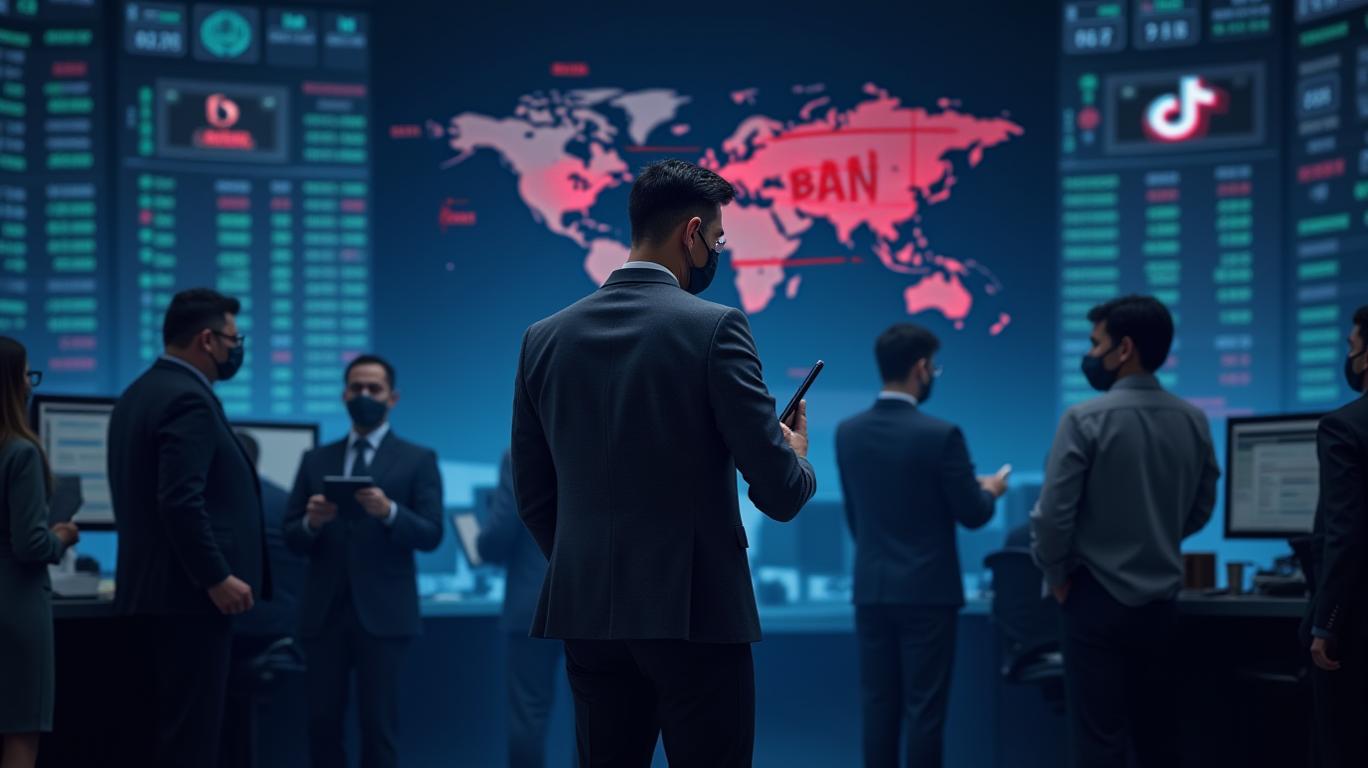
The Supreme Court is set to hear arguments today regarding a law that could lead to a ban or sale of TikTok in the U.S. If the app isn't sold by Chinese parent company ByteDance, the law would block TikTok in the U.S. This potential ban is being challenged by TikTok on First Amendment grounds, calling it an "unprecedented censorship" for the over 170 million Americans who use the app. The Supreme Court's decision could have significant repercussions for stocks such as Meta (NASDAQ:META) and Oracle (NYSE:ORCL), among others.
If TikTok is banned, it is expected that Meta, Snap, and Alphabet (NASDAQ:GOOGL), the parent company of YouTube, would likely gain market share. On the other hand, Oracle, which hosts the app, could see a loss in income. Analysts at Morgan Stanley have suggested that a TikTok ban would present a significant opportunity for competitors as users would likely redirect their time to other platforms. They predict that Meta and YouTube would be the primary beneficiaries of this shift, with some time also going to Snapchat, owned by Snap, as well as Reddit and Pinterest (NYSE:PINS).
Research firm eMarketer has projected that TikTok collected $10.4 billion in U.S. ad revenue last year, roughly 12% of social media ad spending in the U.S. and 3% of the U.S. digital advertising market. In the event of a ban, they estimate that Meta and Google, via YouTube, would collect about half of the "dislocated" advertising dollars from TikTok.
Meanwhile, TikTok is a significant customer of Oracle's cloud infrastructure business. Analysts from Evercore ISI have estimated that TikTok could be worth between $480 million and $800 million in annual revenue for Oracle Cloud Infrastructure, which is about 5% of the division's sales. Oracle has warned that a TikTok ban could negatively impact its revenue if the company cannot redeploy that capacity in a timely manner.
The law does provide an option for ByteDance to sell TikTok. So far, ByteDance has appeared reluctant to do so. However, there has been speculation about potential buyers, including e-commerce giant Amazon (NASDAQ:AMZN) and retail corporation Walmart (NYSE:WMT). Both companies were suggested by Morgan Stanley analysts as potentially strategic acquirers, but neither has publicly expressed interest since the TikTok ban bill was passed. A group known as Project Liberty, formed by billionaire entrepreneur and former Los Angeles Dodgers owner Frank McCourt, has made an offer to ByteDance. Shark Tank's Kevin O'Leary backs the group, but the value of their bid has not been disclosed.
As the Supreme Court hears the arguments today, the future of TikTok in the U.S., and the repercussions for other tech companies, hangs in the balance. Investors should keep a close eye on the developments and consider the potential impact on Meta, Snap, Oracle, and other relevant stocks.
ORCL--
The Supreme Court is set to hear arguments today regarding a law that could lead to a ban or sale of TikTok in the U.S. If the app isn't sold by Chinese parent company ByteDance, the law would block TikTok in the U.S. This potential ban is being challenged by TikTok on First Amendment grounds, calling it an "unprecedented censorship" for the over 170 million Americans who use the app. The Supreme Court's decision could have significant repercussions for stocks such as Meta (NASDAQ:META) and Oracle (NYSE:ORCL), among others.
If TikTok is banned, it is expected that Meta, Snap, and Alphabet (NASDAQ:GOOGL), the parent company of YouTube, would likely gain market share. On the other hand, Oracle, which hosts the app, could see a loss in income. Analysts at Morgan Stanley have suggested that a TikTok ban would present a significant opportunity for competitors as users would likely redirect their time to other platforms. They predict that Meta and YouTube would be the primary beneficiaries of this shift, with some time also going to Snapchat, owned by Snap, as well as Reddit and Pinterest (NYSE:PINS).
Research firm eMarketer has projected that TikTok collected $10.4 billion in U.S. ad revenue last year, roughly 12% of social media ad spending in the U.S. and 3% of the U.S. digital advertising market. In the event of a ban, they estimate that Meta and Google, via YouTube, would collect about half of the "dislocated" advertising dollars from TikTok.
Meanwhile, TikTok is a significant customer of Oracle's cloud infrastructure business. Analysts from Evercore ISI have estimated that TikTok could be worth between $480 million and $800 million in annual revenue for Oracle Cloud Infrastructure, which is about 5% of the division's sales. Oracle has warned that a TikTok ban could negatively impact its revenue if the company cannot redeploy that capacity in a timely manner.
The law does provide an option for ByteDance to sell TikTok. So far, ByteDance has appeared reluctant to do so. However, there has been speculation about potential buyers, including e-commerce giant Amazon (NASDAQ:AMZN) and retail corporation Walmart (NYSE:WMT). Both companies were suggested by Morgan Stanley analysts as potentially strategic acquirers, but neither has publicly expressed interest since the TikTok ban bill was passed. A group known as Project Liberty, formed by billionaire entrepreneur and former Los Angeles Dodgers owner Frank McCourt, has made an offer to ByteDance. Shark Tank's Kevin O'Leary backs the group, but the value of their bid has not been disclosed.
As the Supreme Court hears the arguments today, the future of TikTok in the U.S., and the repercussions for other tech companies, hangs in the balance. Investors should keep a close eye on the developments and consider the potential impact on Meta, Snap, Oracle, and other relevant stocks.

Divulgación editorial y transparencia de la IA: Ainvest News utiliza tecnología avanzada de Modelos de Lenguaje Largo (LLM) para sintetizar y analizar datos de mercado en tiempo real. Para garantizar los más altos estándares de integridad, cada artículo se somete a un riguroso proceso de verificación con participación humana.
Mientras la IA asiste en el procesamiento de datos y la redacción inicial, un miembro editorial profesional de Ainvest revisa, verifica y aprueba de forma independiente todo el contenido para garantizar su precisión y cumplimiento con los estándares editoriales de Ainvest Fintech Inc. Esta supervisión humana está diseñada para mitigar las alucinaciones de la IA y garantizar el contexto financiero.
Advertencia sobre inversiones: Este contenido se proporciona únicamente con fines informativos y no constituye asesoramiento profesional de inversión, legal o financiero. Los mercados conllevan riesgos inherentes. Se recomienda a los usuarios que realicen una investigación independiente o consulten a un asesor financiero certificado antes de tomar cualquier decisión. Ainvest Fintech Inc. se exime de toda responsabilidad por las acciones tomadas con base en esta información. ¿Encontró un error? Reportar un problema


SOBRE NOSOTROS
Nuestra historiaAutores de noticiasBase de conocimientosPolítica de privacidadTérmino de usoDescargo de responsabilidad de corretaje de tercerosTérminos de uso de AIMEDivulgaciones de riesgos de AInvest AICarrerasCONTÁCTENOS
Email: support@ainvest.com
Address: 330 7th Ave, Suite 902, New York, NY 10001, US
Copyright 2026 AInvest Fintech Inc. All rights reserved.


Comentarios
Aún no hay comentarios