
Tightening Global Crude Oil Supply Dynamics: Strategic Positioning in Energy Commodities
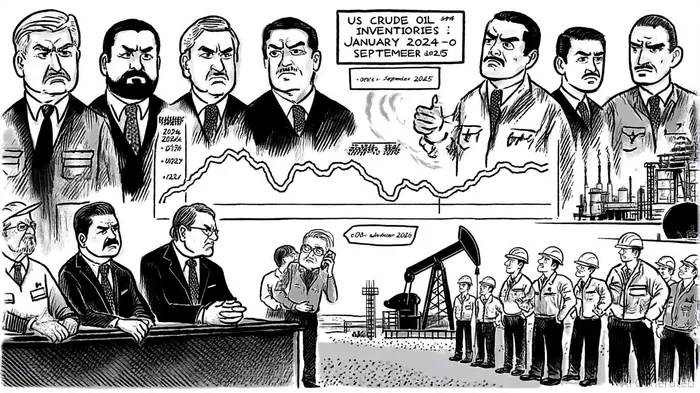
The global crude oil market in 2025 is being reshaped by a confluence of tightening supply, geopolitical volatility, and resilient demand. For investors, understanding these dynamics is critical to navigating energy commodities. The U.S. market, once a net importer, now serves as a bellwether for broader trends, with commercial crude inventories hitting a seven-week low of 415.4 million barrels as of September 12, 2025—5% below the five-year seasonal average[2]. This decline, driven by record-low net imports and surging exports of 5.28 million barrels per day[2], underscores a structural shift in U.S. energy policy and global trade flows.
U.S. Inventory Trends and Global Supply Constraints
The U.S. Energy Information Administration (EIA) reports that crude oil stockpiles have fallen by 9.3 million barrels in a single week, marking the largest draw in seven weeks[3]. This follows a sustained decline of 8.4 million barrels over two weeks in August 2025[5], reflecting a tightening market where commercial inventories are 6% below the five-year average[5]. Meanwhile, the Strategic Petroleum Reserve (SPR) saw a modest increase of 300,000 barrels to 406 million barrels[1], signaling a cautious approach to emergency stockpiling amid geopolitical risks.
Globally, OPEC+ remains a pivotal actor. Despite plans to boost output by 137,000 barrels per day in October 2025[1], the group has only added 1.5 million barrels per day since early 2025, leaving 5.7 million barrels per day of spare capacity on the sidelines[4]. This strategic restraint, combined with geopolitical disruptions—such as heightened tensions between Iran and Israel in June 2025—has created price volatility. For instance, fears of Strait of Hormuz disruptions pushed Brent crude above $75 per barrel[3], illustrating how regional conflicts can amplify supply risks.
Demand Resilience and Non-OPEC+ Supply Growth
While OPEC+ grapples with output adjustments, non-OPEC+ producers like the U.S., Canada, Brazil, and Guyana are adding 1.4 million barrels per day to global supply in 2025[1]. However, this growth is offset by flat demand in OECD countries and subdued consumption in China[1]. The petrochemical industry, however, has emerged as a key driver of demand resilience, with oil used in plastics and chemicals accounting for a growing share of global consumption[5]. This shift suggests that even in a low-growth macroeconomic environment, oil demand will remain structurally supported.
Strategic Investment Opportunities
For investors, the interplay of tightening supply and resilient demand presents opportunities in energy commodities. U.S. crude producers, constrained by infrastructure bottlenecks and capital discipline[3], are likely to benefit from higher realized prices as inventories remain low. Additionally, the growing spare capacity of OPEC+ provides a hedge against geopolitical shocks, though it also introduces downward price pressure if deployed.
A would visually reinforce the structural shifts in the market. Investors should also monitor the SPR's role as a buffer against supply shocks, particularly as geopolitical tensions persist.
Conclusion
The tightening of U.S. crude oil stockpiles, coupled with global supply constraints and demand resilience, positions energy commodities as a strategic asset class in 2025. While OPEC+'s spare capacity and non-OPEC+ supply growth introduce complexity, the underlying fundamentals—driven by refinery utilization rates near 92.6%[1] and a record-low net import position in the U.S.—suggest a market poised for volatility and potential upside. Investors who align with these dynamics may find opportunities in upstream energy equities, oil-linked ETFs, and hedging strategies to capitalize on the evolving landscape.







Comentarios
Aún no hay comentarios