
Thyssenkrupp's Strategic Pathways Amid Multiple Steel Unit Bids: Assessing Long-Term Value Creation and Green Transition Alignment
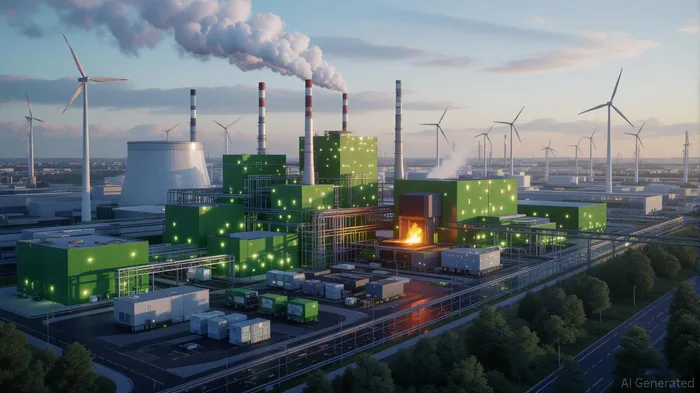
The steel industry stands at a crossroads, with decarbonization and consolidation reshaping its competitive landscape. Thyssenkrupp AG, a cornerstone of Germany's industrial heritage, finds itself at the center of a pivotal moment as it navigates bids for its steel division, Thyssenkrupp Steel Europe (TKSE), while advancing its ambitious green steel transition. This analysis evaluates the long-term value creation potential of Thyssenkrupp's strategic options, focusing on the interplay between ownership restructuring, green transition alignment, and sector-wide consolidation dynamics.
Strategic Bids and Ownership Uncertainty
Thyssenkrupp has received a non-binding bid for TKSE from India's Jindal Steel International, a move that could redefine the company's trajectory. Jindal, a global steel giant with integrated “mine-to-metal” operations, has outlined a €2 billion investment plan to expand Duisburg's direct reduced iron (DRI) project, add electric arc furnace capacity, and secure low-emission production. According to a report by Reuters, Jindal emphasized its financial strength and commitment to decarbonization, positioning itself as a potential partner to accelerate Thyssenkrupp's green agenda[1].
This bid contrasts with the earlier partial stake sale to Czech billionaire Daniel Kretinsky, which aimed to create a 50-50 joint venture. However, labor union IG Metall raised concerns over Kretinsky's strategic vision, highlighting the political and social risks of foreign ownership[1]. Jindal's offer, by contrast, aligns with Germany's industrial policy priorities, including supply chain resilience and climate neutrality. Yet, the non-binding nature of the bid leaves uncertainty, as Thyssenkrupp must weigh economic sustainability, employment guarantees, and green transition continuity[1].
Green Transition: A Make-or-Break Investment
Thyssenkrupp's €3.5 billion green steel plant in Duisburg remains central to its long-term strategy, despite rising hydrogen costs and infrastructure bottlenecks. The company has reiterated its commitment to the project, which is expected to begin operations in 2027 and achieve net-zero emissions by 2045[4]. However, as noted in a Hydrogen Insight report, hydrogen prices have surged beyond initial projections, prompting Thyssenkrupp to seek revised funding terms with the German government and European Commission[3].
The project's success hinges on external factors: faster hydrogen infrastructure development, competitive energy pricing, and regulatory support. According to Thyssenkrupp's 2025 Annual General Meeting, the company has secured €500 million in state subsidies to date and emphasized the need for “adjusted framework conditions” to ensure economic viability[3]. This underscores the delicate balance between technological ambition and fiscal realism—a challenge shared by peers like ArcelorMittalMT--, which recently abandoned its German green steel plans due to high electricity costs[4].
Labor Agreements and Industrial Restructuring
Parallel to the bid evaluation, Thyssenkrupp and IG Metall have reached an agreement in principle to restructure the steel division, focusing on capacity reduction and green transition initiatives[2]. This labor pact, expected to culminate in a collective-bargaining agreement by summer 2025, signals a pragmatic alignment between management and workers. By prioritizing the DRI plant and hydrogen-based production, Thyssenkrupp aims to maintain competitiveness while adhering to climate targets validated by the Science Based Targets initiative (SBTi)[5].
The restructuring also addresses operational inefficiencies, with plans to streamline production and reduce debt. For investors, this represents a critical test of Thyssenkrupp's ability to balance short-term profitability with long-term sustainability—a challenge that will determine whether the company remains an independent player or becomes part of a larger industrial consortium.
Consolidation and Sector-Wide Implications
The steel sector's consolidation trend, driven by decarbonization costs and global competition, positions Thyssenkrupp as a strategic asset. Jindal's bid, if finalized, could catalyze a shift in Europe's steel dynamics, leveraging Jindal's global supply chain and green steel expertise. However, the transaction's success depends on regulatory approval, stakeholder alignment, and the ability to integrate Duisburg's green initiatives into Jindal's broader operations[2].
For Thyssenkrupp, the decision to accept, reject, or negotiate the bid will shape its role in the green transition. A partnership with Jindal could accelerate technology deployment and secure funding, but it also risks diluting German industrial sovereignty. Conversely, retaining ownership under Kretinsky or pursuing a joint venture with domestic partners may offer greater control but could delay critical investments.
Conclusion: Navigating the Green Transition's Crossroads
Thyssenkrupp's strategic pathways reflect the broader challenges and opportunities facing the steel industry. The Jindal bid and green steel project represent two sides of the same coin: one offers financial and operational clarity, while the other embodies the company's commitment to climate neutrality. For investors, the key question is whether Thyssenkrupp can leverage these options to create enduring value while aligning with global decarbonization goals.
The coming months will be decisive. If Thyssenkrupp secures favorable terms for its green steel plant and navigates the bid process with a focus on sustainability and stakeholder trust, it could emerge as a model for industrial transformation. However, delays in hydrogen infrastructure or regulatory hurdles could undermine its ambitions, highlighting the sector's inherent volatility. In this high-stakes environment, Thyssenkrupp's ability to adapt will define its legacy—and its relevance—in a greener, more consolidated steel industry.







Comentarios
Aún no hay comentarios