
Thimerosal-Free Flu Mandate Sparks Supply Chain Shifts, Favoring Merck and Thimerosal-Free Leaders
The U.S. Advisory Committee on Immunization Practices (ACIP) has ignited a seismic shift in influenza vaccine production by mandating thimerosal-free formulations for all 2024-2025 flu vaccines. This decision, driven by political appointees with anti-vaccine leanings, has created a critical inflection point for pharmaceutical supply chains. While the mandate primarily targets a small fraction of vaccines (4-6% of flu shots still use thimerosal), its ripple effects could reshape the industry's cost structures, distribution models, and competitive dynamics. For investors, the disruption favors companies like Merck, which already dominate thimerosal-free markets and are positioned to capitalize on this regulatory pivot.
The Thimerosal Mandate: A Costly Supply Chain Overhaul
Thimerosal, a mercury-based preservative, has been a cornerstone of multi-dose vaccine vials for decades due to its cost efficiency and logistical simplicity. However, ACIP's politically charged vote—backed by discredited claims linking thimerosal to autism—has forced manufacturers to pivot. The mandate requires all flu vaccines for the 2024-2025 season to exclude thimerosal, even though 96% of U.S. flu vaccines already meet this standard. The remaining 4%—primarily multi-dose vials—will now face obsolescence unless reformulated.
This shift poses immediate challenges:
- Higher production costs: Single-dose vials, the primary thimerosal-free alternative, are costlier to manufacture and distribute. Scaling up single-dose production could strain margins for firms reliant on multi-dose economies of scale.
- Logistical bottlenecks: Multi-dose vials are critical in rural and low-income settings, where single-dose distribution is less practical. Discontinuing them risks access gaps, particularly in global markets.
- Preservative innovation risks: Companies exploring alternatives to thimerosal (e.g., benzalkonium chloride) may face regulatory hurdles or scalability issues.
Merck: A Leader in Thimerosal-Free Innovation
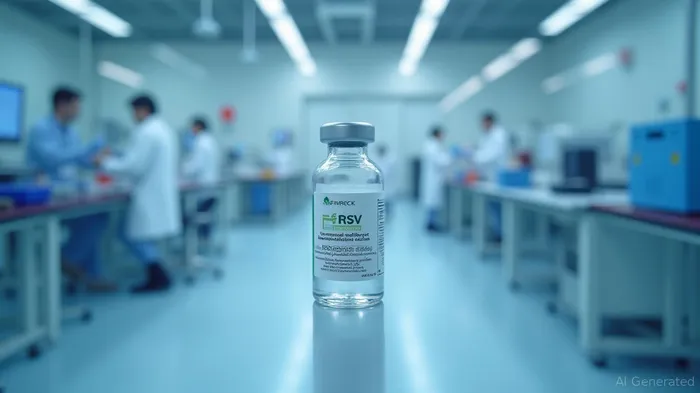
Merck's RSV vaccine, Vaxelis, and its flu vaccine portfolio position it as a prime beneficiary of the thimerosal mandate. Unlike competitors tied to multi-dose vials, MerckMRK-- has prioritized single-dose and preservative-free formulations for years. For example, its Fluvirin flu vaccine already uses thimerosal-free single-dose packaging, aligning with ACIP's demands. Additionally, Merck's RSV drug, which targets older adults and infants—a high-margin demographic—faces less thimerosal-related scrutiny, offering a hedge against flu vaccine margin pressures.
The company's scalable manufacturing infrastructure is another advantage. Its investment in single-dose vial production facilities and partnerships with global distributors (e.g., through its HPV vaccine supply chain) could allow it to capitalize on the mandate-driven shift. Analysts estimate Merck could gain a 10-15% market share boost in flu vaccines by 2026, while its RSV franchise could exceed $2 billion in annual sales by 2027.
Opportunities and Risks for Investors
Investment Opportunities:
1. Thimerosal-Free Leaders: Companies like Merck, Pfizer (PFE), and Moderna (MRNA) with existing thimerosal-free pipelines or single-dose expertise stand to gain. Pfizer's Prevnar 13 pneumococcal vaccine, already thimerosal-free, could see cross-selling opportunities in flu markets.
2. Preservative Alternatives: Firms developing non-mercury preservatives (e.g., Baxter International (BAX)) may carve out niche roles in multi-dose formulations, though regulatory risks remain.
3. Global Supply Chain Players: Logistics firms like McKesson (MCK) and AmerisourceBergen (ABC) could benefit from increased demand for single-dose distribution networks.
Key Risks:
- Cost Overruns: Multi-dose vaccine manufacturers (e.g., Sanofi, GSK) may struggle with margin compression as they pivot to single-dose formats.
- Regulatory Uncertainty: ACIP's ideological agenda could extend thimerosal restrictions to other vaccines, creating prolonged supply chain disruptions.
- Global Backlash: Low-income countries reliant on multi-dose vials may resist the mandate, leading to trade disputes or access inequities.
Portfolio Strategy
Investors should ** overweight Merck and other thimerosal-free leaders while avoiding multi-dose-dependent companies. Consider:
- Long Merck (MRK): Target price $100/share by end-2025 (current: ~$85).
- Short SanofiSNY-- (SNY): Vulnerable to margin pressures if multi-dose reforms stall.
- Monitor ACIP's 2025 Agenda**: The June 25-26 meeting could signal whether the thimerosal mandate becomes permanent, altering long-term supply chain dynamics.
Conclusion
ACIP's thimerosal mandate has exposed vulnerabilities in vaccine supply chains while creating asymmetric opportunities for innovators like Merck. The shift to single-dose production and preservative-free formulations will reward firms with agility and foresight, while penalizing those clinging to outdated models. Investors ignoring this regulatory pivot risk missing a multi-billion-dollar realignment in the influenza and RSV markets.





Comentarios
Aún no hay comentarios