

Thiel's Whale Wallet: A $74M Smart Money Exit from AI Hype
The trade is clear. Thiel Macro executed a strategic pivot away from speculative AI infrastructure, selling its entire position in NvidiaNVDA-- and trimming TeslaTSLA-- by a staggering 76%. This wasn't a minor adjustment; it was a fundamental rebalancing of a portfolio that has shrunk by roughly two-thirds.
The numbers tell the story. In the third quarter, the fund sold 537,742 Nvidia shares, a move that reduced its portfolio value by 40.07%. Simultaneously, it trimmed its Tesla stake by $92.33 million, a reduction of 76.2%. These sales were the primary drivers behind the fund's equity book shrinking to just $74.45 million by the end of September.
The smart money didn't just cash out; it reallocated. The proceeds were concentrated into two tech megacaps: MicrosoftMSFT-- and AppleAAPL--. The fund now holds 34.09% of its portfolio in Microsoft and 27.08% in Apple, combining for a dominant 61% allocation. This shift signals a move from pure-play AI bets to more established, cash-generative platforms with proven cloud growth. For all the hype, the exit from Nvidia was a clean one.
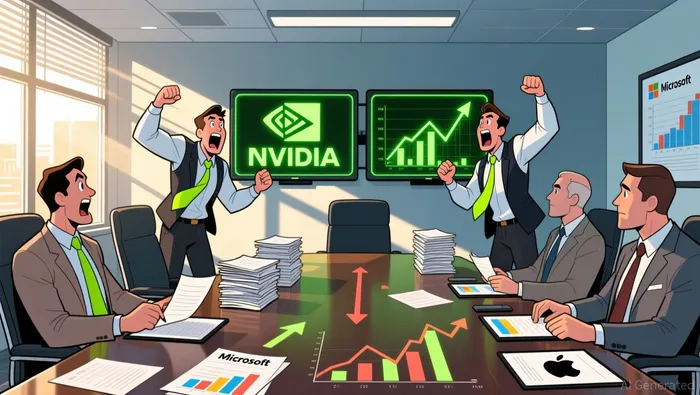
The New Alignment: Microsoft and Apple as AI Infrastructure Plays
Thiel's new core is a bet on AI's real plumbing, not its hype. The shift from Nvidia to Microsoft and Apple represents a classic smart-money pivot: away from pure-play speculation and into established platforms with concrete, near-term use cases. This is alignment of interest, not a chase for the next meme.
Microsoft is the clear infrastructure play. The fund's heavy weighting there-34% of the portfolio-targets Azure, the cloud engine that powers its exclusive deal with OpenAI. While Microsoft's recent financials were soft, the long-term growth in its software and cloud businesses is undeniable. Thiel's move here is a bet on the durable, recurring revenue of enterprise AI infrastructure. It's the opposite of a speculative chip run; it's about owning the essential platform.
Apple's inclusion is more nuanced but equally strategic. The fund's 27% stake is anchored by a recent, concrete decision: Apple's selection of Alphabet's Gemini models to bring AI to its voice assistant, Siri. This isn't about Apple leading the AI race; it's about leveraging proven technology to quickly deploy a feature that could drive user engagement and services revenue. For Thiel, who has long warned that AI's hype cycle runs far ahead of its real economics, this is a pragmatic play. It's using AI as a tool to enhance an existing, cash-generative ecosystem, not betting on unproven in-house innovation.
Together, these holdings form a new alignment. They are megacaps with massive cash flows, proven cloud platforms, and immediate AI applications. This is the smart money's answer to the AI frenzy: take the profits from the speculative run, and reinvest in the companies that will actually build and profit from the infrastructure. The exit from Nvidia was a clean break from the hype. The new core is a bet on the slow, steady work of making AI real.
Insider Context: Skin in the Game vs. Public Position
The smart money's public trades tell one story, but the real signal is in the personal holdings. While Thiel Macro sold its entire Nvidia position, the billionaire himself still owns over 3% of Palantir, a company deeply embedded in defense AI. This divergence is a classic conflict of interest. The fund is cutting its speculative tech bets, but Thiel's personal wealth remains heavily tied to a single, volatile AI play.
The numbers on his Palantir sales are stark. Since 2021, he has sold 48.6 million shares for an estimated $1.5 billion. That's not a lack of conviction; it's a steady, strategic exit from a core holding. His most recent trade, a sale of 4 million shares in September 2024, was part of a concentrated selling spree that included multiple sales of over 4 million shares in a single week. This is skin in the game being reduced, not increased.
So what's the true alignment? It's not a bet on Palantir's future. It's a bet on the cash flow from that future. The billions he's already taken off the table fund his new, more conservative portfolio. His personal holdings now represent a smaller slice of his net worth, which is estimated at over $8 billion. The fund's move into Microsoft and Apple is a public, high-conviction bet on AI infrastructure. His personal moves are a private, high-conviction bet on liquidity and diversification. The smart money is moving to the platform. Thiel is moving to cash.
What to Watch: Catalysts and Risks for the Thesis
The smart money has spoken. Thiel Macro's exit from Nvidia and its pivot to Microsoft and Apple is a clear signal. But for the thesis to hold, we need to see the real-world mechanics play out. The next catalysts are concrete: Microsoft's Azure revenue growth and Apple's Siri rollout.
Microsoft is the infrastructure bet. The fund's 34% weighting hinges on Azure's ability to deliver. Watch the next earnings reports for hard numbers on cloud growth. If Azure continues to scale, it validates the move. If it stalls, the thesis cracks. The fund's recent buying at a lower price point suggests it sees value, but the proof is in the quarterly numbers.
Apple's role is more about execution. The company's recent financials were strong, but its AI strategy is a gamble. The key is the rollout of Alphabet's Gemini models into Siri. This isn't about leading the AI race; it's about quickly deploying a feature to boost engagement. Monitor user feedback and any impact on services revenue. A successful integration would show the fund's bet on leveraging proven tech is working. A botched rollout would highlight the risk of relying on others.
Then there's the fund's own future moves. Thiel Macro's 13F filings are the only window into its trades. Any future purchase of Nvidia or Tesla would be a major red flag, signaling a tactical shift back into the AI narrative. The fund's exit was emphatic, but it's not a permanent vow. The market's next correction could lure it back.
The biggest risk is that this was all tactical, not strategic. Thiel Macro's portfolio is tiny relative to his net worth, so this could be a short-term reallocation, not a fundamental change in view. If Nvidia's valuation corrects and the AI hype cycle resets, Thiel may re-enter the narrative. For now, the smart money is in the platform. But the real test is whether those platforms can deliver the growth to justify the bet.





Comentarios
Aún no hay comentarios