
Tharisa plc's Strategic Positioning for Growth in 2025 Under Vision 2030
Tharisa plc, a leading integrated resources group in the platinum group metals (PGM) and chrome concentrates sector, has positioned itself as a key player in the global transition to sustainable energy. As the company approaches the midpoint of its Vision 2030 roadmap, its 2025 strategic initiatives and operational performance offer a compelling case for long-term value creation. This analysis evaluates Tharisa's operational resilience, innovation pipeline, and financial readiness, drawing on recent disclosures to assess its alignment with broader industry trends and investor expectations.
Operational Resilience: A Foundation for Sustainable Growth
Tharisa's operational resilience is anchored in its cost-advantaged opencast mining operations and a robust balance sheet. During the Q4 2025 earnings call, CEO Phoevos Pouroulis emphasized the company's ability to maintain profitability amid volatile commodity markets, citing "a strong balance sheet that supports strategic ambitions". This financial flexibility allows Tharisa to navigate cyclical downturns while investing in long-term projects.
The company's operational efficiency is further bolstered by its integrated value chain, spanning exploration, mining, processing, and logistics. This vertical integration reduces exposure to supply chain disruptions and enhances margins, a critical advantage in the PGM sector, where input costs can fluctuate sharply. According to the 2025 Sustainability Report, Tharisa's focus on "redefining resources" includes optimizing existing assets, such as the Tharisa Mine in South Africa and the Karo Platinum Project in Zimbabwe, to maximize output while minimizing environmental impact.
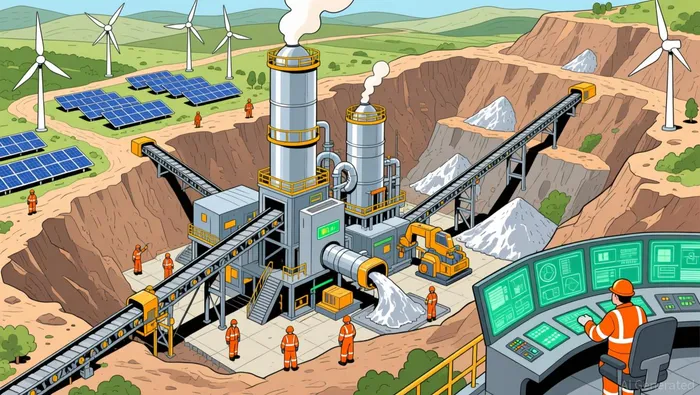
Innovation: Commercializing Technology for a Low-Carbon Future
Innovation is a cornerstone of Tharisa's Vision 2030, with a dual focus on technological advancement and sustainability. The company has prioritized the commercialization of proprietary technologies, including its iron chromium redox flow battery initiative under the Redox One project. This innovation aligns with global decarbonization goals and positions Tharisa to capitalize on the growing demand for clean energy storage solutions.
Additionally, Tharisa is expanding its research capabilities, particularly in Germany, to develop integrated processing methods that enhance resource recovery and reduce waste. The 2025 Sustainability Report highlights the company's commitment to reducing carbon emissions by 30% by 2030 and achieving net carbon neutrality by 2050. These targets are not merely aspirational; they are underpinned by concrete projects, such as the adoption of low-carbon technologies in mining operations and the exploration of circular economy models.
Financial Readiness: Balancing Shareholder Returns and Strategic Investment
Tharisa's financial strategy for 2025 reflects a disciplined approach to capital allocation. The company remains committed to delivering "superior returns for shareholders" while reinvesting in growth opportunities. This balance is evident in its dividend policy and debt management, which prioritize stability without sacrificing expansion potential.
The Q4 2025 earnings call underscored the importance of maintaining a strong liquidity position, with the CEO noting that Tharisa's balance sheet provides "headroom to pursue strategic acquisitions and high-impact projects". This financial readiness is particularly relevant in the context of Vision 2030, which requires significant investment in innovation and sustainability initiatives. By aligning capital expenditures with long-term value drivers-such as the transition to a low-carbon economy-Tharisa is positioning itself to outperform peers in both profitability and ESG metrics.
Conclusion: A Strategic Framework for Long-Term Value Creation
Tharisa plc's strategic positioning in 2025 demonstrates a clear alignment with the objectives of Vision 2030. Its operational resilience, driven by cost efficiency and vertical integration, provides a stable foundation for navigating market volatility. Meanwhile, its innovation pipeline-spanning clean energy technologies and sustainable mining practices-ensures relevance in a rapidly evolving industry. Financially, the company's disciplined approach to capital allocation and debt management reinforces its ability to deliver consistent returns while funding transformative projects.
For investors, Tharisa represents a rare combination of traditional resource-sector strengths and forward-looking innovation. As the global economy pivots toward sustainability, companies that can bridge the gap between profitability and environmental stewardship will be best positioned to thrive. Tharisa's 2025 performance and strategic clarity suggest it is well on its way to becoming one of them.







Comentarios
Aún no hay comentarios