
Thailand Picks Central Bank Board Chair After Contentious Search
Generado por agente de IAHarrison Brooks
viernes, 28 de febrero de 2025, 5:17 am ET1 min de lectura
KITT--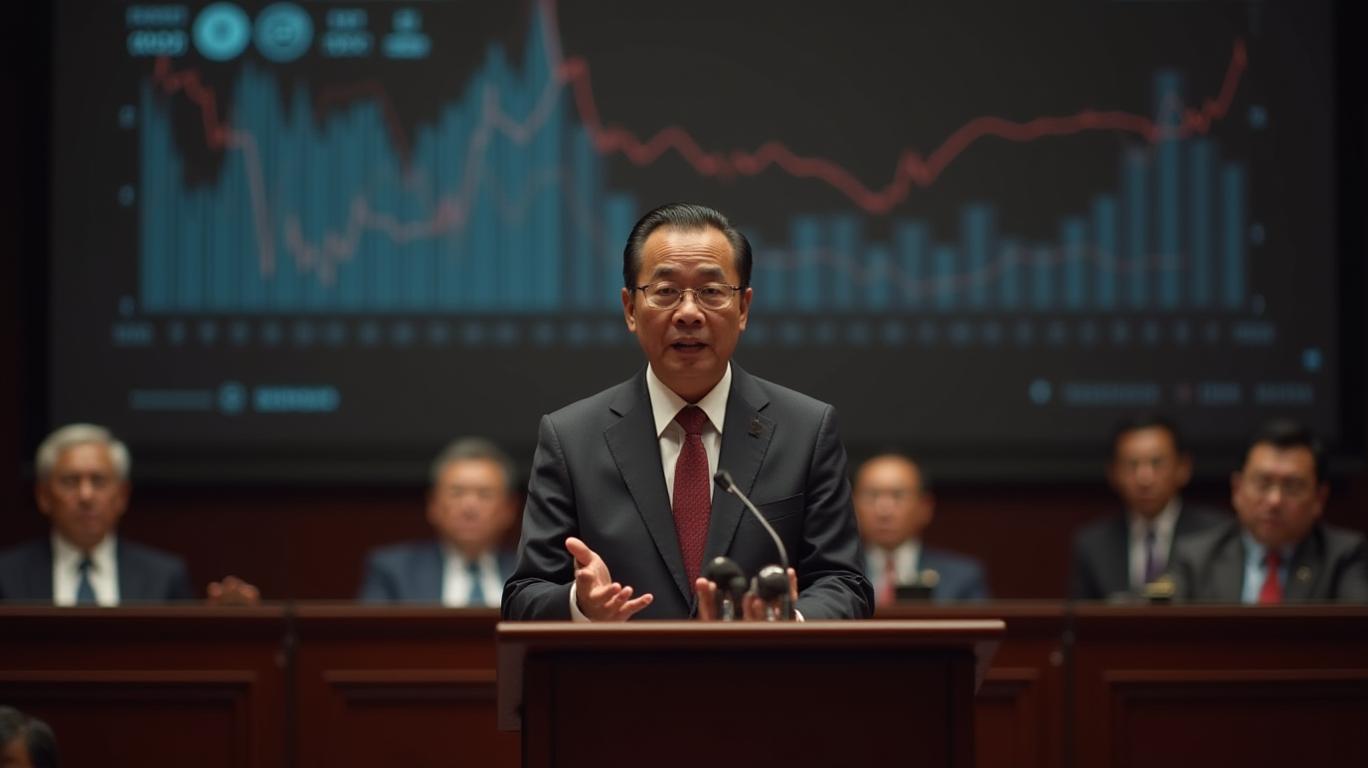
Thailand's finance minister has announced the appointment of KittirattKITT-- Na-Ranong as the new chairman of the Bank of Thailand (BOT) board, following a contentious search process. The appointment, which was approved by the cabinet, has raised concerns over the central bank's independence and credibility, given Kittiratt's previous political ties.
Kittiratt, a former finance minister and advisor to a former prime minister associated with the ruling party, was initially nominated for the position in December 2022. However, his appointment was deemed unsuitable by the Office of the Council of State due to his political ties, which could potentially compromise the central bank's independence and decision-making process.
The finance minister, who also serves as deputy prime minister, has until mid-January to finalize the appointment. After cabinet approval, the appointment still needs royal endorsement. Kittiratt would replace a predecessor whose term ended on September 16, 2022.
The appointment of Kittiratt has sparked concerns among former central bank chiefs and economists, who argue that the appointment of someone with political links would cause irreparable damage to the institution's credibility. They fear that the central bank's decisions may be influenced by political interests, rather than economic fundamentals.
Pipat Luengnaruemitchai, chief economist at Kiatnakin Phatra Securities, acknowledged the potential benefits of the initiative but noted that outdated laws and restrictive regulations remain significant obstacles. He pointed to the robust legal frameworks and judicial systems in established financial centers such as Singapore and Hong Kong, stressing the need for Thailand to open its financial sector to foreign competition.
Pacharapoj Nantaramas, executive vice president and chief economist at Krungthai Bank, supported a "sandbox" approach to test various financial models and recommended streamlining processes for businesses and skilled workers relocating to Thailand. He cautioned that incentives for attracting foreign investment should be carefully balanced to avoid placing undue strain on public finances.
Burin Adulwattana, managing director and chief economist at Kasikorn Research Center, compared the initiative to the creation of a special economic zone for finance. He indicated that while initial restrictions on competition may limit immediate gains, full liberalization and open competition are essential for increasing financial flows, boosting tax revenue, retaining talent, and creating jobs.
The Financial Business Centre Act represents a strategic effort by the Thai government to position the country as a key financial center in the region by addressing structural and regulatory challenges. As Thailand moves forward with this legislation plan, stakeholders will need to closely monitor the development of the Act to resolve outstanding uncertainties and ensure alignment with existing regulatory systems.
Thailand's finance minister has announced the appointment of KittirattKITT-- Na-Ranong as the new chairman of the Bank of Thailand (BOT) board, following a contentious search process. The appointment, which was approved by the cabinet, has raised concerns over the central bank's independence and credibility, given Kittiratt's previous political ties.
Kittiratt, a former finance minister and advisor to a former prime minister associated with the ruling party, was initially nominated for the position in December 2022. However, his appointment was deemed unsuitable by the Office of the Council of State due to his political ties, which could potentially compromise the central bank's independence and decision-making process.
The finance minister, who also serves as deputy prime minister, has until mid-January to finalize the appointment. After cabinet approval, the appointment still needs royal endorsement. Kittiratt would replace a predecessor whose term ended on September 16, 2022.
The appointment of Kittiratt has sparked concerns among former central bank chiefs and economists, who argue that the appointment of someone with political links would cause irreparable damage to the institution's credibility. They fear that the central bank's decisions may be influenced by political interests, rather than economic fundamentals.
Pipat Luengnaruemitchai, chief economist at Kiatnakin Phatra Securities, acknowledged the potential benefits of the initiative but noted that outdated laws and restrictive regulations remain significant obstacles. He pointed to the robust legal frameworks and judicial systems in established financial centers such as Singapore and Hong Kong, stressing the need for Thailand to open its financial sector to foreign competition.
Pacharapoj Nantaramas, executive vice president and chief economist at Krungthai Bank, supported a "sandbox" approach to test various financial models and recommended streamlining processes for businesses and skilled workers relocating to Thailand. He cautioned that incentives for attracting foreign investment should be carefully balanced to avoid placing undue strain on public finances.
Burin Adulwattana, managing director and chief economist at Kasikorn Research Center, compared the initiative to the creation of a special economic zone for finance. He indicated that while initial restrictions on competition may limit immediate gains, full liberalization and open competition are essential for increasing financial flows, boosting tax revenue, retaining talent, and creating jobs.
The Financial Business Centre Act represents a strategic effort by the Thai government to position the country as a key financial center in the region by addressing structural and regulatory challenges. As Thailand moves forward with this legislation plan, stakeholders will need to closely monitor the development of the Act to resolve outstanding uncertainties and ensure alignment with existing regulatory systems.

Divulgación editorial y transparencia de la IA: Ainvest News utiliza tecnología avanzada de Modelos de Lenguaje Largo (LLM) para sintetizar y analizar datos de mercado en tiempo real. Para garantizar los más altos estándares de integridad, cada artículo se somete a un riguroso proceso de verificación con participación humana.
Mientras la IA asiste en el procesamiento de datos y la redacción inicial, un miembro editorial profesional de Ainvest revisa, verifica y aprueba de forma independiente todo el contenido para garantizar su precisión y cumplimiento con los estándares editoriales de Ainvest Fintech Inc. Esta supervisión humana está diseñada para mitigar las alucinaciones de la IA y garantizar el contexto financiero.
Advertencia sobre inversiones: Este contenido se proporciona únicamente con fines informativos y no constituye asesoramiento profesional de inversión, legal o financiero. Los mercados conllevan riesgos inherentes. Se recomienda a los usuarios que realicen una investigación independiente o consulten a un asesor financiero certificado antes de tomar cualquier decisión. Ainvest Fintech Inc. se exime de toda responsabilidad por las acciones tomadas con base en esta información. ¿Encontró un error? Reportar un problema


SOBRE NOSOTROS
Nuestra historiaAutores de noticiasBase de conocimientosPolítica de privacidadTérmino de usoDescargo de responsabilidad de corretaje de tercerosTérminos de uso de AIMEDivulgaciones de riesgos de AInvest AICarrerasCONTÁCTENOS
Email: support@ainvest.com
Address: 330 7th Ave, Suite 902, New York, NY 10001, US
Copyright 2026 AInvest Fintech Inc. All rights reserved.


Comentarios
Aún no hay comentarios