
Thailand's Evolving Crypto ETF Landscape: Regulatory Momentum and Diversification Beyond Bitcoin
Regulatory Momentum: A Framework for Growth
Thailand's regulatory momentum in 2025 has been marked by a dual focus on investor protection and market expansion. In January 2025, the SEC amended rules to allow mutual funds targeting ultra-high net worth investors to allocate unlimited capital to crypto ETFs, while capping retail investor exposure at 5% of net asset value (NAV) in crypto-linked products, as noted in a JU blog post. This distinction acknowledges the risk profiles of different investor segments while encouraging institutional participation.
Simultaneously, the government has intensified enforcement actions against unregulated platforms. By June 2025, five major exchanges-Bybit, CoinEx, OKX, 1000X, and XT.COM-were blocked for operating without licenses, according to a Coinpedia report. These actions align with the Royal Decree on Measures to Prevent and Suppress Technology Crimes (No. 2), which empowers authorities to block unlicensed platforms and enforce KYC/AML compliance, as explained by AIM Bangkok.
A cornerstone of Thailand's strategy is the five-year capital gains tax exemption for transactions on licensed platforms, effective from 2025 to 2029, as detailed by Mahanakorn Partners. This incentive aims to stimulate trading activity and attract foreign capital, particularly as the country tests crypto payments in Phuket and explores stablecoins backed by government bonds, according to The Crypto Basic.
Diversification Beyond Bitcoin: Expanding the Crypto ETF Universe
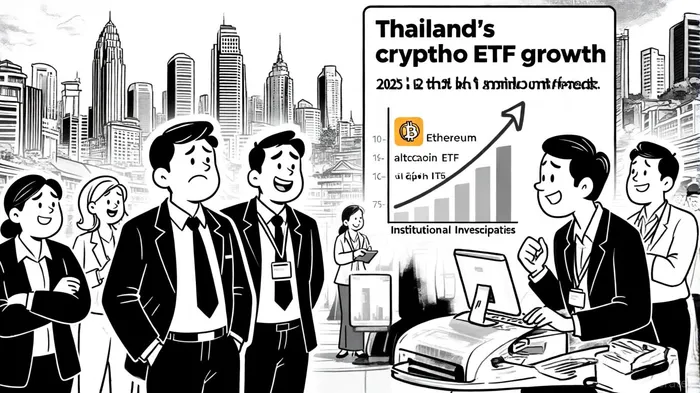
While Bitcoin has dominated global crypto ETF discourse, Thailand's regulators are prioritizing diversification. The SEC has announced plans to launch domestic ETFs that include a broader basket of digital assets, moving beyond Bitcoin to encompass EthereumETH--, SolanaSOL--, and other altcoins, the regulator said in a Bloomberg report. This shift mirrors global trends, where products like the Grayscale Digital Large Cap Fund-offering exposure to Bitcoin, Ethereum, and altcoins-have gained traction, as noted in CCN's ETF watchlist.
Thailand's first Ethereum ETF, the MFC Ethereum ETF Tracker Fund (METHETF-UI), has already been introduced, leveraging the iShares Ethereum Trust ETF as a U.S.-based vehicle, according to a Khao24 report. This product caters to institutional and high-net-worth investors, providing a regulated pathway to Ethereum exposure. Meanwhile, the SEC is evaluating proposals for spot Bitcoin ETFs, which could debut in 2025, as Cointelegraph reports.
The regulatory sandbox program, including initiatives like TouristDigiPay, underscores Thailand's commitment to innovation. By enabling tourists to use crypto-linked credit cards for local transactions, the government is not only testing real-world use cases but also normalizing digital assets for mainstream adoption, as the JU blog noted.
Global Context and Regional Competition
Thailand's efforts are part of a broader regional race to dominate the crypto landscape. Singapore and Hong Kong have already established themselves as crypto-friendly jurisdictions, but Thailand's combination of regulatory clarity, tax incentives, and strategic pilot programs positions it as a formidable contender. The country's focus on altcoin ETFs and stablecoin integration aligns with global demand for diversified crypto exposure, particularly as institutional investors seek alternatives to Bitcoin's volatility, as observed by Fresh Crypto Insights.
However, challenges remain. Legal uncertainties around custody solutions and cross-border compliance persist, requiring further collaboration between regulators and market participants. Additionally, while the tax exemption for 2025–2029 is a strong incentive, it may create short-term distortions in market behavior, a point Mahanakorn Partners highlighted.
Future Outlook: A Hub for Digital Asset Innovation
Thailand's crypto ETF landscape is poised for rapid growth, driven by regulatory clarity, tax incentives, and a focus on diversification. As the SEC finalizes rules for multi-asset ETFs and tests stablecoin-backed instruments, the country could emerge as a model for emerging markets seeking to balance innovation with investor protection.
For investors, the evolving ecosystem presents opportunities to access a regulated, tax-advantaged market with exposure to both Bitcoin and altcoins. However, due diligence remains critical, particularly as the sector navigates uncharted regulatory terrain.






Comentarios
Aún no hay comentarios