
Thailand's Competitiveness Crisis and Currency Dilemma: Strategic Risk Assessment for Foreign Investors in Southeast Asia
Thailand's position as a regional manufacturing and investment hub in Southeast Asia has long been underpinned by its strategic geography and pro-business policies. However, a confluence of economic and political challenges in 2025 has cast a shadow over its competitiveness, creating a complex risk landscape for foreign investors. This analysis examines Thailand's declining economic competitiveness, currency volatility, and the interplay of policy interventions, offering a framework for assessing strategic risks in a market that remains both alluring and fraught.
Competitiveness Decline: A Perfect Storm of External and Internal Pressures
According to a Reuters report, Thailand's central bank warned in early 2026 of a "sustained decline in competitiveness," driven by U.S. tariffs, a strong baht, and political uncertainty. These factors have eroded the country's export-driven growth model, which has historically been a cornerstone of its economic resilience. The 2025 IMD World Competitiveness Ranking, which places Switzerland, Singapore, and Hong Kong at the top, underscores the gap between Thailand and its regional peers, highlighting the critical role of government efficiency in maintaining competitiveness.
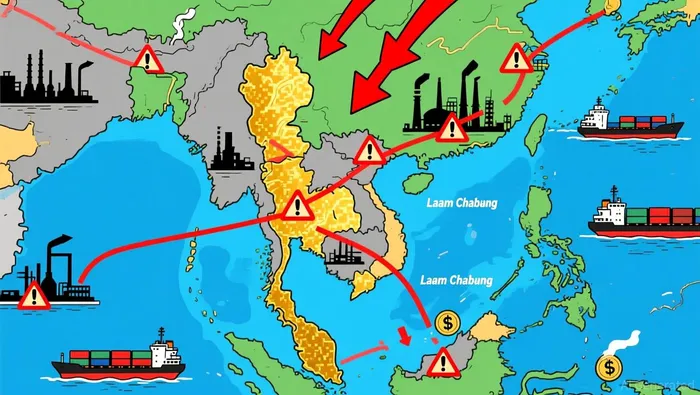 Political instability has further compounded the problem. Thailand's political landscape, marked by frequent leadership changes and policy reversals, has created uncertainty for investors. This instability undermines long-term planning and deters capital inflows, particularly in sectors requiring heavy infrastructure or regulatory approvals.
Currency Dilemma: The Baht's Double-Edged Sword
The Bank of Thailand's 2025 policy rate cut of 0.25 percentage points, aimed at stimulating economic recovery, has had unintended consequences. While the move sought to counter slowing growth, it exacerbated the appreciation of the baht against the U.S. dollar. A strong baht, while beneficial for importers and consumers, has hurt exporters-Thailand's largest economic sector-by making their goods less competitive globally.
Data from the Bank of Thailand indicates that headline inflation is projected to dip into negative territory in 2025 (-0.1%) due to lower energy prices and subdued demand. However, the central bank has signaled concerns about the baht's strength, which could further strain export industries and dampen foreign direct investment (FDI). The OECD has echoed these concerns, noting that structural reforms are essential to address competitiveness gaps and open services to foreign investors.
Investment Incentives vs. Regulatory Scrutiny
Despite these challenges, Thailand remains a magnet for foreign capital. The Board of Investment (BOI) continues to offer attractive incentives, including corporate tax exemptions and import duty waivers, to lure investors into advanced manufacturing, electric vehicles, and digital services. Pro-investment policies, such as streamlined approval processes and inter-agency coordination, have improved investor confidence.
However, increased FDI inflows have led to heightened regulatory scrutiny. Foreign investors must now navigate a more complex compliance landscape, with strict adherence to local laws and licensing requirements. The choice of entry structure-BOI-promoted companies, Thai-majority entities, or Treaty of Amity companies-has become a critical strategic decision, as each carries distinct legal and operational implications.
Strategic Recommendations for Foreign Investors
For investors considering Thailand, a nuanced risk assessment is essential. First, currency exposure must be hedged carefully. The baht's volatility, driven by both domestic policy and global trade dynamics, requires dynamic financial strategies to mitigate losses in export-oriented ventures. Second, political risk should be factored into long-term planning. Engaging with local stakeholders and diversifying supply chains can reduce vulnerability to policy shifts.
Third, leveraging BOI incentives while navigating regulatory hurdles demands a proactive approach. Investors should prioritize sectors aligned with Thailand's strategic priorities, such as EVs and green technology, where government support is most robust. Finally, structural reforms-such as improving labor productivity and digital infrastructure-will be critical for Thailand to regain its competitive edge. Investors who align with these reforms may find opportunities in a market poised for transformation.
Conclusion
Thailand's competitiveness crisis and currency dilemma present a paradox for foreign investors: a market with enduring strategic advantages but increasingly complex risks. While pro-investment policies and geographic centrality remain compelling, the interplay of a strong baht, political uncertainty, and global trade tensions demands a cautious, adaptive approach. For those willing to navigate these challenges, Thailand offers a unique blend of opportunity and resilience-but only for those who enter with a clear-eyed understanding of the risks.







Comentarios
Aún no hay comentarios