
Thailand’s $4.7B Infrastructure Play: A Hedge Against Trade Volatility
As the July 9, 2025, deadline looms for U.S. tariffs on Thailand, the government’s bold $4.7 billion reallocation to water management, transport infrastructure, and SME financing has positioned the nation as a strategic bet for investors seeking stability amid global trade turmoil. This reallocation isn’t merely fiscal prudence—it’s a masterstroke to insulate domestic growth from external shocks, while unlocking asymmetric upside in sectors primed for acceleration. 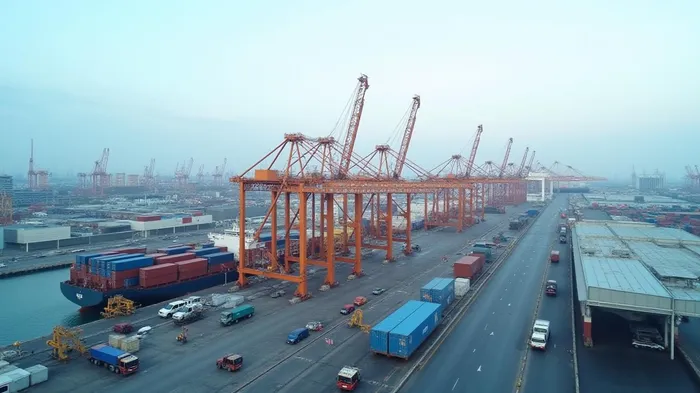
The Tariff Threat and Thailand’s Countermove
The U.S. has delayed but not abandoned its 37% ad valorem tariffs on all Thai exports until July 2025. For SMEs in water transport, maritime logistics, and related sectors, this deadline creates a “now or never” imperative to fortify supply chains. Thailand’s response? Redirect $4.7 billion to three pillars:
1. Water Management: Flood prevention and irrigation projects to boost agricultural resilience.
2. Transport Infrastructure: Upgrades to ports, railways, and roads to reduce reliance on U.S. markets.
3. SME Financing: Loans and guarantees to help businesses pivot toward regional trade hubs like Singapore and Vietnam.
This strategy isn’t just defensive—it’s a growth catalyst. By shielding SMEs and modernizing infrastructure, Thailand aims to redirect trade flows to Asia, where 70% of its exports already land. The result? A self-reinforcing cycle of domestic demand and foreign investment.
Sector-Specific Opportunities
1. Water Management: Floodgates of Growth
Thailand’s monsoon season and frequent flooding make water infrastructure critical. The $1.5 billion allocated here funds smart irrigation systems, flood barriers, and river restoration.
- Investment Play: Companies like Vejviri Public Company (SET: VEJV), a water utility giant, and Thai Water Engineering (TWE), which specializes in flood control, stand to benefit.
- Geopolitical Hedge: Water projects reduce vulnerability to agricultural trade disruptions, a key U.S. tariff target.
2. Transport Infrastructure: Ports as Profit Centers
The $2.5 billion transport allocation targets ports, railways, and digital logistics systems. Key projects include expanding the Laem Chabang port—Southeast Asia’s third-busiest—and integrating rail links with China’s Belt and Road Initiative (BRI).
- Investment Play: Thai Ports Authority (TPA) and Sansiri Logistics (SANSIRI) are well-positioned to capture rising demand for regional shipping.
- Risk Mitigation: Diversifying trade routes reduces exposure to U.S. maritime tariffs (up to 100% on cargo equipment), as 40% of Thai exports now transit through Chinese-linked ports.
3. SME Loans: Fueling the Engine of Growth
The $700 million SME financing package targets water transport, agriculture, and tech startups. This isn’t just liquidity—it’s a bid to create regional champions.
- Investment Play: Thai SME bonds (e.g., SCB SME Loan ABS) offer yields of 5–7%, while equity stakes in logistics firms like Flash Express (SET: FLASH) provide exposure to e-commerce growth.
The Geopolitical Calculus: Why Now?
Thailand’s reallocation is a preemptive strike against three risks:
1. U.S. Tariffs: The July 9 deadline forces SMEs to pivot quickly. Those unprepared face a 37% cost hike on exports.
2. Maritime Equipment Costs: Proposed U.S. tariffs of up to 100% on cargo cranes and containers could cripple Thai exporters. Diversifying supply chains to China or Vietnam via improved rail links mitigates this.
3. Debt Sustainability: Thailand’s public debt-to-GDP ratio (46%) remains manageable, but investors should monitor for shifts in risk appetite.
Why Invest Now?
The July deadline creates urgency for Thailand to accelerate spending. This is a “buy the dip” moment for:
- Infrastructure Equities: Thailand’s SET Infrastructure Index (SETINFRA) has underperformed the broader market by 15% in the past year but could rally 20–30% by late 2025 as projects break ground.
- Sovereign Bonds: Thai government bonds (YTM: 2.8%) offer a yield premium over U.S. Treasuries (2.3%) while benefiting from a weaker baht.
Risks to Monitor
- Delays in Project Execution: Bureaucratic hurdles could slow infrastructure rollouts.
- Geopolitical Tensions: A U.S.-China trade détente might reduce urgency for Thailand’s pivot to Asia.
- Global Recession: Weaker demand for Thai exports (electronics, seafood) could offset infrastructure gains.
Conclusion: A Structural Shift in Thailand’s Economy
Thailand’s $4.7 billion reallocation isn’t just fiscal stimulus—it’s a blueprint for decoupling from U.S. trade volatility. Investors who bet on infrastructure equities and bonds now will capture a dual tailwind: domestic growth acceleration and reduced exposure to external shocks. With less than 70 days until the tariff deadline, the window to position for Thailand’s infrastructure boom is narrowing fast.
Action Items:
1. Overweight Thai infrastructure stocks (TPA, VEJV).
2. Add Thai government bonds to fixed-income portfolios.
3. Monitor for catalysts.
The trade war’s endgame is uncertain, but Thailand’s pivot to self-reliance offers a clear path to alpha. Act before the July 9 deadline leaves the field crowded—and prices inflated.







Comentarios
Aún no hay comentarios