
Thai-U.S. Trade Deal: A Manufacturing Gamble with Big Rewards
The clock is ticking for Thailand and the U.S. to resolve their trade tensions before the July 9 deadline—and investors are betting big on whether a deal will avert a 36% tariff nightmare. This isn't just about tariffs; it's about who wins in automotive, energy, and agriculture—and who gets crushed if negotiations fail. Let's break down the opportunities, the risks, and how to play this like a pro.
The Automotive Sector: A High-Stakes Tariff Race

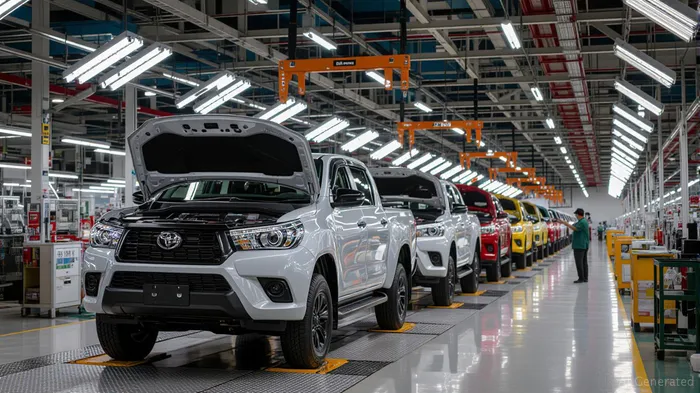
Thailand's automotive industry is on the line. A successful tariff reduction to 10% could add $2.3 billion to Thailand's GDP by making its pickup trucks and SUVs (think ToyotaTM-- Tundra, HondaHMC-- Ridgeline) cheaper than Vietnam's exports. But if the U.S. slaps a 36% tariff? Thailand's GDP could take a 1% hit, and automakers like Toyota Motor Manufacturing Thailand (TMMThailand) face a steep decline.
For U.S. investors, the play is upstream suppliers tied to Thailand's auto sector:
- Western Digital (WDC) and Seagate Technology (STX): Their hard disk drives are critical for automotive electronics. Lower tariffs mean smoother supply chains.
- Indirect beneficiaries: U.S. auto parts makers like TRW Automotive (TRW) or BorgWarner (BWA) could see orders rise if Thai automakers ramp up production.
Energy & LNG: Cheniere's Big Play
Thailand's pledge to buy $16 billion in U.S. LNG over 20 years is a goldmine for energy giants. Cheniere Energy (LNG) is front and center, with long-term contracts already inked. The company's stock has soared 30% since 2024 as investors bet on Thailand's commitment.
But don't overlook EQT Corporation (EQT). While its direct exposure is smaller, rising LNGLNG-- demand from Thailand and Southeast Asia could push natural gas prices higher, benefiting all U.S. producers.
Agriculture: ADM's Corn Windfall
Thailand's plan to replace $5 billion in South American corn imports with U.S. suppliers is a win for Archer-Daniels-Midland (ADM) and Cargill (CARG). Thai agribusiness giants like Charoen Pokphand Foods (CPF) rely on cheap U.S. corn for livestock feed—lower tariffs mean fatter margins for ADMADM--.
The Risks: Politics, Tariffs, and Transshipment
- Political instability: Thailand's Prime Minister faces suspension over ethics charges, adding chaos to negotiations. A leadership vacuum could delay deals or worsen terms.
- Deadline pressure: If no agreement by July 9, U.S. tariffs could spike to 35%, crushing sectors like textiles and electronics that rely on Chinese inputs.
- Transshipment fraud: The U.S. is cracking down on mislabeled goods. Firms like PTT Global Chemical must prove “rules of origin” compliance or face penalties.
The Playbook: ETFs to Buy or Short
- Optimistic scenario (Deal by July 9):
- Buy: The iShares MSCI Thailand ETF (THD) for broad exposure to Thai automakers and energy firms.
- Sector-specific: Global X FTSE Southeast Asia ETF (ASEA) for diversified regional plays.
Stock picks: Cheniere (LNG) and ADM are direct beneficiaries.
Pessimistic scenario (No deal):
- Short: THD and ASEA could crash if tariffs hit 36%.
- Hedge: Utilities ETFs (e.g., XLU) or gold (GLD) to offset trade war fallout.
Final Call: Go Long on Thai-U.S. Ties—But Beware the July 9 Drop-Dead Date
This isn't just about tariffs; it's about who controls Asia's manufacturing future. U.S. firms with Thai supply chain ties are primed to win—but investors must stay glued to the July 9 deadline. If talks stall, sell Thailand exposure. If a deal strikes, lean hard into LNG, agri, and auto suppliers.
“Don't be a fool—this is a game of inches. If you're in, be ready to pivot by July 9,” says the Street.
Invest wisely—and keep an eye on the clock.







Comentarios
Aún no hay comentarios