
Textron's Q3 2025 Earnings: Assessing Operational Resilience and Margin Sustainability Amid Macroeconomic Headwinds
Operational Resilience: A Mixed Bag of Performance
Textron's Q3 2025 results are expected to reflect a continuation of its mixed performance in recent quarters. While the company has exceeded bottom-line estimates in three of the past four quarters, it missed projections in Q2 2025, where net income fell 5.8% to $245 million despite a 5.4% revenue increase to $3.7 billion, according to Textron's Q2 2025 results. This volatility underscores the fragility of Textron's operating model in the face of sector-specific headwinds.
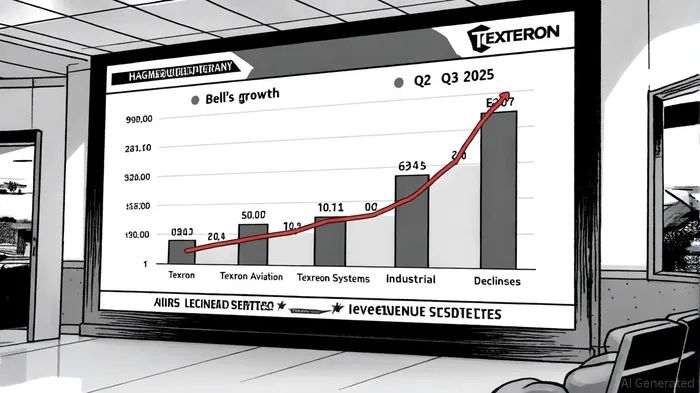
The Bell segment, however, remains a bright spot. In Q2 2025, Bell reported a 28% revenue increase, driven by growth in the MV-75 program and commercial helicopter demand, as noted by FinancialContent. This resilience is attributed to its robust defense backlog, which stands at a record $15 billion, according to SWOT Analysis, providing multi-year visibility. Conversely, the Industrial segment has struggled, with declining revenue and margin pressures linked to weak demand and inflationary costs, per StockInvest.
Margin Sustainability: Navigating Cost Pressures
Textron's operating margins have been under pressure, particularly in the Aviation segment. In Q2 2025, the company's profit margin fell to 6.6% from 7.4% in Q2 2024, primarily due to higher operating expenses, according to Yahoo Finance. Analysts project that Q3 2025 margins may remain constrained by supply chain bottlenecks and rising material costs, per Barchart. However, management has emphasized cost optimization strategies, including automation in manufacturing and predictive inventory models, to mitigate these challenges, as discussed in BeyondSPX.
The company's gross margin also declined slightly in Q2 2025 to 18.8% from 19.4% in Q2 2024, according to Simply Wall St, reflecting inflationary pressures. Textron's ability to pass on cost increases to customers, particularly in its defense-focused Bell segment, will be critical to sustaining margins. For instance, the FLRAA (Future Long-Range Assault Aircraft) program has bolstered Bell's backlog, offering pricing stability in a volatile market, according to InvestorShangout.
Macroeconomic Headwinds and Strategic Adaptation
Textron's Q3 2025 results will also be shaped by broader macroeconomic factors. The IAM union strike in the Aviation segment, which disrupted jet production in 2024, was documented by InvestorShangout and has had lingering effects on delivery timelines (see InvestorShangout's coverage). Additionally, inflation and rising interest rates have increased borrowing costs, though Textron's strong liquidity position (current ratio of 1.84) provides a buffer, according to Investing.com.
Management has prioritized diversification to counteract these risks. For example, the recent $5 million order for Cessna Skyhawk Veris simulators marks Textron's entry into the fixed-wing virtual training market, a move reported by MarketBeat. Furthermore, the company's focus on sustainable aviation technologies, including 100% Sustainable Aviation Fuel (SAF) development, aligns with long-term regulatory and market trends identified by SWOT Analysis.
Investor Implications and Outlook
While Textron's Q3 2025 results are expected to meet or slightly exceed estimates, the company's stock performance has lagged broader indices, with a 52-week gain of just 86 basis points, as noted by MarketBeat. This underperformance reflects investor skepticism about margin sustainability, particularly in the Industrial segment. However, the Bell segment's strength and Textron's $15 billion defense backlog identified by SWOT Analysis offer a compelling case for long-term resilience.
Analysts project full-year 2025 adjusted EPS of $6.11, an 11.5% increase from 2024, a projection earlier summarized by Barchart, but achieving this will require consistent execution across segments. If TextronTXT-- can stabilize its Aviation and Industrial divisions while leveraging Bell's growth, it may reposition itself as a resilient player in the industrial sector.
Conclusion
Textron's Q3 2025 earnings will serve as a litmus test for its operational resilience and margin sustainability. While the company faces headwinds from inflation, supply chain disruptions, and segment-specific challenges, its strategic focus on diversification, cost optimization, and high-margin defense programs provides a foundation for long-term stability. Investors should closely monitor management's commentary on capital allocation and innovation, as these will determine whether Textron can translate its backlog and market position into sustained profitability.





Comentarios
Aún no hay comentarios