
Texas Takes the Lead: Primacy Over Class VI CO2 Permits and the CCS Infrastructure Boom
The U.S. Environmental Protection Agency's (EPA) April 2025 Memorandum of Agreement Addendum 2 (MOA) with Texas's Railroad Commission (RRC) marks a pivotal moment in the carbon capture and storage (CCS) sector. By granting Texas regulatory primacy over Class VI CO₂ injection permits—a first in EPA Region 6—the state is poised to accelerate CCS project timelines, leverage federal subsidies, and establish itself as a leader in decarbonization infrastructure. For investors, this regulatory shift presents a high-growth opportunity, though risks such as seismic activity and regulatory hurdles demand careful navigation.
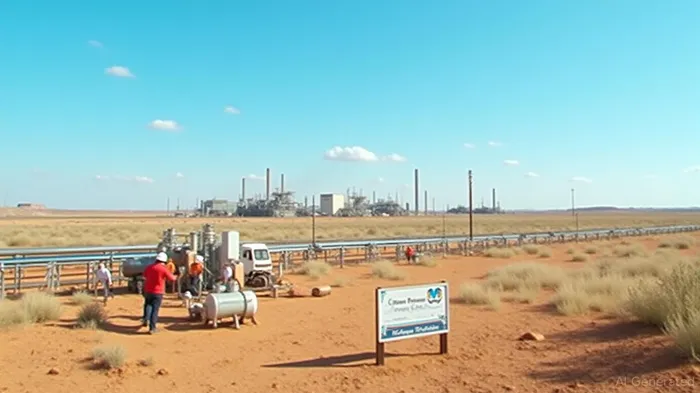
Regulatory Primacy: A Catalyst for Project Acceleration
Texas's primacy status, expected to take effect by late 2025 (pending EPA finalization), allows the RRCRRC-- to assume full permitting authority for Class VI wells. This eliminates the bureaucratic lag of federal oversight, enabling faster approvals for CO₂ injection projects. The April 2025 MOA also signals the RRC's readiness to manage technical reviews, public engagement, and enforcement—a critical step for Texas's ambitions to host 40% of U.S. CCS capacity by 2035.
The RRC's streamlined process could cut permit issuance times by up to 6 months compared to federal timelines. This efficiency is already visible: in April 2025, the EPA issued its first Class VI permits in Texas to Oxy Low Carbon Ventures for wells in Ector County, storing 722,000 metric tons of CO₂ annually. Early movers like Oxy (OXY) stand to benefit from both primacy and the 45Q tax credit, which now offers up to $180/ton of captured CO₂ under the Inflation Reduction Act.
Subsidy Synergy: Federal Dollars Meet State Ambition
The confluence of Texas primacy and federal incentives creates a potent tailwind. The 45Q credit, which has already spurred over $10 billion in CCS projects nationwide, will see increased utilization as Texas's permitting pipeline clears. For firms like Kinder Morgan (KMG), which operates CO₂ pipelines, and engineering firms such as Bechtel, this means expanded opportunities in infrastructure development.
Texas's geology—a vast Permian Basin and depleted oil fields—also aligns with the technical requirements of CCS. The RRC's mandate to prioritize public engagement and environmental safeguards (despite omitting environmental justice provisions in the final MOA) ensures projects balance growth with community trust, reducing long-term liabilities.
Risks: Seismic Activity and Regulatory Uncertainty
While primacy accelerates projects, risks persist. Induced seismicity from CO₂ injection—a concern in Oklahoma and Kansas—could delay or halt projects if not mitigated by rigorous geologic assessments. Additionally, environmental groups may challenge the EPA's primacy approval, as seen in Louisiana's drawn-out process.
The absence of environmental justice provisions in the MOA also raises reputational risks for firms operating in marginalized communities. Early adopters must embed ESG practices into project designs to preempt backlash and ensure compliance with evolving standards.
Investment Playbook: Targeting the CCS Value Chain
- Engineering & Construction: Firms like Fluor (FLR) and AECOM (ACM) with CCS expertise will profit from design and permitting contracts.
- Midstream Infrastructure: Kinder Morgan (KMG) and Denbury Resources (DNR) benefit from CO₂ transport demand.
- Technology Providers: Companies offering monitoring tools (e.g., 4C Analytics) or carbon capture tech (e.g., Carbon Clean Solutions) can capitalize on stricter regulatory requirements.
- State-Backed Funds: Texas's Emerging Technology Fund (ETF) may back startups in this space; investors could track ETF allocations.
Conclusion: A Nascent Market with First-Mover Rewards
Texas's primacy over Class VI permits transforms the state into a testing ground for CCS scalability. While seismic risks and regulatory hurdles exist, the alignment of federal subsidies, geologic assets, and streamlined permitting positions Texas-based firms to dominate a $150 billion global CCS market by 2030. Investors should prioritize companies with early project wins, strong ESG frameworks, and partnerships with Texas regulators. The race to decarbonize is on—and Texas is leading the charge.
Final caveat: Monitor the EPA's final rule publication (anticipated Q4 2025) and any legal challenges post-primacy to time investments effectively.





Comentarios
Aún no hay comentarios