
Texas Becomes First US State to Authorize Bitcoin Reserve
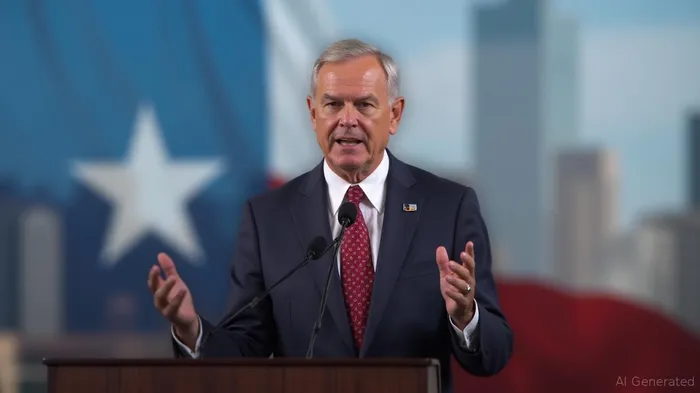
Texas has become the first state in the U.S. to legally authorize the creation of its own Bitcoin reserve, funded by taxpayer dollars. Governor Greg AbbottABT-- signed Senate Bill 21, which allows the state to purchase and hold Bitcoin and other top-tier cryptocurrencies. This legislation passed both the Texas House and Senate with wide margins, empowering the state comptroller to start building the reserve immediately.
The Texas Bitcoin reserve is a significant move that contrasts sharply with the federal government's approach. While the Trump administration announced the formation of a “Strategic Bitcoin Reserve,” the federal initiative is more constrained. The federal reserve is built entirely from Bitcoin seized in criminal investigations and cannot be expanded unless the purchases are “budget-neutral.” This means the federal government will not be buying new Bitcoin anytime soon; it is simply freezing what it has already seized.
Proponents of the Texas bill, including Lieutenant Governor Dan Patrick and State Senator Charles Schwertner, argue that Bitcoin's decentralized nature and fixed supply make it an ideal store of value for the long term. They also point to Bitcoin’s ten-year performance record and growing institutional adoption as reasons to allocate a small but symbolic slice of the state’s rainy day funds. The Comptroller’s office will hold and manage the Texas reserve, with input from a five-member advisory board. Funding for the reserve can come from legislative appropriations, investment earnings, and private donations.
Critically, the law gives the state authority to actively buy and manage Bitcoin, including holding it as an asset and potentially disposing of it strategically. Some proponents argue that future returns could be generated through yield-bearing mechanisms such as staking or lending, though the bill itself does not explicitly authorize those functions.
With its Economic Stabilization Fund, commonly known as the “Rainy Day Fund,” projected to hold between $24 billion and $28.5 billion in 2025, Texas could feasibly allocate hundreds of millions to Bitcoin purchases without putting its fiscal position at risk. At current market prices, a 1% allocation (roughly $240-$285 million) could net the state around 2,400 to 2,800 BTC. A more aggressive 5% allocation would bring in up to 14,000 coins, making Texas one of the largest sovereign holders of Bitcoin globally.
For comparison, the federal government currently holds approximately 218,000 BTC, based on recent blockchain analytics, though nearly all of it came from seizures rather than purchases. With SB 21 now law, the Texas Comptroller’s office is expected to outline implementation procedures by the end of the fiscal year. Meanwhile, companion legislation (HB 4488) will protect the reserve from being swept into the state treasury for unrelated uses.
As Washington and Austin pursue divergent paths on handling Bitcoin, Texas may now become the first U.S. state to hold the cryptocurrency not because it had to, but because it chose to. This move underscores Texas's commitment to embracing innovative financial technologies and positioning itself as a leader in the crypto space. The state's proactive approach contrasts with the federal government's more cautious stance, highlighting the potential for state-level initiatives to drive broader adoption and acceptance of cryptocurrencies.






Comentarios
Aún no hay comentarios