
Texas Refineries Face Emission Challenges: Marathon and Flint Hills Report Events
Generado por agente de IAClyde Morgan
miércoles, 5 de marzo de 2025, 5:19 pm ET2 min de lectura
MPC--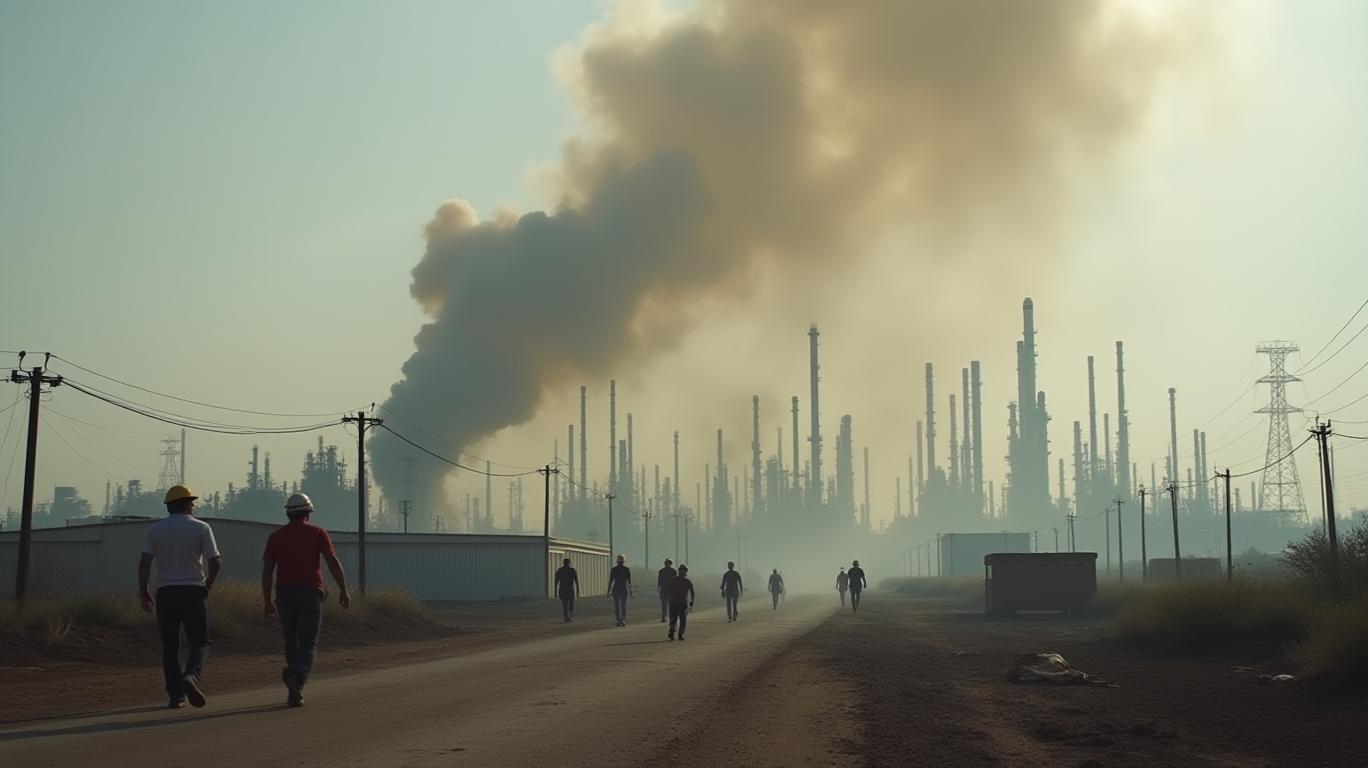
Marathon Petroleum's 665,000 b/d Galveston Bay and Flint Hills Resources' 350,000 b/d Corpus Christi refineries reported emissions events on Tuesday, March 6, 2025, in Wednesday filings with the Texas Commission on Environmental Quality (TCEQ). MarathonMPC-- reported a "mist" leaking from its 501E reflux tower at a resid hydrotreating unit, resulting in emissions of harmful substances, including volatile organic compounds (VOCs). The event lasted for about two hours. The company isolated the tower and placed the unit on standby to stop the leak. Flint Hills reported an unspecified "power blink" that triggered flaring for nearly three hours.
These emission events highlight the ongoing challenges faced by refineries in Texas, particularly in managing VOCVOC-- emissions. Marathon's Galveston Bay refinery, for instance, has seen its average benzene emissions steadily increase since 2018, with 2021 levels more than double the federal limit. Approximately 37,000 people live within 3 miles of the refinery, with about 62% being people of color, according to EPA data. Long-term exposure to benzene emissions has been linked to blood disorders, damage to reproductive organs, and fetuses.
Community and environmental advocates in Texas have expressed concerns about the disproportionate impact of these emissions on communities of color. John Beard, the executive director of the Port Arthur Community Action Network, stated, "Emissions of benzene are dangerous for life and health." The EPA has been collecting hazardous air pollution data from refineries since 2018, requiring more than 100 U.S. refineries to monitor and report levels of benzene along the perimeters of their facilities. This data has shown that some refineries have seen benzene pollution get worse over time, highlighting the need for continued monitoring and stricter regulations to protect the health of surrounding communities.
The TCEQ plays a crucial role in regulating and enforcing emission standards in Texas. However, the effectiveness of the TCEQ in addressing these issues has been called into question. The Environmental Integrity Project (EIP) analysis of refinery data from 2021 revealed that five Texas refineries, including Marathon's Galveston Bay refinery and Flint Hills' Corpus Christi East refinery, exceeded federal pollution limits for the carcinogenic chemical benzene. This indicates that the TCEQ's enforcement of emission standards may not be sufficient to prevent refineries from exceeding pollution limits.
In conclusion, the emission events at Marathon's Galveston Bay and Flint Hills' Corpus Christi refineries underscore the ongoing challenges faced by Texas refineries in managing VOC emissions, particularly benzene. While some steps are being taken to address these concerns, such as increased monitoring and efforts to reduce emissions, more needs to be done to protect the health and well-being of surrounding communities, particularly those with a higher concentration of people of color. The TCEQ's role in regulating and enforcing emission standards is crucial, but its effectiveness in addressing these issues has been called into question. Stricter regulations and more robust enforcement may be necessary to ensure the safety and well-being of Texas communities.
VOC--
Marathon Petroleum's 665,000 b/d Galveston Bay and Flint Hills Resources' 350,000 b/d Corpus Christi refineries reported emissions events on Tuesday, March 6, 2025, in Wednesday filings with the Texas Commission on Environmental Quality (TCEQ). MarathonMPC-- reported a "mist" leaking from its 501E reflux tower at a resid hydrotreating unit, resulting in emissions of harmful substances, including volatile organic compounds (VOCs). The event lasted for about two hours. The company isolated the tower and placed the unit on standby to stop the leak. Flint Hills reported an unspecified "power blink" that triggered flaring for nearly three hours.
These emission events highlight the ongoing challenges faced by refineries in Texas, particularly in managing VOCVOC-- emissions. Marathon's Galveston Bay refinery, for instance, has seen its average benzene emissions steadily increase since 2018, with 2021 levels more than double the federal limit. Approximately 37,000 people live within 3 miles of the refinery, with about 62% being people of color, according to EPA data. Long-term exposure to benzene emissions has been linked to blood disorders, damage to reproductive organs, and fetuses.
Community and environmental advocates in Texas have expressed concerns about the disproportionate impact of these emissions on communities of color. John Beard, the executive director of the Port Arthur Community Action Network, stated, "Emissions of benzene are dangerous for life and health." The EPA has been collecting hazardous air pollution data from refineries since 2018, requiring more than 100 U.S. refineries to monitor and report levels of benzene along the perimeters of their facilities. This data has shown that some refineries have seen benzene pollution get worse over time, highlighting the need for continued monitoring and stricter regulations to protect the health of surrounding communities.
The TCEQ plays a crucial role in regulating and enforcing emission standards in Texas. However, the effectiveness of the TCEQ in addressing these issues has been called into question. The Environmental Integrity Project (EIP) analysis of refinery data from 2021 revealed that five Texas refineries, including Marathon's Galveston Bay refinery and Flint Hills' Corpus Christi East refinery, exceeded federal pollution limits for the carcinogenic chemical benzene. This indicates that the TCEQ's enforcement of emission standards may not be sufficient to prevent refineries from exceeding pollution limits.
In conclusion, the emission events at Marathon's Galveston Bay and Flint Hills' Corpus Christi refineries underscore the ongoing challenges faced by Texas refineries in managing VOC emissions, particularly benzene. While some steps are being taken to address these concerns, such as increased monitoring and efforts to reduce emissions, more needs to be done to protect the health and well-being of surrounding communities, particularly those with a higher concentration of people of color. The TCEQ's role in regulating and enforcing emission standards is crucial, but its effectiveness in addressing these issues has been called into question. Stricter regulations and more robust enforcement may be necessary to ensure the safety and well-being of Texas communities.

Divulgación editorial y transparencia de la IA: Ainvest News utiliza tecnología avanzada de Modelos de Lenguaje Largo (LLM) para sintetizar y analizar datos de mercado en tiempo real. Para garantizar los más altos estándares de integridad, cada artículo se somete a un riguroso proceso de verificación con participación humana.
Mientras la IA asiste en el procesamiento de datos y la redacción inicial, un miembro editorial profesional de Ainvest revisa, verifica y aprueba de forma independiente todo el contenido para garantizar su precisión y cumplimiento con los estándares editoriales de Ainvest Fintech Inc. Esta supervisión humana está diseñada para mitigar las alucinaciones de la IA y garantizar el contexto financiero.
Advertencia sobre inversiones: Este contenido se proporciona únicamente con fines informativos y no constituye asesoramiento profesional de inversión, legal o financiero. Los mercados conllevan riesgos inherentes. Se recomienda a los usuarios que realicen una investigación independiente o consulten a un asesor financiero certificado antes de tomar cualquier decisión. Ainvest Fintech Inc. se exime de toda responsabilidad por las acciones tomadas con base en esta información. ¿Encontró un error? Reportar un problema


SOBRE NOSOTROS
Nuestra historiaAutores de noticiasBase de conocimientosPolítica de privacidadTérmino de usoDescargo de responsabilidad de corretaje de tercerosTérminos de uso de AIMEDivulgaciones de riesgos de AInvest AICarrerasCONTÁCTENOS
Email: support@ainvest.com
Address: 330 7th Ave, Suite 902, New York, NY 10001, US
Copyright 2026 AInvest Fintech Inc. All rights reserved.


Comentarios
Aún no hay comentarios