
Texas Instruments: A Strategic Powerhouse in the Edge AI Era
The semiconductor industry's pivot toward artificial intelligence (AI) has reshaped competitive dynamics, with Texas InstrumentsTXN-- (TXN) carving a unique niche in the Edge AI segment. While companies like NVIDIA and AMD dominate high-performance computing (HPC) and data center markets, TI has strategically positioned itself as a foundational enabler of decentralized AI applications. This analysis explores TI's competitive advantages, institutional investor sentiment, and long-term profitability in the context of the AI-driven semiconductor boom.
Strategic Positioning in Edge AI
Texas Instruments' focus on analog and embedded processing has positioned it as a critical player in the Edge AI revolution. The company's AM6xA series of vision processors and TMS320F28P55x real-time microcontrollers integrate neural processing units and advanced object detection capabilities, enabling low-power, real-time AI inference in industrial, automotive, and IoT applications. These solutions address key Edge AI requirements-latency reduction, power efficiency, and data privacy-making TI indispensable for sectors like autonomous vehicles and smart manufacturing according to analysis.
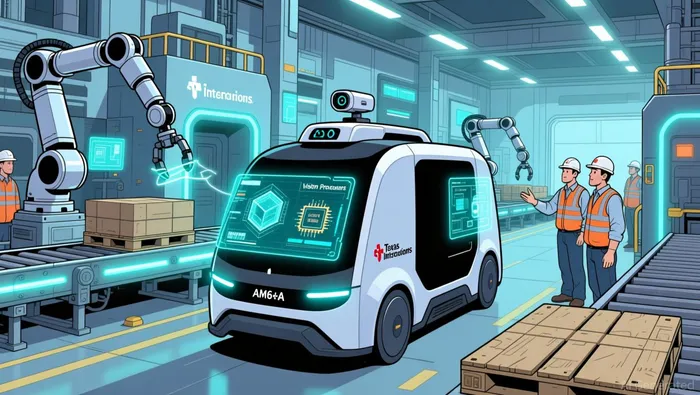 Unlike peers competing in the HPC domain, TI's strategy emphasizes cost-effective, reliable solutions for edge devices. Its analog and embedded processing expertise aligns with the growing demand for intelligent, connected systems in industrial and automotive markets, which are projected to drive long-term growth according to industry reports. This approach leverages TI's historical strengths while avoiding direct competition with high-margin AI accelerator manufacturers as research shows.
Institutional Investor Confidence
Institutional investors have shown renewed confidence in TI, with a 25% increase in ownership in 2025 according to market analysis. Major firms like GMO Capital and Jennison Associates have significantly upped their stakes, reflecting optimism about TI's vertical integration strategy. The completion of the SM1 fab in Sherman, Texas, and plans to achieve 95% internal manufacturing by 2030 have provided TI with a 40% cost advantage over competitors reliant on external foundries. This cost efficiency, combined with a 58% gross profit margin, has insulated TI from pricing pressures in a competitive market.
Moreover, TI's alignment with U.S. reshoring initiatives and its access to $4.6 billion in funding under the CHIPS and Science Act have further bolstered investor sentiment. Despite weaker performance in its embedded processing segment, TI's robust analog business-responsible for 79% of Q3 2025 revenue-has provided a stable foundation for growth.
Valuation Metrics and Competitive Landscape
TI's valuation metrics underscore its conservative yet resilient profile compared to AI-focused peers. As of December 2025, TI trades at a P/E ratio of 31.43, significantly lower than NVIDIA's 46.28 and AMD's 105.5. Its EV/EBITDA ratio of 20.36–21.13 (as of late 2025) also reflects a more moderate valuation than the lofty multiples of HPC leaders according to financial analysis. This disparity highlights TI's role as a "defensive" play in the semiconductor sector, offering stability amid the volatility of AI-driven growth stocks.
While NVIDIA's 55% net margin and 91.87% return on equity dwarf TI's 30.68% margin and 28.39% return on equity, TI's focus on Edge AI mitigates exposure to the cyclical risks of data center demand. Analysts project a median price target of $195/share by 2027, implying an 18% upside from current levels. This forecast assumes a gradual recovery in semiconductor demand and sustained efficiency from TI's 300mm wafer fab investments according to analyst projections.
Long-Term Profitability and Risks
TI's long-term profitability hinges on its ability to capitalize on Edge AI adoption in industrial and automotive markets. Its analog segment, which grew 16% year-over-year in Q3 2025, remains a cash flow engine, while its Edge AI initiatives position it to benefit from decentralized AI trends. However, limited exposure to the AI capital expenditure cycle poses a challenge compared to peers like NVIDIA, which are central to data center infrastructure according to a SWOT analysis.
Geopolitical tailwinds, including U.S. reshoring policies, could amplify TI's strategic advantages. Conversely, overcapacity risks and high depreciation costs from expanding manufacturing capacity may pressure margins in the near term. Investors must also weigh TI's slower growth trajectory against the explosive potential of HPC-focused rivals.
Conclusion
Texas Instruments' strategic focus on Edge AI, coupled with its manufacturing prowess and institutional investor backing, positions it as a resilient player in the semiconductor industry. While it may lack the high-growth allure of AI accelerators, its role in enabling decentralized AI applications ensures long-term relevance. For investors seeking stability and steady returns in an AI-driven market, TI offers a compelling balance of innovation and operational discipline.





Comentarios
Aún no hay comentarios