
Texas Data Centers and Semiconductor Demand: A $1 Billion+ Catalyst for Texas Instruments
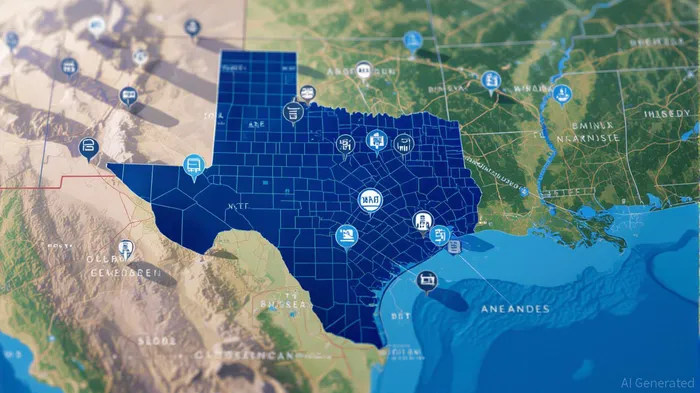
The rapid expansion of data centers in Texas has emerged as a defining trend of the 2020s, driven by the state's unique combination of low energy costs, business-friendly policies, and proximity to cutting-edge technology hubs. As of September 2025, Texas hosts 279 data centers, with the Dallas-Fort Worth (DFW) region alone accounting for 141 facilities and 591 MW of power demand—second only to Northern Virginia in the U.S. [1]. This surge is fueled by the rise of artificial intelligence (AI), cloud computing, and the digitization of industries, creating a cascading effect on semiconductor demand. For companies like Texas InstrumentsTXN-- (TI), the state's data center boom represents a $1 billion+ growth opportunity, positioning the semiconductor giant at the intersection of infrastructure innovation and energy-driven economic transformation.
The Data Center Boom: A Semiconductor Powerhouse
Data centers are among the most energy-intensive facilities in modern infrastructure, with large-scale operations consuming 100 MW or more. By the end of 2025, these facilities are projected to account for 10% of Texas' total electricity demand on the main grid [1]. This exponential growth is not just a local phenomenon but a global one, as tech giants and startups alike seek to capitalize on Texas' competitive advantages. The Stargate Project—a $500 billion initiative led by OpenAI, OracleORCL--, and SoftBank—plans to construct up to 20 data centers in the state, underscoring its strategic role in the AI infrastructure landscape [3].
Semiconductors form the backbone of these operations. Advanced computing hardware, including application-specific integrated circuits (ASICs) and high-performance analog chips, is critical for managing the vast computational loads of AI training, edge computing, and real-time data processing. Texas Instruments, a leader in analog and embedded processing technologies, is uniquely positioned to benefit from this demand. While specific contracts between TI and Texas data centers remain undisclosed, the company's deep integration into the state's technology ecosystem—coupled with its proximity to major data center clusters—suggests a strong alignment with the sector's growth trajectory.
Energy Infrastructure and the Semiconductor Supply Chain
The energy demands of data centers have also spurred a parallel expansion in power infrastructure. Texas policymakers are accelerating investments in natural gas and renewable energy to meet the projected 10% grid load from data centers by 2025 [1]. The Texas Energy Fund has already begun offering low-interest loans for gas-fueled power plants, while some companies are exploring on-site generation to mitigate grid strain [1]. This energy-driven infrastructure buildout creates a symbiotic relationship with semiconductor demand: as data centers scale, their reliance on advanced chips for power management, thermal regulation, and computational efficiency grows in tandem.
Texas Instruments' expertise in analog semiconductors—used extensively in power conversion, signal processing, and sensor systems—positions it to capture a significant share of this market. For instance, TI's C2000 real-time microcontrollers and TPS series power management ICs are widely adopted in industrial and energy applications, suggesting potential applicability in data center infrastructure. While the company has not disclosed granular financial projections tied to Texas data centers, its broader revenue growth in the analog segment (up 12% year-over-year in Q2 2025) indicates a strong tailwind from infrastructure-driven demand [2].
Strategic Implications for Investors
The convergence of data center expansion, energy infrastructure, and semiconductor innovation in Texas creates a compelling case for investors. For Texas Instruments, the state's digital economy offers a dual advantage: proximity to end markets and alignment with its core competencies in analog and embedded technologies. The company's R&D investments in AI-optimized chips and energy-efficient solutions further reinforce its relevance to the data center sector.
However, challenges remain. The long-term sustainability of Texas' energy grid under data center strain is a critical risk, with some analysts warning of potential bottlenecks in 2026–2027 [4]. For TI, this underscores the importance of diversifying its customer base while leveraging its Texas-based operations to maintain a first-mover advantage.
Conclusion
Texas' data center boom is more than a regional trend—it is a $1 billion+ catalyst for semiconductor demand, with Texas Instruments at the epicenter. As the state's digital infrastructure continues to evolve, TI's technical expertise and geographic proximity position it to capitalize on a market that is reshaping the global economy. For investors, the key takeaway is clear: the intersection of technology-driven infrastructure and energy innovation in Texas represents a high-conviction opportunity for long-term growth.





Comentarios
Aún no hay comentarios