
Tether's (USDT) Role in South Korea's Illicit Financial Activity: Regulatory Risk and Stablecoin Investment Safety
In 2025, South Korea has witnessed an unprecedented surge in suspicious cryptocurrency transactions, with TetherUSDT-- (USDT) emerging as a central player in these illicit activities. According to the Financial Intelligence Unit (FIU) and Korea Customs Service (KCS), over 36,684 suspicious transaction reports (STRs) were filed between January and August alone, surpassing the combined totals of 2023 (16,076) and 2024 (19,658) [1]. This alarming trend has sparked regulatory scrutiny and raised critical questions about the role of stablecoins in facilitating financial crimes.
The Mechanics of Hwanchigi and USDT's Role
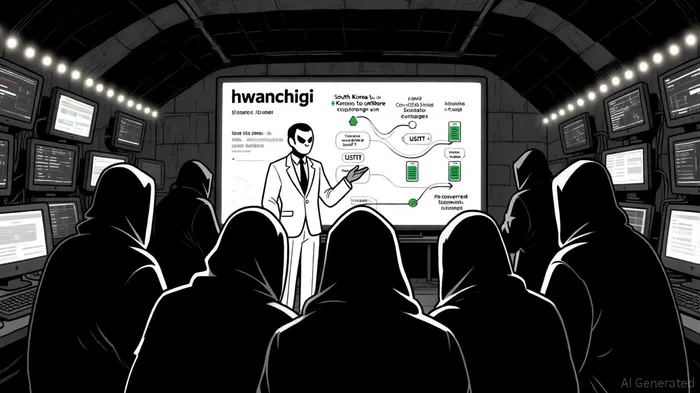
The surge in STRs is largely attributed to a method known as hwanchigi, where illicit funds are converted into cryptocurrencies offshore and then reconverted into Korean won through domestic exchanges [2]. Stablecoins like USDTUSDT-- are particularly favored in these schemes due to their peg to the U.S. dollar, ease of cross-border transfers, and relative anonymity compared to traditional banking systems. A notable case involved an underground broker allegedly moving ₩57.1 billion ($42 million) between South Korea and Russia using USDT, with thousands of transactions obscuring the trail [3].
This method exploits gaps in regulatory oversight, particularly the lack of real-time monitoring for stablecoin transactions. Unlike traditional fiat transfers, which are subject to strict anti-money laundering (AML) checks, stablecoins often bypass these controls, especially when transacted on offshore exchanges [4].
Regulatory Responses and Global Trends
South Korean lawmakers, including Rep. Jin Sung-joon, have called for stronger enforcement, enhanced coordination between agencies like the FIU and KCS, and improved oversight of stablecoin transactions [5]. The government's response includes plans for stricter reporting requirements for virtual asset service providers (VASPs) and tighter regulation of digital asset services [6]. These measures align with global trends, as regulators in the U.S., EU, and other jurisdictions increasingly scrutinize stablecoins to prevent their misuse in bypassing traditional financial controls [7].
For instance, the European Union's Markets in Crypto-Assets (MiCA) regulation, set to take effect in 2026, mandates stringent AML compliance for stablecoin issuers. Similarly, the U.S. Treasury has proposed rules requiring stablecoin issuers to maintain sufficient reserves and report suspicious activities in real time [8]. South Korea's actions suggest a growing consensus that stablecoins, while innovative, pose systemic risks if left unregulated.
Investment Implications: Risk vs. Resilience
For investors, the rise in regulatory scrutiny presents both risks and opportunities. On one hand, stricter oversight could reduce the utility of stablecoins like USDT in illicit activities, potentially diminishing their demand in black markets. However, it could also lead to short-term volatility as exchanges and VASPs adjust to compliance costs. For example, South Korea's 15% surge in crypto trading volume in 2025—driven partly by local regulatory changes—illustrates how policy shifts can create market turbulence [9].
On the other hand, stablecoins that adapt to regulatory frameworks may emerge stronger. Tether, for instance, has faced criticism for its lack of transparency in reserve backing but has recently taken steps to publish monthly audits. If Tether and similar stablecoins can demonstrate compliance with global standards, they may retain their role as a bridge between fiat and crypto ecosystems while mitigating reputational risks [10].
Conclusion
The case of South Korea underscores the dual-edged nature of stablecoins: they enable financial innovation but also pose significant risks when exploited for illicit purposes. For investors, the key takeaway is that regulatory risk is no longer a peripheral concern but a central factor in assessing stablecoin investments. As governments close loopholes and enforce stricter compliance, stablecoins that adapt to these changes will likely survive, while those that resist may face obsolescence. The coming years will test whether Tether and its peers can balance utility with accountability in an increasingly regulated world.






Comentarios
Aún no hay comentarios