
Tether and UNODC's Partnership to Secure Africa's Digital Economy: A Strategic and Financial Analysis for 2026
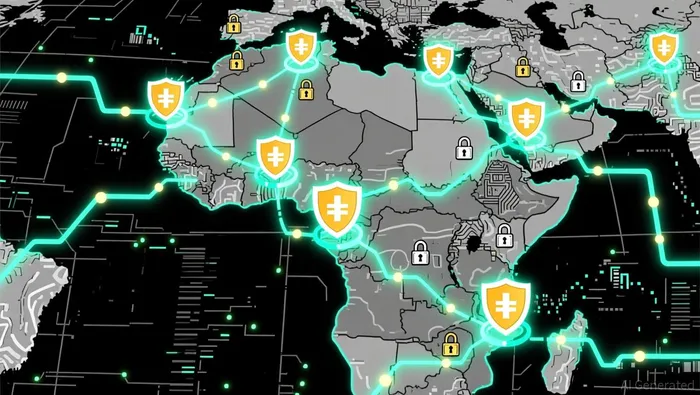
Africa's digital economy is undergoing a seismic shift, driven by rapid cryptocurrency adoption and the urgent need to combat cybercrime. At the heart of this transformation lies Tether's collaboration with the United Nations Office on Drugs and Crime (UNODC), a partnership that has positioned the stablecoin giant as a pivotal player in securing the continent's digital infrastructure. By aligning with the UNODC's Strategic Vision for Africa 2030, TetherUSDT-- is not only addressing systemic vulnerabilities but also fostering institutional trust in stablecoins like USDTUSDT--. For investors, this initiative represents a compelling case for exposure to blockchain infrastructure and stablecoin ecosystems in emerging markets.
Strategic Objectives and On-the-Ground Impact
Tether's partnership with UNODC is anchored in three pillars: cybersecurity education, financial transparency, and humanitarian aid. The Senegal Project, for instance, targets youth through bootcamps and mentorship programs, equipping them with skills to navigate the digital economy securely. Meanwhile, the Africa Project funds civil society organizations to assist victims of human trafficking in countries like Nigeria and the Democratic Republic of the Congo. These initiatives directly address the surge in cyber-enabled crimes, as evidenced by a recent INTERPOL operation that uncovered $260 million in illicit crypto and fiat funds across Africa. By tackling both the supply and demand sides of digital crime, Tether and UNODC are creating a more resilient ecosystem.
The financial implications of this partnership are equally striking. Sub-Saharan Africa received over $205 billion in on-chain value between July 2024 and June 2025, with stablecoins accounting for 43% of the region's crypto transaction volume. Nigeria alone processed $92.1 billion in on-chain value during this period, driven by USDT's role as a hedge against inflation and a tool for cross-border remittances. This growth is not merely speculative; it reflects real-world utility. For example, Tether's collaboration with HoneyCoin in Kenya has integrated USD₮ into point-of-sale systems, enabling merchants to accept stablecoin payments while mitigating currency volatility. Such infrastructure investments underscore Tether's commitment to scaling stablecoin adoption in a sustainable manner.
Regulatory Advancements and Institutional Trust
Regulatory progress further validates the legitimacy of Tether's initiatives. Kenya's recent legislation to regulate Virtual Asset Service Providers (VASPs) is a direct response to the growing influence of stablecoins like USDT. Similarly, Tether's USD₮ has been recognized as an Accepted Fiat-Referenced Token (AFRT) by the Abu Dhabi Global Market (ADGM), expanding its use across multiple blockchains. These developments signal a shift toward institutional acceptance, reducing the reputational risks associated with stablecoins and enhancing their appeal to traditional investors.
Investment Rationale: Why Tether and Blockchain Infrastructure?
For investors, the Tether-UNODC partnership offers a dual opportunity. First, it accelerates the adoption of USDT in Africa, a market projected to grow as stablecoins become essential for remittances, savings, and e-commerce. Second, it positions Tether as a key infrastructure provider, with partnerships like Kotani Pay and HoneyCoin demonstrating its ability to bridge Web3 and local financial systems. The broader blockchain infrastructure plays-such as cybersecurity platforms and blockchain-based monitoring systems- also present high-growth opportunities, particularly as African governments prioritize digital resilience.
Conclusion: A Win-Win for Stability and Scalability
Tether's collaboration with UNODC is more than a corporate social responsibility effort; it is a strategic investment in Africa's digital future. By addressing cybercrime, fostering financial inclusion, and aligning with regulatory frameworks, Tether is building a foundation for long-term stablecoin adoption. For investors, this partnership offers a clear pathway to capitalize on the continent's digital transformation while supporting sustainable development. As 2026 approaches, exposure to Tether and its blockchain infrastructure ecosystem appears increasingly compelling.






Comentarios
Aún no hay comentarios