
Tether's Strategic Shift to Bitcoin and Gold: A Game Changer for Stablecoin Risk and Liquidity Dynamics
Tether's recent reallocation of its reserve portfolio toward BitcoinBTC-- and gold has ignited a firestorm of debate in both traditional and crypto markets. As the largest U.S. dollar-pegged stablecoin with a circulating supply of nearly $185 billion, Tether's reserve strategy carries systemic implications for liquidity dynamics, macroeconomic stability, and the broader financial ecosystem. This analysis unpacks the motivations, risks, and macroeconomic ramifications of Tether's pivot to volatile assets, drawing on recent disclosures, regulatory reactions, and market data.
Macroeconomic Implications: Diversification or Destabilization?
Tether's reserve composition has undergone a seismic shift in 2025, with gold and Bitcoin now accounting for 12-13% of total assets. Specifically, the company holds approximately 100 tons of gold ($13 billion) and over 90,000 Bitcoin ($10 billion). This move is framed as a strategic hedge against a prolonged low-interest-rate environment, as U.S. Treasury yields-a traditional source of Tether's profitability-have stagnated near 5.5% amid the Federal Reserve's hawkish stance. By allocating to gold and Bitcoin, TetherUSDT-- aims to capitalize on potential upside during periods of monetary easing and inflation, while diversifying away from low-yielding Treasuries.
However, this strategy introduces new macroeconomic risks. Gold and Bitcoin, while increasingly correlated (at 0.65 in 2025), remain volatile assets. A 30% decline in their combined value could erode Tether's $30 billion equity buffer, potentially rendering the USDTUSDT-- token insolvent. This vulnerability is compounded by the October 2025 $2.5 trillion gold market capitalization crash, which underscored the fragility of traditional safe-haven assets. Meanwhile, Bitcoin's role as a "digital gold" has been reinforced by its relatively stable performance during this period, challenging gold's dominance in the inflation-hedging narrative.
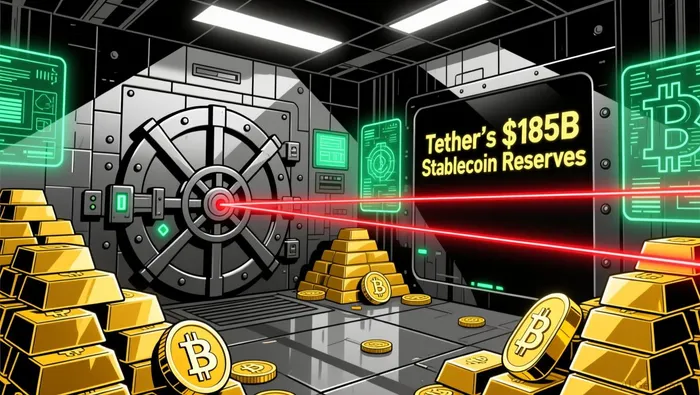
The systemic implications are profound. Tether's gold and Bitcoin reserves now rival those of central banks, with 116 tons of gold held as of Q3 2025, equivalent to 2% of global quarterly gold demand. This aggressive accumulation has contributed to a 58% year-to-date surge in gold prices, creating feedback loops that could destabilize traditional markets. Furthermore, Tether's relocation to El Salvador-a jurisdiction with weaker regulatory frameworks-has amplified concerns about its ability to withstand macroeconomic shocks.
Regulatory and Investor Reactions
The S&P downgrade has intensified scrutiny of Tether's reserve management practices. Critics argue that the company's reliance on opaque custodians and its defiance of the U.S. Treasury's GENIUS Act-which explicitly bars gold as a reserve asset for U.S.-compliant stablecoins-pose regulatory conflicts. Tether's CEO, Paolo Ardoino, has defended the strategy, emphasizing the profitability of its gold and Bitcoin holdings and a $30 billion equity buffer. However, investors remain divided. While some view the shift as a prudent hedge against dollar devaluation, others fear it could trigger a liquidity crisis if market conditions deteriorate.
The October 2025 gold crash also exposed the fragility of Tether's dual-asset model. Unlike gold, Bitcoin maintained relative stability during the crisis, raising questions about its potential to replace gold as the preferred store of value. This divergence highlights the inherent risks of pairing two volatile assets in a stablecoin's reserve portfolio.
Conclusion: A Double-Edged Sword
Tether's strategic shift to Bitcoin and gold represents a bold bet on macroeconomic uncertainty. While the move diversifies its reserve base and aligns with the "digital gold" narrative, it also introduces systemic risks that could destabilize both crypto and traditional markets. The S&P downgrade and regulatory pushback underscore the tension between innovation and stability in the stablecoin sector. For investors, the key question remains: Can Tether's equity buffer and reserve diversification withstand a prolonged downturn in Bitcoin and gold prices, or will this strategy prove to be a dangerous gamble?
As the financial landscape evolves, Tether's actions will likely shape the future of stablecoin reserves-and the broader debate over the role of cryptocurrencies in global finance.






Comentarios
Aún no hay comentarios