
Tether’s Strategic Move into South Korea’s Won-Based Stablecoin Market: A New Frontier for Blockchain Investment
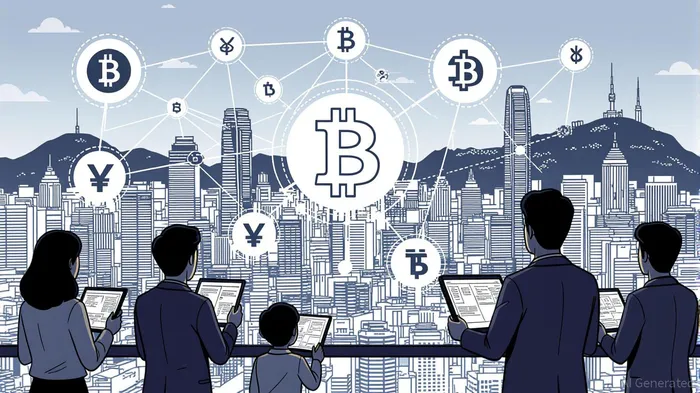
Strategic Investment in Emerging Stablecoin Markets
South Korea’s financial landscape is undergoing a seismic shift as it positions itself at the forefront of blockchain innovation. With the government’s pro-crypto agenda under President Lee Jae-myung and the imminent release of a comprehensive stablecoin regulatory framework in October 2025, the country is fast becoming a strategic hub for digital asset adoption [4]. TetherUSDT--, the issuer of the world’s largest stablecoin (USDT), has seized this opportunity by engaging in high-level discussions with South Korean financial giants like Shinhan Financial GroupSHG--. These moves signal a calculated effort to tap into a market ripe for disruption, where won-backed stablecoins could redefine cross-border transactions and financial inclusion [2].
Regulatory Tailwinds and Market Readiness
South Korea’s regulatory environment is evolving to accommodate stablecoins, with the Financial Services Commission (FSC) set to unveil rules in October 2025. These regulations will govern collateral management, minimum capital thresholds, and IT security standards for stablecoin issuers [5]. This structured approach contrasts sharply with the Bank of Korea’s recent suspension of its retail CBDC project, which has shifted focus toward private-sector-led innovation [6]. For investors, this regulatory clarity reduces uncertainty and creates a fertile ground for Tether and competitors like CircleCRCL-- to establish a foothold.
Tether’s strategy in South Korea is particularly noteworthy. While the company has not yet announced formal partnerships, its discreet engagement with Shinhan Financial Group—led by Vice President Marco Dal Lago—highlights a focus on building trust with local institutions [2]. This contrasts with Circle’s more aggressive public outreach, including recruitment drives for its won stablecoin business [1]. The competitive dynamic between these two stablecoin giants underscores the market’s potential, with Tether’s first-mover advantage in global stablecoin adoption (USDT’s $85 billion market cap) giving it a distinct edge [4].
Market Opportunities and Structural Advantages
A won-backed stablecoin could address critical pain points in South Korea’s economy. By leveraging blockchain technology, such a token could streamline cross-border trade, reduce reliance on SWIFT, and lower transaction fees for small businesses and consumers [1]. For instance, South Korean e-commerce giants and SMEs could benefit from near-instant settlements, bypassing traditional banking delays. Additionally, the government’s push to cap crypto lending rates at 20% to protect retail investors [5] suggests a regulatory environment prioritizing consumer protection—a factor that could accelerate stablecoin adoption if paired with robust oversight.
Investors should also consider the macroeconomic context. South Korea’s current account surplus and strong export sector make it an ideal candidate for stablecoin-driven trade finance. A won-backed stablecoin could act as a bridge currency, complementing the U.S. dollar and euro in regional trade corridors. This aligns with Tether’s broader strategy to diversify its stablecoin offerings beyond the dollar, as seen in its recent expansion onto the BitcoinBTC-- network via the RGB protocol [4].
Challenges and Risk Mitigation
Despite the optimism, risks remain. The regulatory framework, while promising, is still in its final stages, and last-minute changes could impact market entry timelines. Additionally, structural risks such as stablecoin non-redeemability and liquidity crises—exemplified by past failures like TerraUSD—must be addressed through stringent collateral requirements and transparency measures [5]. For Tether, maintaining a 1:1 reserve ratio for its won-backed stablecoin will be critical to preserving trust, especially in a market where consumer skepticism toward crypto projects persists.
Competition from Circle and other local players also poses a challenge. South Korea’s largest banks, including Hana and KB FinancialKB--, are actively exploring partnerships with both Tether and Circle, creating a fragmented but dynamic ecosystem [3]. Investors must monitor how Tether differentiates itself—whether through technological innovation, institutional partnerships, or regulatory compliance—to sustain its market leadership.
Investment Implications and Future Outlook
For strategic investors, Tether’s foray into South Korea represents a dual opportunity: capitalizing on the growth of a nascent stablecoin market and aligning with a company that has demonstrated resilience in volatile crypto cycles. The potential for won-backed stablecoins to capture a significant share of South Korea’s $1.5 trillion digital payments market [1] is immense, particularly as the country’s fintech sector matures.
However, patience is key. While Tether’s meetings with Shinhan and others indicate progress, no formal agreements have been announced [4]. Investors should prioritize long-term positioning over short-term speculation, focusing on metrics like transaction volume growth, regulatory adoption rates, and Tether’s ability to integrate with South Korea’s existing financial infrastructure.
In the broader context, South Korea’s stablecoin ambitions reflect a global trend: the convergence of blockchain and traditional finance. As Tether and its rivals navigate this uncharted territory, the lessons learned in Seoul could shape the future of digital currencies worldwide. For now, the stage is set for a high-stakes experiment in monetary innovation—one that promises to redefine the boundaries of financial inclusion and cross-border commerce.
Source:
[1] Stablecoin Adoption in South Korea: Key Developments [https://www.okx.com/en-us/learn/stablecoin-adoption-south-korea]
[2] Tether Execs Hold Stablecoin Meetings With Top S Korean ... [https://finance.yahoo.com/news/tether-execs-hold-stablecoin-meetings-233000405.html]
[3] Heads of major S. Korean financial groups to meet ..., [https://en.yna.co.kr/view/AEN20250821006400320]
[4] South Korea Moves Ahead With Stablecoin Regulation Bill [https://www.mexc.com/sl-SI/news/south-korea-moves-ahead-with-stablecoin-regulation-bill/67075]
[5] Legislative Framework For Korean Stablecoin | Four Pillars [https://4pillars.io/en/articles/proposal-for-domestic-stablecoin-legislation]
[6] Non-USD stablecoin replaces central bank-led digital ... [https://www.compliancecorylated.com/news/non-usd-stablecoin-replaces-central-bank-led-digital-currency-worldwide/]





Comentarios
Aún no hay comentarios