
Tether's Strategic UN Collaboration and Africa's Crypto Growth: Unlocking Investment Opportunities in Cybersecurity and Financial Infrastructure
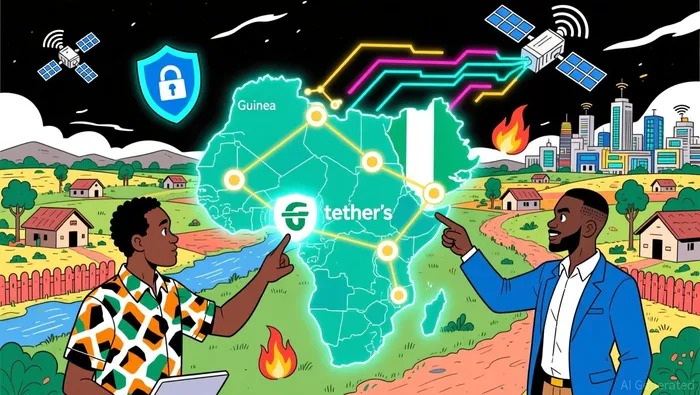
Africa's digital economy is undergoing a seismic shift, driven by rapid crypto adoption and innovative blockchain partnerships. At the forefront of this transformation is TetherUSDT--, whose collaboration with the United Nations Office on Drugs and Crime (UNODC) is reshaping cybersecurity and financial infrastructure across the continent. This partnership, announced in January 2026, aligns with the UNODC's Strategic Vision for Africa 2030 and targets critical gaps in digital asset security, human trafficking support, and youth empowerment. For investors, this represents a unique window to capitalize on emerging opportunities in cybersecurity and financial infrastructure, particularly as Tether expands its footprint beyond Senegal into markets like Guinea, Nigeria, and the Democratic Republic of the Congo (DRC).
Cybersecurity: A Pillar of Trust in Africa's Digital Economy
The collaboration between Tether and the UNODC is not just about combating fraud-it's about building a resilient digital ecosystem. By leveraging blockchain technology, the partnership aims to enhance transparency and aid law enforcement in tracking illicit crypto activities. For instance, the Senegal Project includes multi-phase educational programs with bootcamps, mentorship, and micro-grants to equip youth with cybersecurity skills. These initiatives are critical as Africa becomes the third-fastest-growing crypto region, with on-chain transaction volumes surging to $205 billion between July 2024 and June 2025.
Investors should note the strategic focus on cybersecurity infrastructure. Tether's funding for civil society organizations in Nigeria and the DRC to support human trafficking victims underscores the broader societal impact of secure digital systems. Moreover, the partnership's emphasis on blockchain-based monitoring systems to detect illicit activities signals a growing demand for cybersecurity startups and legal frameworks tailored to crypto compliance.
Financial Infrastructure: Bridging Gaps with Stablecoins and Cross-Border Payments
Tether's investments in African financial infrastructure are equally transformative. The acquisition of Kotani Pay, a platform connecting Web3 users with local payment channels, exemplifies this strategy. By reducing transaction costs and settlement times, Kotani Pay enables African businesses to access global liquidity and manage cross-border operations efficiently. This is particularly impactful in regions with underdeveloped banking systems, where stablecoins like USDTUSDT-- offer a hedge against inflation and currency volatility.
Another key player is Shiga Digital, a Kenyan startup providing blockchain-based virtual accounts and foreign exchange services. Tether's investment in Shiga Digital aligns with its mission to foster financial inclusion, especially for unbanked populations. These ventures highlight a clear trend: blockchain infrastructure is no longer a niche experiment but a scalable solution for economic empowerment.
Regional Expansion: From Senegal to Innovation Hubs
Tether's collaboration extends beyond Senegal, with a 2023–2025 Memorandum of Understanding with Guinea to accelerate digital transformation through blockchain and peer-to-peer technologies. The "Innovation City" project in Guinea, focused on education and sustainable tech, is a testament to Tether's long-term vision for regional hubs. Similarly, Tether's support for solar-powered community kiosks and digital wallets in Sub-Saharan Africa underscores its commitment to addressing energy and financial access challenges.
For investors, this expansion signals opportunities in infrastructure-as-a-service (IaaS) providers, blockchain-based identity verification systems, and cross-border payment gateways. The African Savings for Growth program, which aims to mobilize institutional savings for development projects, further amplifies the potential for public-private partnerships in this space.
Economic Impact: A $205 Billion Shift in On-Chain Activity
The economic implications of Tether's initiatives are profound. Between July 2024 and June 2025, on-chain crypto transaction volumes grew by 52% year-on-year. This surge is driven by platforms like Kotani Pay, which facilitate seamless access to digital assets for businesses and individuals. However, the rise in crypto adoption has also attracted criminal activity, with $2.17 billion in stolen funds reported mid-2025. Tether's collaboration with the UNODC to strengthen legal frameworks and cybersecurity education is thus not just a moral imperative but a strategic investment in trust-a critical asset for any digital economy.
Challenges and the Path Forward
Despite the momentum, challenges persist. Regulatory uncertainty and fraud remain significant hurdles. For instance, the DPRK's $1.5 billion hack of ByBit in 2025 highlights the need for robust security protocols. Investors must prioritize partnerships that integrate advanced threat detection and compliance tools. Additionally, while Kenya's digital asset legislation sets a precedent, harmonizing regulations across African markets will require sustained international collaboration.
Conclusion: A Golden Opportunity for Impact-Driven Investors
Tether's strategic alliance with the UN and its investments in African startups like Kotani Pay and Shiga Digital are catalyzing a new era of financial inclusion and cybersecurity resilience. For investors, this is more than a market play-it's a chance to contribute to Africa's digital transformation while reaping returns from a sector projected to grow exponentially. As the continent's crypto ecosystem matures, the intersection of blockchain, cybersecurity, and financial infrastructure will define the next wave of innovation.






Comentarios
Aún no hay comentarios