
Tether's Path to a Record $15B Profit in 2025: Strategic Implications of USDT's Global Adoption for Stablecoin Infrastructure and Fintech Investments
The Engine of Growth: USDT's Global Adoption
USDT's dominance in the stablecoin market-accounting for 57.4% of the $300 billion total capitalization-has been a primary revenue driver for Tether. By 2025, the stablecoin is used by approximately 6.25% of the global population, with over $76 billion in annual B2B settlements alone, according to a Coinotag analysis. This adoption is fueled by USDT's role in bypassing traditional payment intermediaries, reducing transaction costs to under 1% per transaction, and enabling real-time settlements, a Coinotag study found. For Tether, this translates to a business model where reserve management and interest income from high-yield environments (e.g., U.S. treasuries) generate consistent margins, evidenced by Tether's investment in Kotani Pay.
The strategic implications are profound. As USDT's utility expands, so does Tether's ability to monetize infrastructure. For instance, the company's recent investment in Kotani Pay, an African fintech platform, connects Web3 users with local payment channels, addressing a $136 billion annual stablecoin settlement market. This move not only deepens USDT's penetration in emerging economies but also creates a flywheel effect: increased adoption drives more transactions, which in turn justify further infrastructure investments.
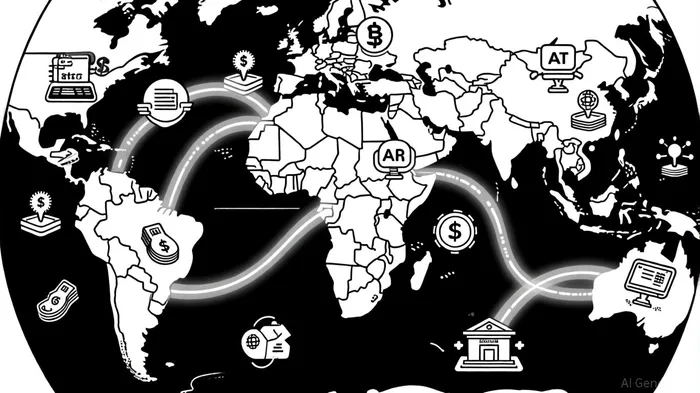
Infrastructure Innovations: Building the Stablecoin Ecosystem
Tether's vision extends beyond mere token issuance. The company is actively shaping the infrastructure that supports USDT's utility. A prime example is Stable, a Layer 1 blockchain optimized for stablecoin transactions. With a $28 million seed round co-led by Bitfinex and Hack VC, Stable aims to create a "stablechain" where USDT serves as the native gasGAS-- token, enabling low-fee, high-throughput transactions - a development covered by The Block. This project, expected to launch its mainnet in late 2025, addresses inefficiencies in general-purpose blockchains and positions USDT as a foundational asset for real-world payments and remittances.
Complementing this is QVAC, Tether's decentralized AI platform that integrates BitcoinBTC-- and USDT for autonomous transactions. By leveraging AI-driven tools, QVAC enhances privacy and operational efficiency, opening new avenues for programmable money. These innovations underscore Tether's pivot from a stablecoin issuer to a full-stack infrastructure provider, creating a moat against competitors like USDCUSDC--.
Regulatory Tailwinds and Market Expansion
The U.S. GENIUS Act, which supports tokenized fiat adoption, has further accelerated USDT's growth. This regulatory clarity has enabled Tether to launch USAT, a U.S.-compliant stablecoin targeting institutional and retail users. Meanwhile, the European Union's MiCA framework is fostering a similar environment, encouraging cross-border experimentation with tokenized cash, according to a McKinsey analysis. These developments are critical for Tether's expansion into regulated markets, where it can leverage its existing user base to capture a larger share of the $18 billion crypto card spending market.
Financial Implications: A $500 Billion Valuation Play
Tether's financial trajectory is equally compelling. The company is in advanced discussions for a $20 billion capital raise at a $500 billion valuation, reflecting investor confidence in its reserve-backed model and growth potential. This valuation is justified by its projected $15 billion profit in 2025, driven by interest income from its $186 billion in reserves and expanding transaction fees. For investors, the key question is whether Tether can sustain this growth as regulatory scrutiny intensifies. However, its first-mover advantage, coupled with strategic infrastructure bets, suggests a strong moat.
Conclusion: A High-Conviction Investment Thesis
Tether's path to a $15 billion profit is not just a financial milestone-it's a testament to the transformative power of stablecoins in reshaping global finance. By leveraging USDT's adoption to build infrastructure, forge fintech partnerships, and navigate regulatory landscapes, Tether is creating a self-reinforcing ecosystem. For investors, this represents a high-conviction opportunity: a company that is not only capitalizing on the current stablecoin boom but actively engineering the next phase of blockchain-based finance.






Comentarios
Aún no hay comentarios