
Tether's Disruption of Commodity Lending and Its Implications for Traditional Finance
The Mechanics of USDt-Based Lending
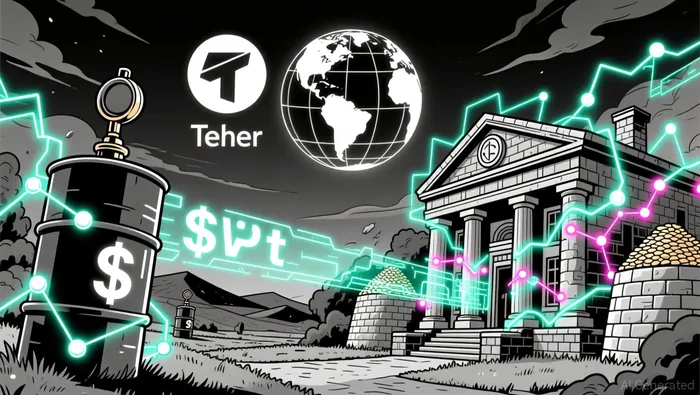
Tether's approach hinges on the unique properties of USDt: its peg to the U.S. dollar, blockchain-based infrastructure, and near-instant settlement capabilities. Unlike traditional trade finance, which can take days or weeks to process loans and settlements, USDt enables transactions to occur in seconds, drastically reducing friction and costs. For example, in October 2024, Tether financed a $45 million crude oil transaction involving 670,000 barrels of Middle Eastern oil, showcasing the scalability and efficiency of its model.
This model is particularly attractive to smaller and mid-sized traders, who often face stringent collateral requirements and slow approval processes from traditional banks. By bypassing these barriers, Tether is democratizing access to capital, especially in emerging markets where banking systems may be underdeveloped or subject to geopolitical sanctions according to financial analysts.
A Direct Challenge to Traditional Banks
The rise of USDt-based lending is forcing traditional banks to reckon with a disruptive competitor that operates with far lower overhead and regulatory constraints. Tether's Trade Finance unit, funded by the company's substantial profits and separate from the reserves backing USDt, can offer loans at lower margins while maintaining profitability according to Bloomberg. This is a stark contrast to traditional banks, which must navigate complex compliance frameworks and often charge higher interest rates to offset risk.
According to a report by Bloomberg, Tether's expansion is already eroding market share in sectors where speed and flexibility are critical, such as oil and agricultural commodities according to market analysis. For institutions that have historically relied on trade finance as a revenue stream, this represents a significant threat. The lack of intermediaries in Tether's model also reduces the need for correspondent banking relationships, further undercutting traditional players.
Broader Implications: Tokenization and the Future of Trade
Beyond immediate financial gains, Tether's foray into commodity lending is accelerating the tokenization of real-world assets. By using blockchain to represent physical commodities as digital assets, Tether is laying the groundwork for a more transparent and liquid trade finance ecosystem. McKinsey highlights that such tokenization could unlock trillions in previously illiquid assets, enabling new forms of collateral and cross-border transactions.
This shift also has macroeconomic ramifications. As USDt becomes a more prevalent medium for trade, it could reduce reliance on traditional currencies in certain markets, particularly in regions with unstable local currencies or capital controls. While this offers benefits like price stability and reduced transaction costs, it also raises questions about monetary sovereignty and the role of central banks in an increasingly decentralized financial landscape according to financial experts.
Conclusion: A New Era in Trade Finance
Tether's USDt-based lending is more than a niche experiment-it is a strategic move to redefine global trade finance. By addressing inefficiencies in traditional systems and empowering underserved markets, Tether is not only capturing market share but also catalyzing a broader shift toward blockchain-based solutions. For investors, this represents both an opportunity and a caution: the potential for high returns in a rapidly growing sector, but also the risk of obsolescence for traditional financial models that fail to adapt.
As Tether continues to scale its ambitions, one thing is clear: the future of trade finance will be shaped by those who can harness the speed, efficiency, and accessibility of digital assets.







Comentarios
Aún no hay comentarios