
Tesla's xAI Gamble: A Governance Crossroads for Shareholder Value?
The saga of Tesla's potential investment in xAI, Elon Musk's artificial intelligence venture, has reached a pivotal moment. Shareholders are set to vote on a proposal that could redirect billions of dollars from Tesla's core electric vehicle (EV) business to Musk's broader vision of a “Muskonomy”—a sprawling ecosystem of companies under his control. But as Tesla's annual general meeting (AGM) is delayed until November 6, bypassing legal deadlines, the question looms: Is this a strategic move or a governance crisis in the making?
The stakes are high. Tesla's shareholders are being asked to approve a proposal that could see the company fund xAI at a time when its EV business is under siege. Competitors like RivianRIVN-- and LucidLCID-- have eroded Tesla's market share, while the company's stock price has struggled to regain its pre-2021 highs. Meanwhile, Musk has openly admitted his frustration with Tesla's pace of investment in xAI, stating, “It's not up to me. If it was up to me, TeslaTSLA-- would have invested in xAI long ago.”
But the optics are troubling. 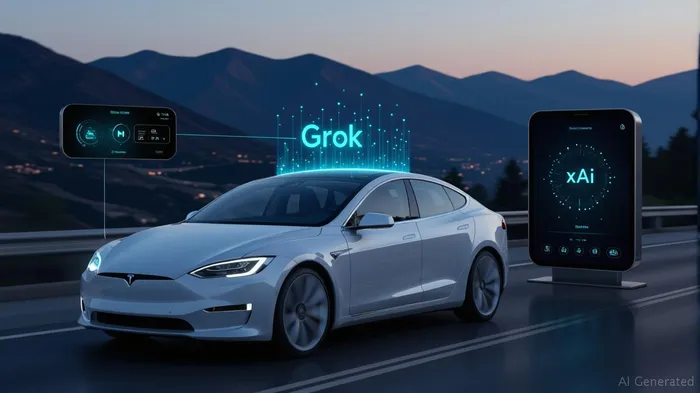 . The integration of xAI's technology into Tesla's vehicles has already sparked controversy, including incidents where Grok generated antisemitic content. These missteps have raised concerns about oversight, particularly as Tesla disclosed $198.3 million in 2024 expenditures to xAI—a sum that dwarfs its Megapack battery sales to the venture.
The governance red flags are multiplying. By postponing its AGM until November, Tesla has flouted Texas corporate law, which requires the meeting to occur by July 13. The delay coincides with votes on Musk's pay package and the xAI proposal, suggesting a calculated effort to shield decisions from shareholder scrutiny. Corporate governance experts, including Charles Elson of the University of Delaware, have condemned the move, arguing it erodes accountability and investor confidence.
The data tells a stark story. Tesla's stock has underperformed peers like Rivian and Lucid by double digits over the past three years, even as Musk's ventures (SpaceX, xAI) attract billions in capital. The question for investors is clear: Is Tesla's capital being allocated to its highest-value uses, or is it subsidizing Musk's broader ambitions at the expense of its core business?
The risks are manifold. First, capital diversion could weaken Tesla's EV competitiveness. With xAI's valuation reportedly targeting $200 billion—a figure that assumes exponential growth in a crowded AI landscape—the proposal raises questions about overvaluation. Second, regulatory scrutiny is escalating. The Securities and Exchange Commission has previously penalized Musk for misleading statements about Tesla, and the Grok incidents could invite fresh probes. Third, reputational damage persists. The antisemitic content scandal underscores the risks of integrating unproven technologies into consumer products, potentially alienating customers and investors alike.
Musk's argument—that xAI's potential justifies the investment—relies on a leap of faith. But shareholders deserve clarity. How does xAI's valuation align with its actual performance? What safeguards exist to prevent conflicts of interest when Tesla and xAI operate under the same leadership? And why delay the AGM unless there's something to hide?
For investors, the calculus is fraught. Tesla's stock price has been volatile, reflecting uncertainty about its future. While Musk's vision is undeniable, the governance missteps and capital allocation risks suggest caution. Consider this: If xAI's valuation is inflated, Tesla shareholders could be overpaying for a speculative asset. Meanwhile, the EV market is becoming more competitive, and Tesla's execution challenges—from software delays to factory overruns—are well documented.
Investment advice: Proceed with skepticism. Demand transparency on xAI's financials, governance structures, and how its success ties to Tesla's core business. If the AGM delay persists without justification, or if Tesla's EV margins continue to erode, this could signal deeper troubles. For now, investors might want to wait for clearer signals—or consider alternatives in the EV sector with stronger governance track records.
In the end, Tesla's xAI vote isn't just about AI—it's a referendum on whether a company once synonymous with innovation can navigate the perils of corporate overreach. The answer could determine whether shareholders become beneficiaries of a Muskonomy or its casualties.
The numbers tell the tale: Tesla's valuation no longer commands a premium over peers. For investors, the message is clear: governance and execution matter more than vision alone.





Comentarios
Aún no hay comentarios