
Is Tesla a Sustainable Long-Term Bet Amid Rising Chinese EV Competition?
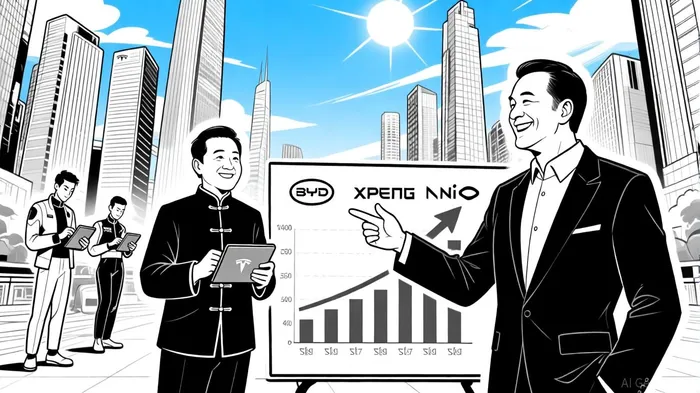
Market Share Dynamics: A Shifting Battleground
In 2024, , , according to CNEVPost. By Q3 2025, Tesla's U.S. dominance remains intact, , but Chinese rivals are closing the gap. TS2 Tech reported that XPeng, for instance, , outpacing NIO and BYD in U.S. growth. Meanwhile, Markets FinancialContent's WRAL MarketMinute noted that BYD's global sales have already surpassed Tesla's, signaling a potential inflection point.
Europe, another critical market, is witnessing a similar trend. Chinese EVs, , are eroding market share. This pricing advantage, coupled with BYD's partnerships (e.g., Uber for autonomous tech) and XPeng's AI-driven innovations, threatens Tesla's premium positioning, according to Motor Finance.
Financial Health: Profit Margins Under Pressure
Tesla's financials tell a mixed story. , , reported TradingView. Chinese competitors, meanwhile, are outperforming Tesla on profitability. A GlobeNewswire , . StockAnalysis , reflecting its aggressive R&D bets on AI and autonomous driving.
Strategic Initiatives: Musk's Vision vs. Chinese Innovation
's focus on Full Self-Driving (FSD) and AI integration has defined Tesla's 2025 strategy. However, FSD adoption remains sluggish, with customer trust shaken by safety concerns, according to WebProNews. By contrast, are diversifying their approaches:
- BYD leads in , with and ultra-fast charging systems, as noted by Motor Finance.
- XPeng partners with Volkswagen on AI-driven autonomy and unveiled the , according to ElectroDrive.
- NIO expands its to 3,172 stations, addressing range anxiety (reported by ElectroDrive).
These strategies highlight a key difference: Tesla's reliance on versus Chinese competitors' hardware and infrastructure-centric models.
Valuation Risks: High Multiples in a Crowded Arena
Tesla's valuation remains lofty, . Chinese EVs, however, face unique risks. NIO's recent lawsuit by Singapore's GIC over its battery rental venture was reported by ThinkChina, while GlobeNewswire notes BYD's expansion depends on Chinese government subsidies. For Tesla, the risk lies in sustaining its in a market where cost-conscious consumers increasingly favor Chinese alternatives.
Conclusion: A Tenuous Long-Term Bet?
Tesla's technological leadership and brand strength remain unparalleled, but its profitability is under siege from both pricing pressures and rising R&D costs. Chinese EVs, with their and diversified strategies, are . For Tesla to remain a sustainable long-term bet, it must accelerate FSD adoption, maintain energy division growth, and defend its U.S. dominance against BYD's global push. Investors should monitor Musk's closely-success could cement Tesla's legacy; failure may cede ground to a new wave of .





Comentarios
Aún no hay comentarios