
Tesla's Supercharger Revolution: A Cost-Effective Game Changer
Generado por agente de IAWesley Park
martes, 11 de febrero de 2025, 6:24 am ET1 min de lectura
REVB--
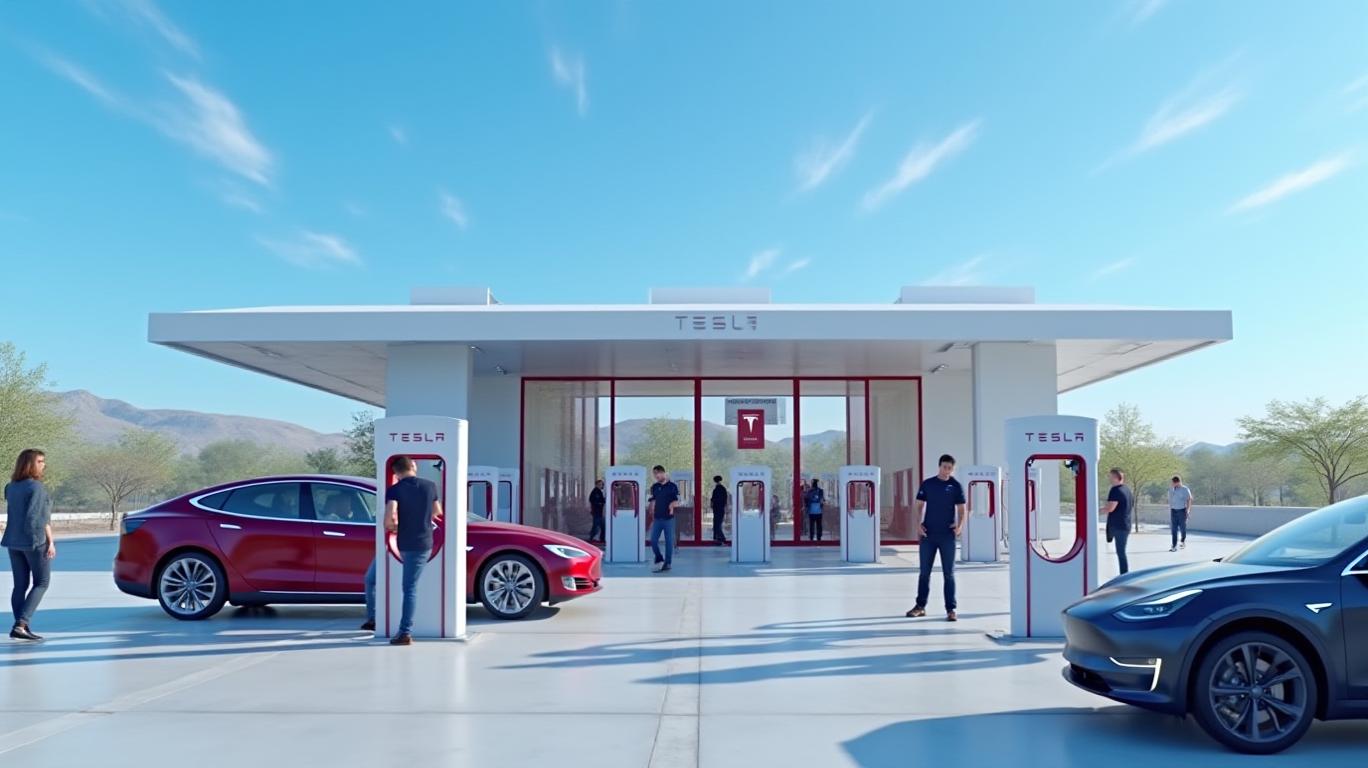
In the ever-evolving world of electric vehicles (EVs), one company stands out as a trailblazer in charging infrastructure: Tesla. The automaker's Supercharger network has become synonymous with convenient and reliable EV travel, setting a benchmark for other manufacturers and charging providers. But what exactly does it cost to build such a network, and what are the factors contributing to Tesla's cost advantage?
According to recent findings from the Texas Volkswagen Environmental Mitigation Program (TxVEMP), Tesla's Superchargers cost around $40,000 to $45,000 per stall. This figure is roughly equivalent to the price of a Model 3 sedan, Tesla's entry-level electric vehicle. This revelation begs the question: How does Tesla manage to deploy its Superchargers at such a competitive cost, and what does this mean for the company's return on investment (ROI)?
Tesla's cost advantage in deploying Superchargers can be attributed to several factors:
1. Power Electronics Expertise: Tesla has strong expertise in power electronics, which allows it to produce Superchargers at a lower cost. This expertise is not limited to charging stations but also extends to its electric vehicles and commercial power inverters.
2. Mass Production: Tesla produces Superchargers at its Gigafactory New York and has opened a new Supercharger factory in Shanghai, which it aims to ramp up to 10,000 Supercharging stalls per year. Mass production helps reduce costs through economies of scale.
3. Simplified Design: Tesla's Superchargers have a simplified design, focusing on high power output and minimal features. This simplicity helps reduce production and installation costs.
4. Proprietary Connector (Initially): While Tesla has started opening its network and using the CCS connector, its initial success was built on its proprietary connector. This ensured compatibility within its ecosystem and allowed Tesla to optimize its charging infrastructure for its vehicles.
These factors combined contribute to Tesla's cost advantage in deploying Superchargers compared to other fast-charging networks. However, it is essential to note that the exact ROI for Tesla in deploying Superchargers is not explicitly stated in the provided materials, and further analysis would be required to determine a precise figure.
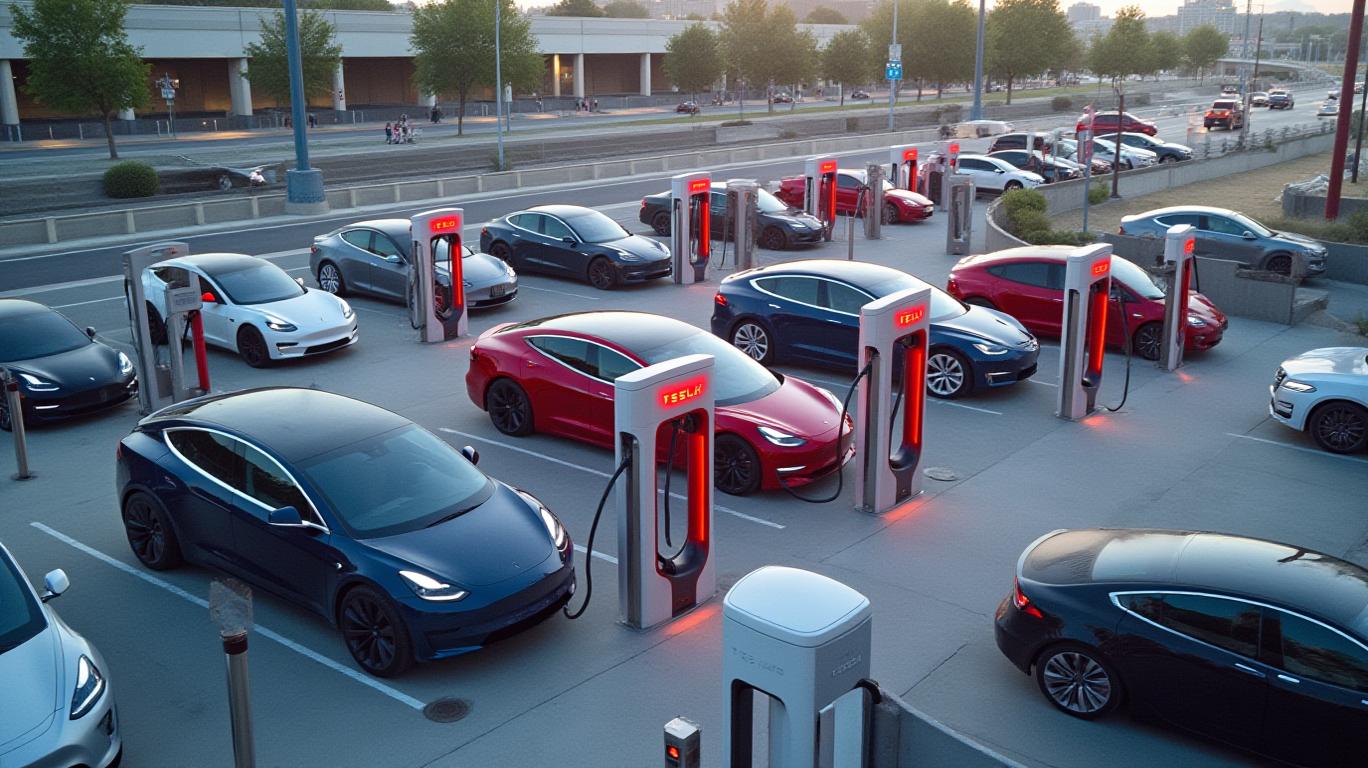
In conclusion, Tesla's Supercharger network has been a significant factor in driving vehicle sales and customer loyalty. The convenience and reliability of the Supercharger network have fostered customer loyalty, while the cost advantage in deployment has allowed Tesla to invest more in expanding its charging infrastructure. As the electric vehicle market continues to grow, Tesla's strategic placement of Superchargers will likely remain a crucial factor in the company's success and the overall adoption of EVs.
TSLA--
In the ever-evolving world of electric vehicles (EVs), one company stands out as a trailblazer in charging infrastructure: Tesla. The automaker's Supercharger network has become synonymous with convenient and reliable EV travel, setting a benchmark for other manufacturers and charging providers. But what exactly does it cost to build such a network, and what are the factors contributing to Tesla's cost advantage?
According to recent findings from the Texas Volkswagen Environmental Mitigation Program (TxVEMP), Tesla's Superchargers cost around $40,000 to $45,000 per stall. This figure is roughly equivalent to the price of a Model 3 sedan, Tesla's entry-level electric vehicle. This revelation begs the question: How does Tesla manage to deploy its Superchargers at such a competitive cost, and what does this mean for the company's return on investment (ROI)?
Tesla's cost advantage in deploying Superchargers can be attributed to several factors:
1. Power Electronics Expertise: Tesla has strong expertise in power electronics, which allows it to produce Superchargers at a lower cost. This expertise is not limited to charging stations but also extends to its electric vehicles and commercial power inverters.
2. Mass Production: Tesla produces Superchargers at its Gigafactory New York and has opened a new Supercharger factory in Shanghai, which it aims to ramp up to 10,000 Supercharging stalls per year. Mass production helps reduce costs through economies of scale.
3. Simplified Design: Tesla's Superchargers have a simplified design, focusing on high power output and minimal features. This simplicity helps reduce production and installation costs.
4. Proprietary Connector (Initially): While Tesla has started opening its network and using the CCS connector, its initial success was built on its proprietary connector. This ensured compatibility within its ecosystem and allowed Tesla to optimize its charging infrastructure for its vehicles.
These factors combined contribute to Tesla's cost advantage in deploying Superchargers compared to other fast-charging networks. However, it is essential to note that the exact ROI for Tesla in deploying Superchargers is not explicitly stated in the provided materials, and further analysis would be required to determine a precise figure.
In conclusion, Tesla's Supercharger network has been a significant factor in driving vehicle sales and customer loyalty. The convenience and reliability of the Supercharger network have fostered customer loyalty, while the cost advantage in deployment has allowed Tesla to invest more in expanding its charging infrastructure. As the electric vehicle market continues to grow, Tesla's strategic placement of Superchargers will likely remain a crucial factor in the company's success and the overall adoption of EVs.

Divulgación editorial y transparencia de la IA: Ainvest News utiliza tecnología avanzada de Modelos de Lenguaje Largo (LLM) para sintetizar y analizar datos de mercado en tiempo real. Para garantizar los más altos estándares de integridad, cada artículo se somete a un riguroso proceso de verificación con participación humana.
Mientras la IA asiste en el procesamiento de datos y la redacción inicial, un miembro editorial profesional de Ainvest revisa, verifica y aprueba de forma independiente todo el contenido para garantizar su precisión y cumplimiento con los estándares editoriales de Ainvest Fintech Inc. Esta supervisión humana está diseñada para mitigar las alucinaciones de la IA y garantizar el contexto financiero.
Advertencia sobre inversiones: Este contenido se proporciona únicamente con fines informativos y no constituye asesoramiento profesional de inversión, legal o financiero. Los mercados conllevan riesgos inherentes. Se recomienda a los usuarios que realicen una investigación independiente o consulten a un asesor financiero certificado antes de tomar cualquier decisión. Ainvest Fintech Inc. se exime de toda responsabilidad por las acciones tomadas con base en esta información. ¿Encontró un error? Reportar un problema




Comentarios
Aún no hay comentarios