
Tesla's Strategic Price Cuts in Europe: A Tactical Move to Reignite Growth in a Competitive EV Market?
In the face of a rapidly evolving European electric vehicle (EV) landscape, Tesla's recent price cuts have sparked debate about their efficacy in countering the aggressive expansion of Chinese rivals like BYD. With sales plummeting by nearly 50% in October 2025 alone, the company's decision to slash prices on key models by up to $5,000-bringing the Model 3's entry-level price in Germany to €37,970-has been framed as a critical gambit to reclaim market share. Yet, as BYD's European sales surged 272% in September 2025, the question remains: Are these price cuts a sustainable solution, or merely a temporary salve for a deeper crisis?
Tesla's Pricing Strategy: A Double-Edged Sword
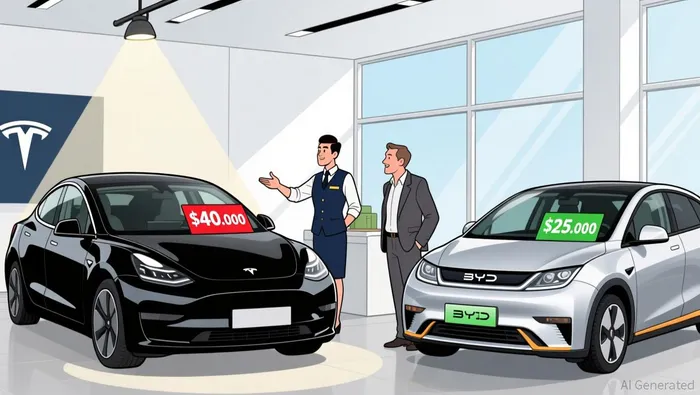
Tesla's price reductions in Europe were ostensibly designed to offset the loss of U.S. federal tax credits and counter the cost advantages of Chinese EVs. However, even after these cuts, BYD's mass-market models, such as the Dolphin Surf at €23,000, remain over €10,000 cheaper than Tesla's offerings. This pricing gap is compounded by BYD's vertical integration, which allows it to produce batteries, semiconductors, and other components in-house, significantly lowering costs. Analysts argue that Tesla's reliance on price cuts risks eroding profit margins without addressing structural weaknesses, such as its limited product diversity compared to competitors like Volkswagen and Stellantis.
 Moreover, Tesla's price volatility has raised consumer concerns. In November 2025, registrations for the Model Y fell from first to 23rd place in Denmark, while BYD's sales in the EU grew by 200% year-on-year. This suggests that price alone may not be enough to retain customer loyalty, particularly as European buyers increasingly prioritize affordability and reliability over brand prestige.
BYD's Competitive Edge: Cost Leadership and Local Adaptation
BYD's success in Europe stems from a multifaceted strategy that TeslaTSLA-- has yet to replicate. By offering a broad product lineup-including plug-in hybrids and affordable EVs-the company caters to a wider demographic, including budget-conscious buyers and those hesitant about charging infrastructure. Additionally, BYD's recent investment in a Hungary-based factory aims to circumvent anti-dumping tariffs of up to 45.3%, ensuring long-term cost stability. This local production strategy contrasts with Tesla's reliance on global supply chains, which remain vulnerable to geopolitical and logistical disruptions.
BYD's technological edge further strengthens its position. Its Blade Battery technology, which enhances safety and durability while reducing costs, has become a key differentiator in a market increasingly focused on value. Meanwhile, Tesla's infrastructure investments-such as plans to double its European Supercharger network by 2025-may not offset the cost advantages of Chinese rivals.
Effectiveness and Long-Term Sustainability
Despite Tesla's price cuts, its European sales have declined for eight consecutive months, with sharp drops in France (-58%), Denmark (-49%), and Sweden (-49%) in November 2025. This trend underscores the limitations of a strategy that prioritizes short-term price adjustments over long-term innovation. Experts suggest that Tesla's broader challenges-such as reputational damage linked to Elon Musk's political stances and consumer skepticism about driver-assist technologies-further undermine the effectiveness of its pricing moves.
For 2026, analysts project that Tesla will need to introduce new models tailored to European preferences, such as compact EVs or plug-in hybrids, while stabilizing pricing to rebuild consumer trust. BYD, meanwhile, is expected to leverage its cost leadership and local partnerships to maintain momentum, particularly as battery costs decline and silicon anode technologies emerge.
Conclusion: A Tactical Move, Not a Strategic Solution
Tesla's price cuts in Europe represent a necessary but insufficient response to the rise of Chinese EVs. While they may temporarily arrest sales declines, they fail to address Tesla's lack of product diversity, pricing volatility, and reputational headwinds. BYD's vertically integrated model and aggressive local adaptation, by contrast, offer a more sustainable path to market dominance. For Tesla to regain its footing, it must pivot from reactive price adjustments to proactive innovation-whether through new models, regulatory compliance, or infrastructure expansion. In a market where affordability and adaptability reign supreme, the road ahead for Tesla remains fraught with challenges.







Comentarios
Aún no hay comentarios