
Tesla's Stock Slump: More Than Musk and OpenAI
Generado por agente de IAWesley Park
miércoles, 12 de febrero de 2025, 5:17 am ET1 min de lectura
TSLA--
Tesla's stock has been on a rollercoaster ride, and it's not just Elon Musk's other ventures, like OpenAI, driving the volatility. The company's recent cost-cutting measures and layoffs have added to the uncertainty, but there's more to the story than meets the eye. Let's dive into the factors influencing Tesla's stock performance and explore the potential long-term effects on the company's growth and profitability.
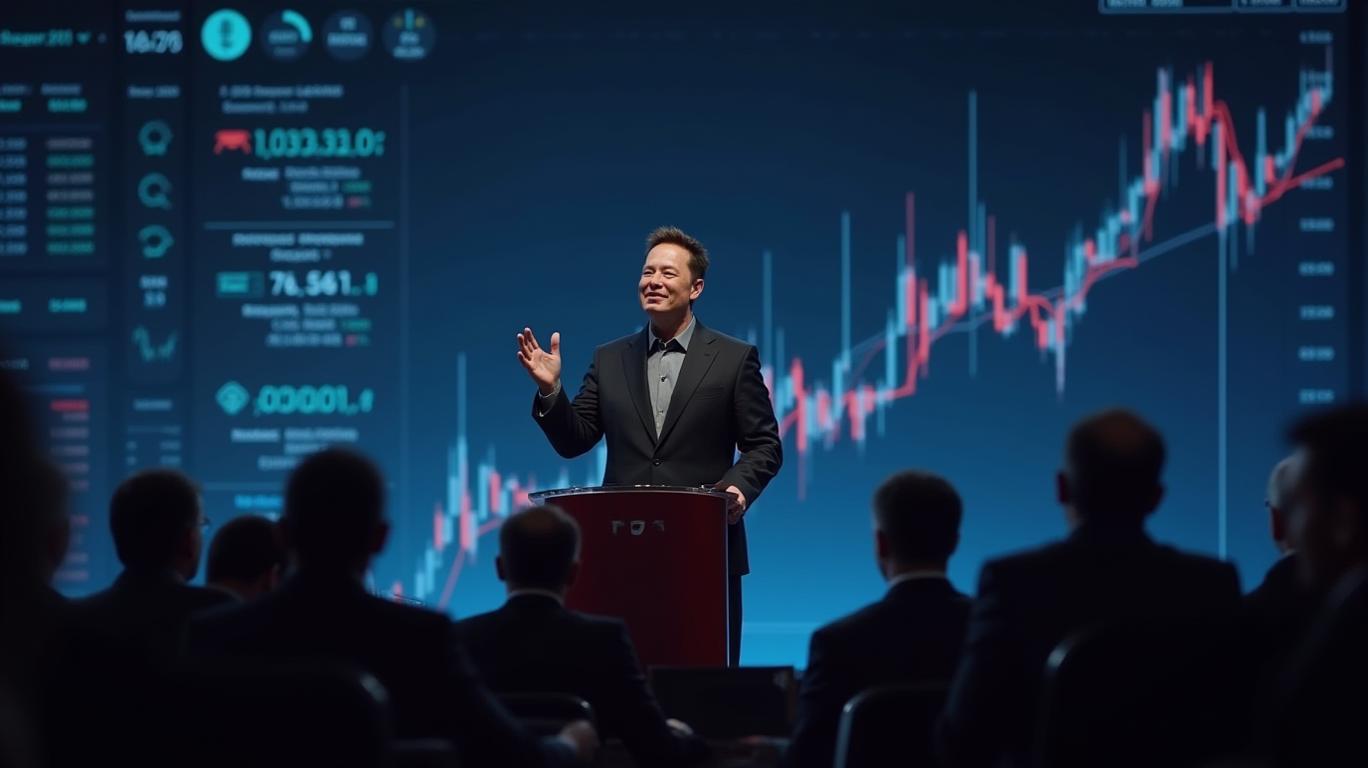
Tesla's stock price has been fluctuating, with a current value of 328.5 USD, down from its 52-week high of 488.54 USD. This decline can be attributed to various factors, including market sentiment towards Elon Musk and his other ventures, as well as the company's recent cost-cutting measures and layoffs. However, it's essential to consider the broader context and the fundamental factors driving Tesla's stock price.
Tesla's stock price has been influenced by its leadership in the electric vehicle (EV) market, technological innovation, expansion, and growth, as well as its energy generation and storage segment. While other auto manufacturers and tech companies have their strengths, Tesla's unique position in the EV market and its focus on innovation set it apart and contribute to its stock price.
Tesla's recent cost-cutting measures and layoffs have had a significant impact on its stock price, with shares experiencing a decline in value. The market's reaction to these measures has been negative, as reflected in the decline in Tesla's stock price. However, the potential long-term effects of these measures on the company's growth and profitability are uncertain.
While cost-cutting measures and layoffs may help to reduce costs and improve the company's financial performance in the short term, they could also have negative consequences in the long term. For example, layoffs may lead to a loss of institutional knowledge and expertise, which could hinder the company's ability to innovate and compete in the market. Additionally, cost-cutting measures may lead to a reduction in the quality of the company's products or services, which could negatively impact customer satisfaction and brand reputation.
In conclusion, Tesla's stock price has been influenced by various factors, including market sentiment towards Elon Musk and his other ventures, as well as the company's recent cost-cutting measures and layoffs. However, the company's fundamental strengths, such as its leadership in the EV market, technological innovation, expansion, and growth, as well as its energy generation and storage segment, set it apart from other auto manufacturers and tech companies. The potential long-term effects of Tesla's cost-cutting measures and layoffs on the company's growth and profitability are uncertain, and it remains to be seen whether they will ultimately benefit or harm the company in the long term.
Tesla's stock has been on a rollercoaster ride, and it's not just Elon Musk's other ventures, like OpenAI, driving the volatility. The company's recent cost-cutting measures and layoffs have added to the uncertainty, but there's more to the story than meets the eye. Let's dive into the factors influencing Tesla's stock performance and explore the potential long-term effects on the company's growth and profitability.
Tesla's stock price has been fluctuating, with a current value of 328.5 USD, down from its 52-week high of 488.54 USD. This decline can be attributed to various factors, including market sentiment towards Elon Musk and his other ventures, as well as the company's recent cost-cutting measures and layoffs. However, it's essential to consider the broader context and the fundamental factors driving Tesla's stock price.
Tesla's stock price has been influenced by its leadership in the electric vehicle (EV) market, technological innovation, expansion, and growth, as well as its energy generation and storage segment. While other auto manufacturers and tech companies have their strengths, Tesla's unique position in the EV market and its focus on innovation set it apart and contribute to its stock price.
Tesla's recent cost-cutting measures and layoffs have had a significant impact on its stock price, with shares experiencing a decline in value. The market's reaction to these measures has been negative, as reflected in the decline in Tesla's stock price. However, the potential long-term effects of these measures on the company's growth and profitability are uncertain.
While cost-cutting measures and layoffs may help to reduce costs and improve the company's financial performance in the short term, they could also have negative consequences in the long term. For example, layoffs may lead to a loss of institutional knowledge and expertise, which could hinder the company's ability to innovate and compete in the market. Additionally, cost-cutting measures may lead to a reduction in the quality of the company's products or services, which could negatively impact customer satisfaction and brand reputation.
In conclusion, Tesla's stock price has been influenced by various factors, including market sentiment towards Elon Musk and his other ventures, as well as the company's recent cost-cutting measures and layoffs. However, the company's fundamental strengths, such as its leadership in the EV market, technological innovation, expansion, and growth, as well as its energy generation and storage segment, set it apart from other auto manufacturers and tech companies. The potential long-term effects of Tesla's cost-cutting measures and layoffs on the company's growth and profitability are uncertain, and it remains to be seen whether they will ultimately benefit or harm the company in the long term.

Divulgación editorial y transparencia de la IA: Ainvest News utiliza tecnología avanzada de Modelos de Lenguaje Largo (LLM) para sintetizar y analizar datos de mercado en tiempo real. Para garantizar los más altos estándares de integridad, cada artículo se somete a un riguroso proceso de verificación con participación humana.
Mientras la IA asiste en el procesamiento de datos y la redacción inicial, un miembro editorial profesional de Ainvest revisa, verifica y aprueba de forma independiente todo el contenido para garantizar su precisión y cumplimiento con los estándares editoriales de Ainvest Fintech Inc. Esta supervisión humana está diseñada para mitigar las alucinaciones de la IA y garantizar el contexto financiero.
Advertencia sobre inversiones: Este contenido se proporciona únicamente con fines informativos y no constituye asesoramiento profesional de inversión, legal o financiero. Los mercados conllevan riesgos inherentes. Se recomienda a los usuarios que realicen una investigación independiente o consulten a un asesor financiero certificado antes de tomar cualquier decisión. Ainvest Fintech Inc. se exime de toda responsabilidad por las acciones tomadas con base en esta información. ¿Encontró un error? Reportar un problema




Comentarios
Aún no hay comentarios