
Tesla Stock Gains as Deutsche Bank Hikes Price Target to $370 Amid Bold New Model Q Plans
Generado por agente de IAWesley Park
martes, 10 de diciembre de 2024, 12:32 pm ET2 min de lectura
DB--
Tesla's stock has been on a rollercoaster ride in recent months, but it seems to be gaining momentum once again. Deutsche Bank has recently hiked its price target for Tesla shares to $370, driven by optimism surrounding the upcoming Model Q. This article explores the potential impact of the Model Q on Tesla's production capacity, market share, and financials, as well as the role of regulatory approvals in the company's stock price increase.
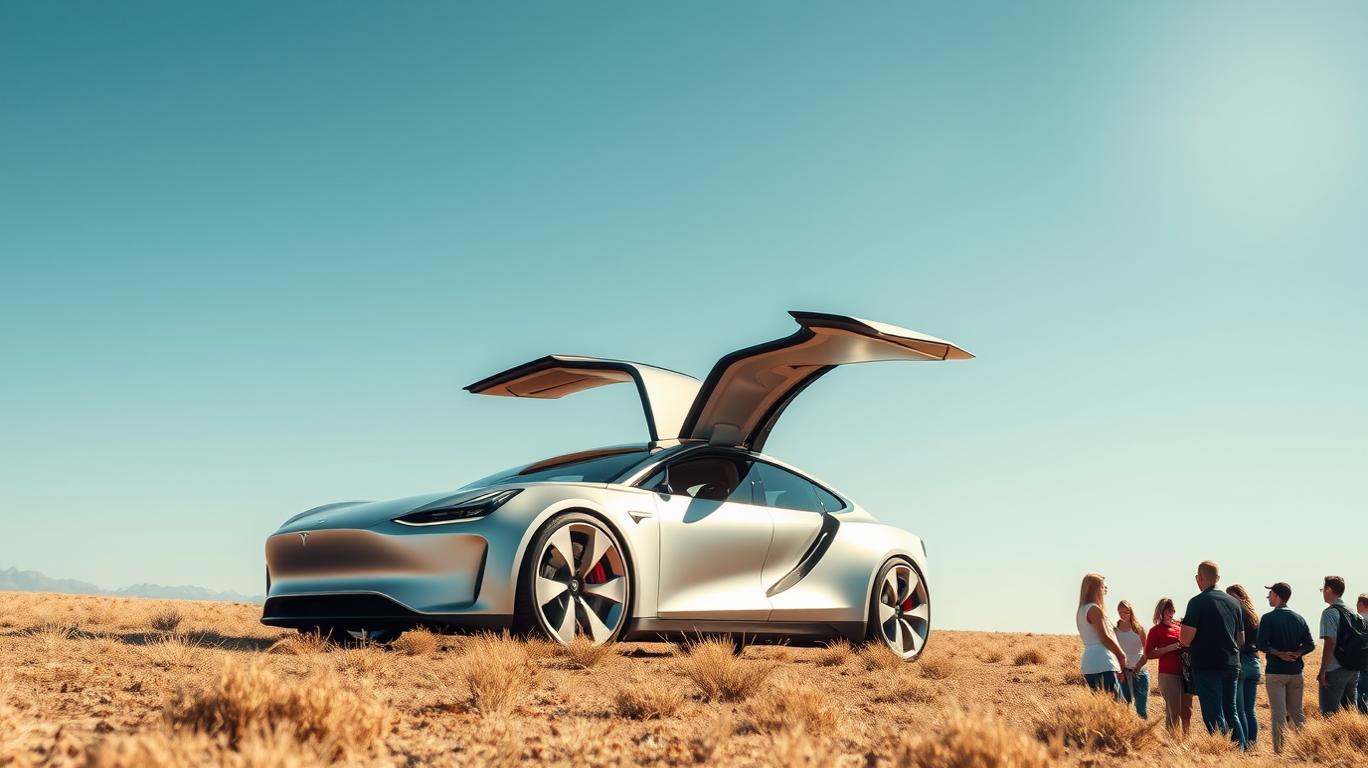
The potential launch of the Model Q could significantly impact Tesla's production capacity and market share. With a rumored range of 500 miles and a price point around $40,000, the Model Q is expected to attract a broader range of customers, increasing Tesla's market share in the mid-size electric vehicle segment. Additionally, the production of the Model Q could help Tesla reach its target of producing 1.5 million vehicles annually by 2025, further expanding its production capacity.
Regulatory approvals, such as the tentative Full Self-Driving (FSD) approval in China, play a significant role in Tesla's stock price increase. Winning FSD approval in China, the company's second-largest market, opens a new revenue stream, as users pay a monthly fee for the feature. Analysts have noted that this approval is a "watershed moment" for Tesla, as it paves the way for expanded partnerships with local tech giants like Baidu, which can ease data security concerns and further benefit Tesla's stock price.
The Model Q's unique design and features differentiate it from Tesla's existing models and competitors. Rumored to be a mid-size, luxury sedan with a starting price around $70,000, the Model Q is expected to offer a longer range than current models, potentially up to 400 miles on a single charge. Additionally, it may feature a more advanced version of Tesla's Autopilot system, with enhanced safety and convenience features. In terms of competition, the Model Q will likely face off against luxury sedans like the Mercedes-Benz E-Class and BMW 5 Series, but its unique electric powertrain and innovative features could give it a competitive edge.
The expected production costs and pricing strategy for the Model Q will impact Tesla's financials. Estimated production costs are around $25,000 per vehicle, with Tesla aiming to price the Model Q competitively at approximately $30,000. This pricing strategy is expected to significantly boost Tesla's sales volume and market share, potentially doubling its annual production capacity to 4 million vehicles by 2026. However, the impact on Tesla's financials will depend on factors such as economies of scale, battery costs, and competition from other automakers.
In conclusion, the potential launch of the Model Q, along with regulatory approvals like the tentative FSD approval in China, is driving optimism and a stock price increase for Tesla. The Model Q's unique design and features, as well as its competitive pricing strategy, position it to capture a larger share of the mid-size electric vehicle market. As Tesla continues to innovate and expand its product offerings, investors can expect a continued focus on risk management, informed market predictions, and thoughtful asset allocation to maximize long-term growth.
TSLA--
Tesla's stock has been on a rollercoaster ride in recent months, but it seems to be gaining momentum once again. Deutsche Bank has recently hiked its price target for Tesla shares to $370, driven by optimism surrounding the upcoming Model Q. This article explores the potential impact of the Model Q on Tesla's production capacity, market share, and financials, as well as the role of regulatory approvals in the company's stock price increase.
The potential launch of the Model Q could significantly impact Tesla's production capacity and market share. With a rumored range of 500 miles and a price point around $40,000, the Model Q is expected to attract a broader range of customers, increasing Tesla's market share in the mid-size electric vehicle segment. Additionally, the production of the Model Q could help Tesla reach its target of producing 1.5 million vehicles annually by 2025, further expanding its production capacity.
Regulatory approvals, such as the tentative Full Self-Driving (FSD) approval in China, play a significant role in Tesla's stock price increase. Winning FSD approval in China, the company's second-largest market, opens a new revenue stream, as users pay a monthly fee for the feature. Analysts have noted that this approval is a "watershed moment" for Tesla, as it paves the way for expanded partnerships with local tech giants like Baidu, which can ease data security concerns and further benefit Tesla's stock price.
The Model Q's unique design and features differentiate it from Tesla's existing models and competitors. Rumored to be a mid-size, luxury sedan with a starting price around $70,000, the Model Q is expected to offer a longer range than current models, potentially up to 400 miles on a single charge. Additionally, it may feature a more advanced version of Tesla's Autopilot system, with enhanced safety and convenience features. In terms of competition, the Model Q will likely face off against luxury sedans like the Mercedes-Benz E-Class and BMW 5 Series, but its unique electric powertrain and innovative features could give it a competitive edge.
The expected production costs and pricing strategy for the Model Q will impact Tesla's financials. Estimated production costs are around $25,000 per vehicle, with Tesla aiming to price the Model Q competitively at approximately $30,000. This pricing strategy is expected to significantly boost Tesla's sales volume and market share, potentially doubling its annual production capacity to 4 million vehicles by 2026. However, the impact on Tesla's financials will depend on factors such as economies of scale, battery costs, and competition from other automakers.
In conclusion, the potential launch of the Model Q, along with regulatory approvals like the tentative FSD approval in China, is driving optimism and a stock price increase for Tesla. The Model Q's unique design and features, as well as its competitive pricing strategy, position it to capture a larger share of the mid-size electric vehicle market. As Tesla continues to innovate and expand its product offerings, investors can expect a continued focus on risk management, informed market predictions, and thoughtful asset allocation to maximize long-term growth.

Divulgación editorial y transparencia de la IA: Ainvest News utiliza tecnología avanzada de Modelos de Lenguaje Largo (LLM) para sintetizar y analizar datos de mercado en tiempo real. Para garantizar los más altos estándares de integridad, cada artículo se somete a un riguroso proceso de verificación con participación humana.
Mientras la IA asiste en el procesamiento de datos y la redacción inicial, un miembro editorial profesional de Ainvest revisa, verifica y aprueba de forma independiente todo el contenido para garantizar su precisión y cumplimiento con los estándares editoriales de Ainvest Fintech Inc. Esta supervisión humana está diseñada para mitigar las alucinaciones de la IA y garantizar el contexto financiero.
Advertencia sobre inversiones: Este contenido se proporciona únicamente con fines informativos y no constituye asesoramiento profesional de inversión, legal o financiero. Los mercados conllevan riesgos inherentes. Se recomienda a los usuarios que realicen una investigación independiente o consulten a un asesor financiero certificado antes de tomar cualquier decisión. Ainvest Fintech Inc. se exime de toda responsabilidad por las acciones tomadas con base en esta información. ¿Encontró un error? Reportar un problema


SOBRE NOSOTROS
Nuestra historiaAutores de noticiasBase de conocimientosPolítica de privacidadTérmino de usoDescargo de responsabilidad de corretaje de tercerosTérminos de uso de AIMEDivulgaciones de riesgos de AInvest AICarrerasCONTÁCTENOS
Email: support@ainvest.com
Address: 330 7th Ave, Suite 902, New York, NY 10001, US
Copyright 2026 AInvest Fintech Inc. All rights reserved.


Comentarios
Aún no hay comentarios