
Tesla Settles Autopilot Lawsuit Over Fatal Crash in Florida.
PorAinvest
jueves, 17 de julio de 2025, 4:19 pm ET2 min de lectura
TSLA--
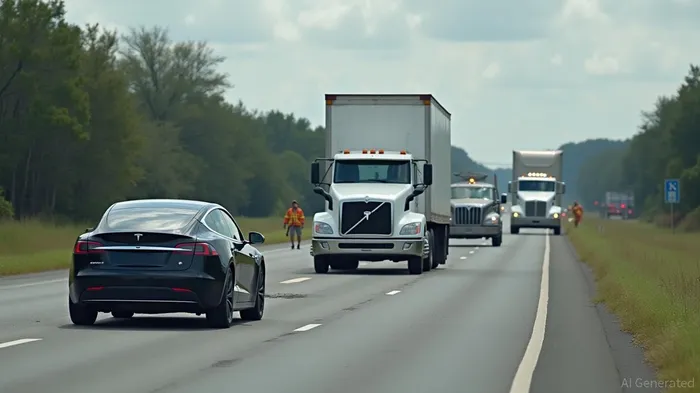
The crash occurred in April 2019 near Key Largo, Florida. The driver, George McGee, was operating a Tesla Model S with Autopilot engaged. Despite the system's capabilities, McGee's Tesla collided with a parked Chevrolet Tahoe at over 50 miles per hour, resulting in the death of 22-year-old Naibel Benavides Leon and severe injuries to her companion, Dillon Angulo. McGee survived the incident [2].
The lawsuit, filed by Angulo and the Benavides family, accused Tesla of exaggerating the capabilities of its Autopilot system, potentially encouraging driver over-reliance. Lawyers for the plaintiffs argued that Tesla's marketing misled drivers about Autopilot's reliability. They pointed to a 2016 Tesla video showing a car appearing to drive itself, with a caption reading: "The person in the driver’s seat is only there for legal reasons. He is not doing anything. The car is driving itself." A senior Tesla engineer later admitted in a separate lawsuit that the video was staged and did not reflect actual capabilities [2].
Tesla maintains that its systems enhance safety when used properly, requiring constant driver attention. The company's website states, "Autopilot and Full Self-Driving (Supervised) are intended for use with a fully attentive driver, who has their hands on the wheel and is prepared to take over at any moment. While these features are designed to become more capable over time, the currently enabled features do not make the vehicle autonomous" [2].
The settlement in the Florida case is the latest in a series of lawsuits against Tesla questioning the safety of its driver-assistance systems. Tesla has often settled these cases out of court, but the Miami proceeding, expected to last three weeks, could set precedents for how courts view manufacturer liability in semi-autonomous EV crashes [2].
The trial highlights real-world implications for EV owners, including the need for vigilance despite advanced features. It also spotlights industry concerns about the transparency and reliability of driver-assistance systems in electric vehicles [2].
References:
[1] https://www.npr.org/2025/07/14/nx-s1-5462851/tesla-lawsuit-autopilot-florida
[2] https://evxl.co/fr/2025/07/14/tesla-autopilot-jury-scrutiny-fatal-2019-florida-crash-trial/
Tesla settled a lawsuit over a 2019 crash in Florida where a driver died after the Autopilot system allegedly failed to avoid a tractor-trailer. The settlement was disclosed in a court filing and comes after a series of out-of-court accords reached by the company in similar cases. The National Transportation Safety Board previously criticized Tesla's technology for insufficiently monitoring driver engagement, citing "inattention due to over-reliance on automation" for the driver's failure to react to the truck.
Tesla has settled a lawsuit stemming from a 2019 crash in Florida, where a driver died after the Autopilot system allegedly failed to avoid a tractor-trailer. The settlement was disclosed in a court filing and comes after a series of out-of-court accords reached by the company in similar cases. The National Transportation Safety Board (NTSB) previously criticized Tesla's technology for insufficiently monitoring driver engagement, citing "inattention due to over-reliance on automation" for the driver's failure to react to the truck [1].The crash occurred in April 2019 near Key Largo, Florida. The driver, George McGee, was operating a Tesla Model S with Autopilot engaged. Despite the system's capabilities, McGee's Tesla collided with a parked Chevrolet Tahoe at over 50 miles per hour, resulting in the death of 22-year-old Naibel Benavides Leon and severe injuries to her companion, Dillon Angulo. McGee survived the incident [2].
The lawsuit, filed by Angulo and the Benavides family, accused Tesla of exaggerating the capabilities of its Autopilot system, potentially encouraging driver over-reliance. Lawyers for the plaintiffs argued that Tesla's marketing misled drivers about Autopilot's reliability. They pointed to a 2016 Tesla video showing a car appearing to drive itself, with a caption reading: "The person in the driver’s seat is only there for legal reasons. He is not doing anything. The car is driving itself." A senior Tesla engineer later admitted in a separate lawsuit that the video was staged and did not reflect actual capabilities [2].
Tesla maintains that its systems enhance safety when used properly, requiring constant driver attention. The company's website states, "Autopilot and Full Self-Driving (Supervised) are intended for use with a fully attentive driver, who has their hands on the wheel and is prepared to take over at any moment. While these features are designed to become more capable over time, the currently enabled features do not make the vehicle autonomous" [2].
The settlement in the Florida case is the latest in a series of lawsuits against Tesla questioning the safety of its driver-assistance systems. Tesla has often settled these cases out of court, but the Miami proceeding, expected to last three weeks, could set precedents for how courts view manufacturer liability in semi-autonomous EV crashes [2].
The trial highlights real-world implications for EV owners, including the need for vigilance despite advanced features. It also spotlights industry concerns about the transparency and reliability of driver-assistance systems in electric vehicles [2].
References:
[1] https://www.npr.org/2025/07/14/nx-s1-5462851/tesla-lawsuit-autopilot-florida
[2] https://evxl.co/fr/2025/07/14/tesla-autopilot-jury-scrutiny-fatal-2019-florida-crash-trial/
Divulgación editorial y transparencia de la IA: Ainvest News utiliza tecnología avanzada de Modelos de Lenguaje Largo (LLM) para sintetizar y analizar datos de mercado en tiempo real. Para garantizar los más altos estándares de integridad, cada artículo se somete a un riguroso proceso de verificación con participación humana.
Mientras la IA asiste en el procesamiento de datos y la redacción inicial, un miembro editorial profesional de Ainvest revisa, verifica y aprueba de forma independiente todo el contenido para garantizar su precisión y cumplimiento con los estándares editoriales de Ainvest Fintech Inc. Esta supervisión humana está diseñada para mitigar las alucinaciones de la IA y garantizar el contexto financiero.
Advertencia sobre inversiones: Este contenido se proporciona únicamente con fines informativos y no constituye asesoramiento profesional de inversión, legal o financiero. Los mercados conllevan riesgos inherentes. Se recomienda a los usuarios que realicen una investigación independiente o consulten a un asesor financiero certificado antes de tomar cualquier decisión. Ainvest Fintech Inc. se exime de toda responsabilidad por las acciones tomadas con base en esta información. ¿Encontró un error? Reportar un problema


SOBRE NOSOTROS
Nuestra historiaAutores de noticiasBase de conocimientosPolítica de privacidadTérmino de usoDescargo de responsabilidad de corretaje de tercerosTérminos de uso de AIMEDivulgaciones de riesgos de AInvest AICarrerasCONTÁCTENOS
Email: support@ainvest.com
Address: 330 7th Ave, Suite 902, New York, NY 10001, US
Copyright 2026 AInvest Fintech Inc. All rights reserved.


Comentarios
Aún no hay comentarios