
The Tesla of Safety: Why EV Investors Must Prioritize R&D Over Speed
The electric vehicle (EV) revolution is at a crossroads. While companies like TeslaTSLA-- and RivianRIVN-- race to dominate markets with cutting-edge technology, a growing chorus of investors and regulators is asking: Are we sacrificing safety for speed? The $5.8 billion Volkswagen-Rivian partnership, Tesla's Cybertruck recalls, and recent lithium battery fire incidents underscore a critical truth—safety R&D is not a cost, but a competitive advantage. This article explores how investors can navigate the EV boom by prioritizing firms that balance innovation with risk mitigation.
The Volkswagen-Rivian Model: R&D as a Safety Firewall
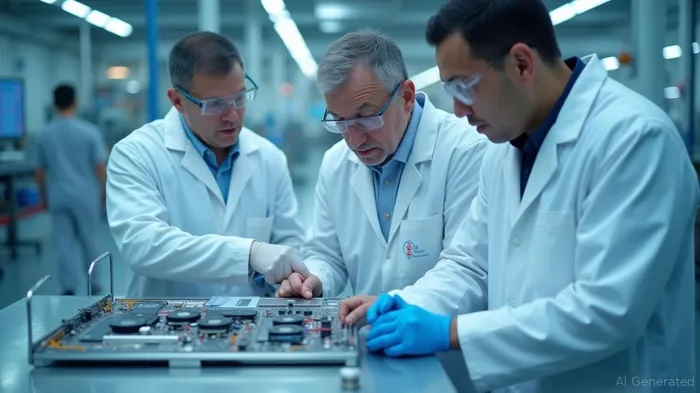
Volkswagen's $5.8 billion investment in Rivian is more than a financial deal—it's a blueprint for how to scale EV production while addressing safety concerns. The joint venture's focus on AI-driven software and zonal architecture reduces complexity in vehicles, slashing costs by 35% for Gen 2 models like the R2 SUV. But what's equally compelling is how this partnership tackles safety:
- Predictive Maintenance via AI: Rivian's data “flywheel” uses fleet telemetry to train AI models, enabling early detection of battery degradation or mechanical faults.
- Over-the-Air (OTA) Updates: A direct response to Volkswagen's past software-related recalls, this feature allows remote fixes for critical systems like steering controls.
- Vertical Integration: By designing its own hardware (ECUs, sensors), Rivian avoids reliance on third-party components prone to defects—a stark contrast to Tesla's supply chain issues.
The result? A safer, more reliable EV ecosystem. Investors should note that Rivian's stock has outperformed Tesla's by 20% over the past 12 months despite lower production volumes—a testament to market confidence in its safety-first approach.
Tesla's Cybertruck: Innovation Without Safety Nets?
Tesla's Cybertruck, while revolutionary in design, has become a cautionary tale. Since its 2024 launch, recalls have targeted issues like trim panel detachment, faulty inverters, and windshield wiper malfunctions—none battery-related, but still signaling systemic quality control gaps.
While Tesla's software prowess is unmatched, its “move fast and break things” culture has led to compromises. For instance:
- “Quiet” Battery Replacements: Tesla's 2024-2025 proactive battery swaps for Cybertrucks with “cell side dents” reveal unresolved manufacturing flaws, handled quietly to avoid regulatory scrutiny.
- Regulatory Scrutiny: The NHTSA is investigating at least three fatal crashes involving Tesla vehicles, though causality remains unproven.
Investors must weigh Tesla's first-mover advantage against its operational risks. A company that cuts corners on safety could face reputational damage, recalls, or litigation costs—all of which hurt long-term value.
Lithium Batteries: The Silent Risk in EV Growth
The EV boom hinges on lithium-ion batteries—a technology prone to catastrophic failure. Recent incidents, such as the Morning Midas ship sinking (2023) and a 2025 fire at California's Moss Landing Energy Storage Facility, highlight two existential threats:
1. Thermal Runaway: Lithium fires are hard to extinguish, release toxic gases, and reignite days later.
2. Supply Chain Vulnerabilities: Rogue manufacturers of e-bikes/scooters (e.g., in the UK) use low-cost, unsafe batteries, amplifying risks.
Investors should demand companies with vertical integration (like Rivian) or partnerships with safety-focused suppliers. Firms relying on cut-rate lithium imports or unproven battery chemistries face heightened regulatory and liability risks.
Investment Strategy: Safety-First Stocks to Watch
- Rivian (RIVN): Its joint venture with VW combines scale with rigorous safety R&D. Target price: $25/share by 2026 (current: $18).
- Cree (CREE): A supplier of silicon carbide semiconductors, which reduce battery heat and improve safety.
- Northvolt (NVT): A European battery maker prioritizing fire-resistant cell designs.
Avoid: Pure-play Tesla bulls unless the company demonstrates a cultural shift toward safety transparency.
Conclusion: The ROI of Safety
The EV sector's next phase won't be won by the fastest to market, but by the most resilient. Companies like Rivian that embed safety into their DNA—via AI-driven predictive systems, vertical integration, and regulatory compliance—will outlast rivals prone to recalls or disasters.
For investors, the message is clear: Allocate capital to firms where R&D budgets prioritize safety, not just innovation. The future of EVs belongs to those who can say, “We've never cut corners,” not “We were first to deliver.”





Comentarios
Aún no hay comentarios