
Tesla's Robotaxi Finally Set to Launch: What You Need to Know
Tesla has confirmed that it will unveil its self-driving taxi service, known as Robotaxi, on October 10th by officially posting a poster with the slogan "We Robot", indicating the aforementioned information.
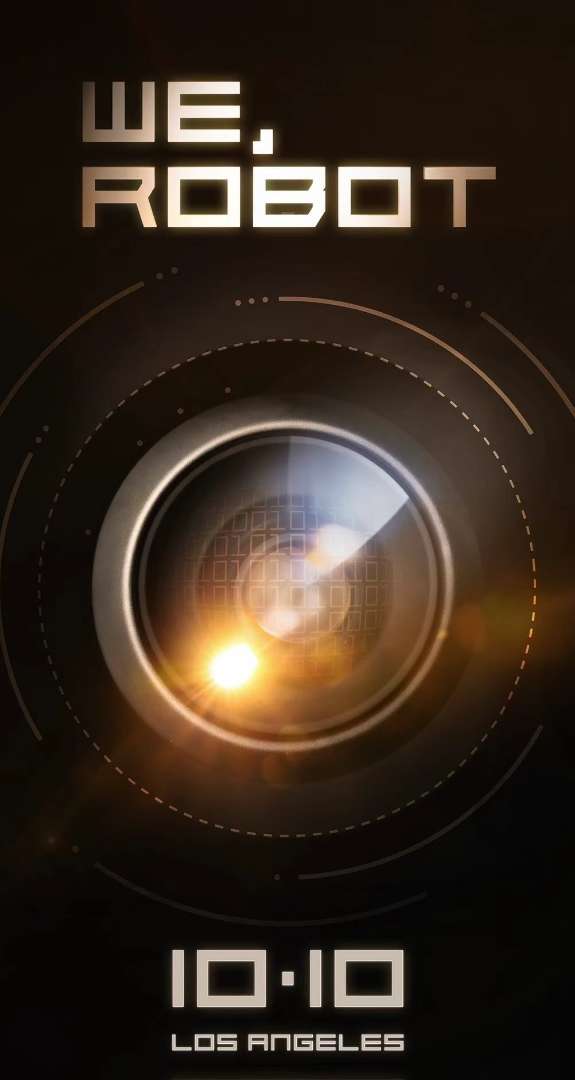
The Robotaxi launch event will be held in Los Angeles, USA. Tesla CEO Elon Musk retweeted this poster on the same day, stating that the product release on October 10th would be one for the history books.
The development and market launch of Tesla's Robotaxi has been full of twists and turns. As early as 2021, when the product was initiated, Musk demanded that the new model must eliminate the steering wheel and brake pedals, with Tesla betting heavily on autonomous driving. Under the persuasion of executives and engineering teams, Musk reluctantly agreed to produce an entry-level model alongside the Robotaxi, retaining the steering wheel and brake pedals.
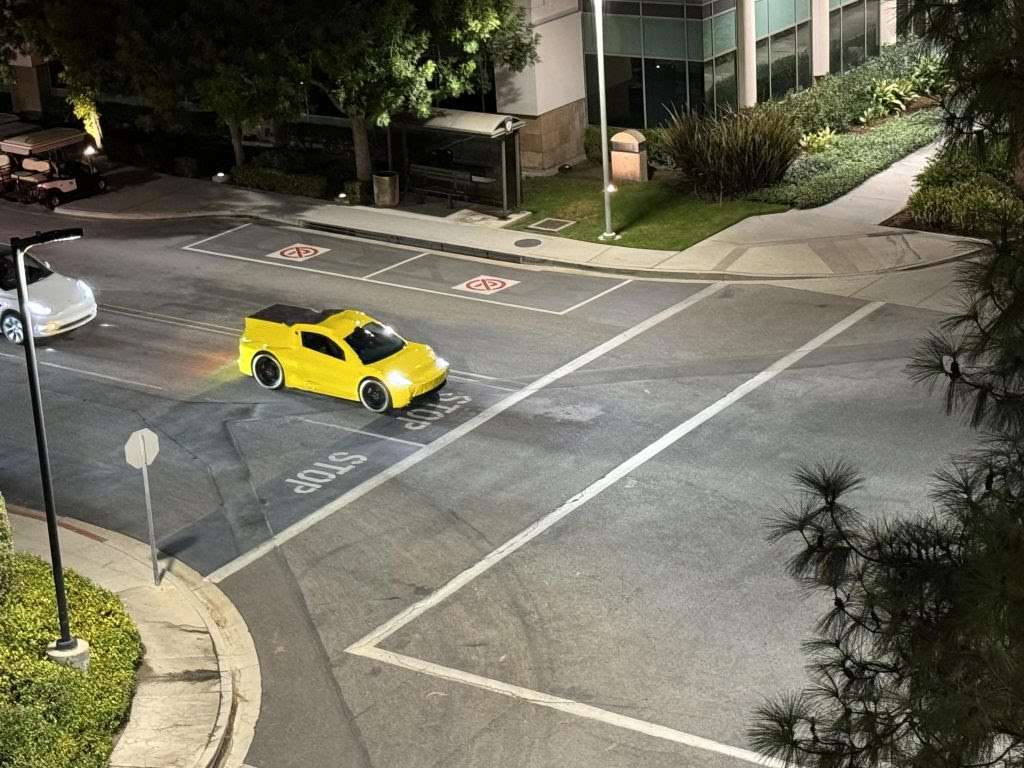
According to multiple media sources, as a vehicle for autonomous driving technology, it may still eliminate the steering wheel and pedals inside, with the rear seats arranged to face each other front and back, and equipped with screens. The exterior design may resemble the Cybertruck. Additionally, a person claiming to be a Warner Bros. studio employee recently posted a image that appears to be Tesla's Robotaxi, in which the car is tightly sealed with yellow cover.
In January 2024, Tesla began to roll out a new version of its Full-Self Driving (FSD) system to the public, which uses an end-to-end architecture, which refers to the complete integration from the perception to the control end, using just one large model. This impressed many with its performance.
Since then, Musk's interest has gradually shifted towards AI and autonomous driving. On April 5th, he suddenly announced on social media that he would launch the Robotaxi on August 8th, causing a stir in the market.
On July 15th, Musk personally admitted that the Robotaxi would be postponed to October 10th, citing his request for the team to change the front design of the Robotaxi and the need for more time to prepare for other content. This time, Tesla did not miss the deadline again.
Tesla is one of the leading companies in autonomous driving technology, and the Robotaxi is seen as a disruptor of the automotive industry's business model. The level of attention for Tesla's launch event is unimaginable.
In terms of potential operations and user experience, Musk previously estimated that the cost per mile for Robotaxi would be only $0.18, while the cost for a human-driven taxi is $2-3 per mile. In this regard, analysts stated that high cost-performance ratio is the core competitiveness of Robotaxi. However, Electrek predicts that it will operate on a small scale, with users summoning vehicles using an app developed by Tesla.
In addition to autonomous driving, Electrek expects to see the latest version of the Optimus robot at the launch event. There is speculation that, judging from the "We, Robot" poster theme, Tesla may not only release one product this time, but the Optimus Gen3 might also make an appearance.
In fact, it is not difficult to associate the two products, Robotaxi and Optimus, with the camera in the background of the released poster image. Both are equipped with cameras with built-in FSD chips as the technical foundation, relying on a pure vision route and algorithmic computing power to support the end-to-end AI large model.
However, the outside world is not clear about how Tesla implements end-to-end, and the FSD is still being continuously iterated and upgraded. On September 5th, Tesla's artificial intelligence team announced that the capabilities of the FSD have advanced again. In September, FSD plans to triple the interval mileage between two human interventions.
Human intervention refers to a situation where the intelligent driving system encounters a problem that cannot be solved and requires a human driver to take over. The interval mileage between two human interventions is a key indicator of the system's capabilities, and the longer the interval, the more stable the system is. In October, Tesla will release the 13th new version of FSD, which will increase the interval mileage between two human interventions by six times.
It is currently impossible to determine whether Tesla's Robotaxi will be equipped with the same version of FSD. The industry speculates that Tesla will announce the Robotaxi product and the timetable for going on the road on October 10th, and Tesla may hold a portion of the vehicles to form a fleet for operation in some cities. Whether Tesla's Robotaxi will be sold to individuals is still uncertain.
The cost of Tesla's Robotaxi is much lower than its competitors' vehicles, like Waymo, so this could mean Tesla can promote Robotaxi on a large scale.
An unnamed senior industry insider said that Tesla's FSD has proven the potential of its autonomous driving technology, and the success of the robotaxi business depends on whether the business model is established, that is, whether the low cost of fleet operation held by the fleet is lower than hiring human drivers. Compared with other places, the United States will be very suitable for the application of Robotaxi. He believes that once the business model is verified, Tesla's valuation will rise sharply.





Comentarios
Aún no hay comentarios