
Tesla's China Setback: Falling Sales and Strategic Shifts
Generado por agente de IAWesley Park
martes, 3 de diciembre de 2024, 3:54 pm ET2 min de lectura
TSLA--
In the competitive world of electric vehicles (EVs), Tesla has been facing a challenge in China, its second-largest market. In November 2024, Tesla's China-made EV sales fell 4.3% year-on-year, marking a decline amidst intensifying competition from local rivals like BYD. This article explores the factors contributing to Tesla's sales decline and the strategic shifts the company is implementing to maintain its market share.
Tesla's sales of China-made EVs, totaling 78,856 units in November, were down 4.3% compared to the same period last year. However, this represents a 15% increase from the previous month, indicating a market shift rather than a collapse (Source 1, 2). The decline can be attributed to several factors, including the aggressive expansion of Chinese competitors, government subsidies, and regulatory challenges.
One of the primary factors contributing to Tesla's sales decline is the aggressive expansion of Chinese EV manufacturers. BYD, for instance, sold a record 504,003 vehicles in November, marking its second consecutive month of over 500,000 vehicles sold (Source 3). This surge in sales, driven by the Dynasty and Ocean lineups of EVs and plug-in hybrids, has intensified competition in the Chinese market. As these rivals gain traction, Tesla's market share has been impacted.
Government subsidies and trade-in incentives have also played a significant role in boosting Chinese EV sales, excluding Tesla. From January to November 2024, Chinese EV sales surged by 51% year-over-year to approximately 1.46 million units (Source 2). As of November 18, over 4 million applications for these subsidies had been submitted, with the majority for new energy vehicles due to bigger subsidies (Source 2). Peer BYD sold a record 504,003 vehicles in November, marking its second consecutive month of over 500,000 vehicles sold (Source 3).
Regulatory challenges, such as data security concerns, have also impacted Tesla's ability to maintain market share in China. In 2021, China prohibited Tesla from transferring data collected by its cars back to the US, hampering its ability to improve self-driving technology. While Tesla has recently passed data security requirements, it remains the only foreign company to do so, limiting its competitive edge against local rivals like BYD, which are allowed to offer autonomous driving systems (Source 4).
To maintain market share, Tesla has been focusing on localization, having sold about 73,000 vehicles to domestic customers in November, a record this year. However, Tesla's exports also declined, indicating a shift towards catering to the domestic market (Source 2). Tesla's strategic shift towards localization is a response to the competitive landscape and a means to better navigate the Chinese market.
In conclusion, Tesla's sales decline in the Chinese market can be attributed to the aggressive expansion of local competitors, government subsidies, and regulatory challenges. The company is responding to these challenges by focusing on localization and strategic pricing adjustments. As the market continues to evolve, investors should monitor Tesla's progress and assess the long-term impact of these strategic shifts on the company's valuation.
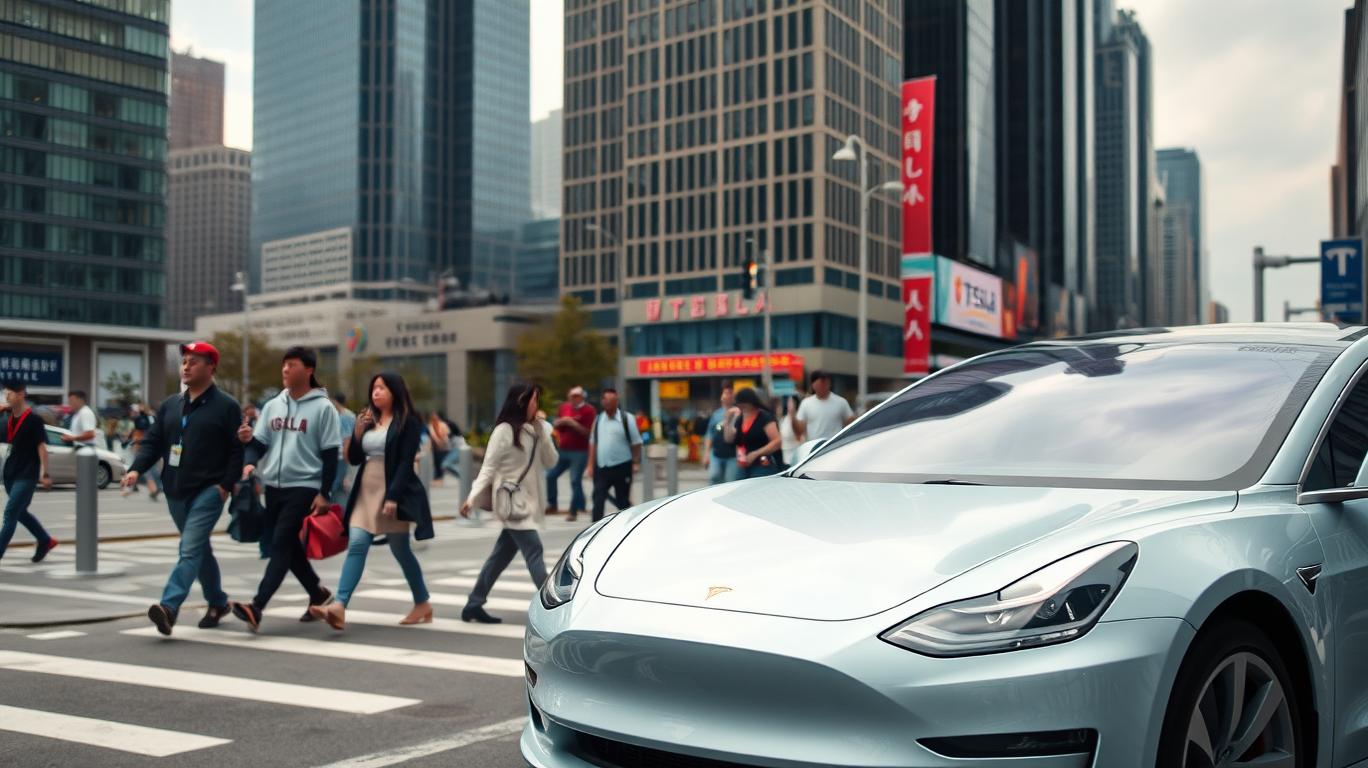
In the competitive world of electric vehicles (EVs), Tesla has been facing a challenge in China, its second-largest market. In November 2024, Tesla's China-made EV sales fell 4.3% year-on-year, marking a decline amidst intensifying competition from local rivals like BYD. This article explores the factors contributing to Tesla's sales decline and the strategic shifts the company is implementing to maintain its market share.
Tesla's sales of China-made EVs, totaling 78,856 units in November, were down 4.3% compared to the same period last year. However, this represents a 15% increase from the previous month, indicating a market shift rather than a collapse (Source 1, 2). The decline can be attributed to several factors, including the aggressive expansion of Chinese competitors, government subsidies, and regulatory challenges.
One of the primary factors contributing to Tesla's sales decline is the aggressive expansion of Chinese EV manufacturers. BYD, for instance, sold a record 504,003 vehicles in November, marking its second consecutive month of over 500,000 vehicles sold (Source 3). This surge in sales, driven by the Dynasty and Ocean lineups of EVs and plug-in hybrids, has intensified competition in the Chinese market. As these rivals gain traction, Tesla's market share has been impacted.
Government subsidies and trade-in incentives have also played a significant role in boosting Chinese EV sales, excluding Tesla. From January to November 2024, Chinese EV sales surged by 51% year-over-year to approximately 1.46 million units (Source 2). As of November 18, over 4 million applications for these subsidies had been submitted, with the majority for new energy vehicles due to bigger subsidies (Source 2). Peer BYD sold a record 504,003 vehicles in November, marking its second consecutive month of over 500,000 vehicles sold (Source 3).
Regulatory challenges, such as data security concerns, have also impacted Tesla's ability to maintain market share in China. In 2021, China prohibited Tesla from transferring data collected by its cars back to the US, hampering its ability to improve self-driving technology. While Tesla has recently passed data security requirements, it remains the only foreign company to do so, limiting its competitive edge against local rivals like BYD, which are allowed to offer autonomous driving systems (Source 4).
To maintain market share, Tesla has been focusing on localization, having sold about 73,000 vehicles to domestic customers in November, a record this year. However, Tesla's exports also declined, indicating a shift towards catering to the domestic market (Source 2). Tesla's strategic shift towards localization is a response to the competitive landscape and a means to better navigate the Chinese market.
In conclusion, Tesla's sales decline in the Chinese market can be attributed to the aggressive expansion of local competitors, government subsidies, and regulatory challenges. The company is responding to these challenges by focusing on localization and strategic pricing adjustments. As the market continues to evolve, investors should monitor Tesla's progress and assess the long-term impact of these strategic shifts on the company's valuation.

Divulgación editorial y transparencia de la IA: Ainvest News utiliza tecnología avanzada de Modelos de Lenguaje Largo (LLM) para sintetizar y analizar datos de mercado en tiempo real. Para garantizar los más altos estándares de integridad, cada artículo se somete a un riguroso proceso de verificación con participación humana.
Mientras la IA asiste en el procesamiento de datos y la redacción inicial, un miembro editorial profesional de Ainvest revisa, verifica y aprueba de forma independiente todo el contenido para garantizar su precisión y cumplimiento con los estándares editoriales de Ainvest Fintech Inc. Esta supervisión humana está diseñada para mitigar las alucinaciones de la IA y garantizar el contexto financiero.
Advertencia sobre inversiones: Este contenido se proporciona únicamente con fines informativos y no constituye asesoramiento profesional de inversión, legal o financiero. Los mercados conllevan riesgos inherentes. Se recomienda a los usuarios que realicen una investigación independiente o consulten a un asesor financiero certificado antes de tomar cualquier decisión. Ainvest Fintech Inc. se exime de toda responsabilidad por las acciones tomadas con base en esta información. ¿Encontró un error? Reportar un problema


SOBRE NOSOTROS
Nuestra historiaAutores de noticiasBase de conocimientosPolítica de privacidadTérmino de usoDescargo de responsabilidad de corretaje de tercerosTérminos de uso de AIMEDivulgaciones de riesgos de AInvest AICarrerasCONTÁCTENOS
Email: support@ainvest.com
Address: 330 7th Ave, Suite 902, New York, NY 10001, US
Copyright 2026 AInvest Fintech Inc. All rights reserved.


Comentarios
Aún no hay comentarios