
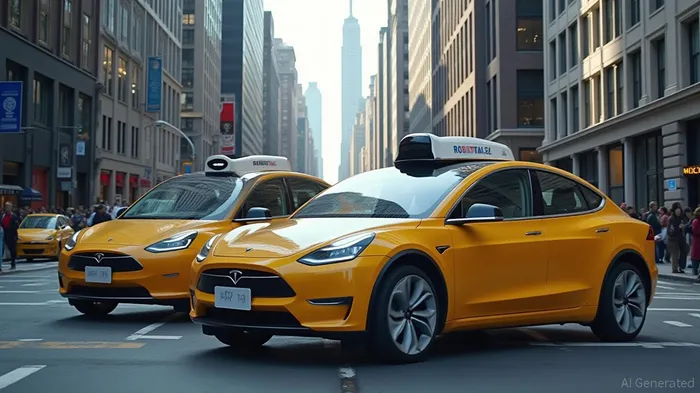
Tesla's Robotaxis Set to Disrupt NYC's Yellow Taxi Industry
PorAinvest
jueves, 14 de agosto de 2025, 2:39 am ET2 min de lectura
TSLA--
Tesla's Full Self-Driving (FSD) technology has demonstrated superior safety and efficiency over human drivers. According to recent reports, Tesla vehicles are ten times less likely to be involved in accidents compared to human-driven vehicles [1]. This technological advantage, coupled with the potential for lower operational costs, positions Robotaxis as a compelling alternative to traditional taxis.
One of the key advantages of Robotaxis is their potential for lower operational costs. Unlike traditional taxis, which incur expenses for salaries, benefits, and tips, Robotaxis operate autonomously. This model allows for more competitive pricing and could result in fares that are dramatically lower than those of existing ride-sharing services like Uber and Lyft [1]. As prices for Robotaxi rides decrease, customers may start to migrate away from traditional Yellow Cabs.
The availability and scalability of Robotaxis are also significant advantages. Traditional cabs operate with human drivers who require breaks and may have limited availability during peak hours. Robotaxis, however, can theoretically function around the clock, save for necessary charging times. Tesla's focus on scaling its Robotaxi fleet means that once operational, these vehicles could significantly reduce wait times and increase ride availability across all five boroughs [1]. This capability is particularly beneficial in less congested areas where traditional cabs may be less accessible.
Safety is a paramount concern in transportation, and Tesla's FSD technology boasts impressive safety statistics. As public trust in autonomous vehicles grows, many riders may prefer the safety of a Robotaxi over a traditional cab. The perception of safety associated with Robotaxis is likely to improve further as advancements in autonomous driving technology continue [1].
The user experience with Tesla's Robotaxis is designed to be intuitive and enjoyable. Features such as customizable cabin temperature and entertainment options, along with a responsive rear screen for music, games, and video streaming, make rides more enjoyable and present a competitive edge over traditional taxis [1].
New York City is actively pursuing a greener future, aiming for a city-owned fleet of all-electric vehicles by 2027. This initiative aligns perfectly with Tesla's mission, as all Robotaxis will be zero-emission vehicles. The city's Green Rides Initiative aims to ensure that ridesharing trips are conducted with environmentally friendly vehicles by 2030, further pressuring traditional Yellow Cabs to adapt or face obsolescence [1].
The advent of Tesla's Robotaxis in New York City presents an array of challenges for traditional Yellow Cabs. With lower operational costs, enhanced safety features, improved user experience, and a commitment to sustainability, Robotaxis are set to disrupt the ride-hailing market significantly. The potential for higher income with less financial burden on drivers makes this model particularly attractive.
As the city embraces innovation, the future of transportation may very well lean towards autonomous solutions, leaving traditional cabs to adapt or risk becoming relics of the past. The Yellow Cab industry will need to reevaluate its strategies and embrace change to remain competitive in this evolving landscape.
References:
[1] https://www.tesery.com/blogs/news/tesla-robotaxi-vs-new-york-taxi-why-the-yellow-cab-has-a-lot-to-lose?srsltid=AfmBOop_2tzUr5bdQU9szs_M4jSCMK5etU8AFA890-HkJOvau1U-puno
[2] https://www.tesery.com/blogs/news/tesla-robotaxi-vs-new-york-taxi-why-the-yellow-cab-has-a-lot-to-lose?srsltid=AfmBOoo21ggjwEJyHt6aitF3FAYDbj595XTg81vR0G26krjkmIv9q8dr
Tesla's robotaxis are set to disrupt New York City's yellow taxi industry. The company has started hiring test drivers for its robotaxis, which will offer cheaper rides and greater advantages compared to manned taxi services. Tesla's Full Self-Driving technology has proven to be safer and more efficient than human drivers, and the company aims to rapidly scale the number of robotaxis, leading to more vehicles available for hire and shorter waiting times for passengers.
The urban transportation landscape in New York City is poised for significant disruption with the advent of Tesla's Robotaxis. Tesla has initiated the hiring of test drivers for its autonomous ride-hailing service, which promises cheaper fares and enhanced operational efficiency compared to traditional manned taxi services [1].Tesla's Full Self-Driving (FSD) technology has demonstrated superior safety and efficiency over human drivers. According to recent reports, Tesla vehicles are ten times less likely to be involved in accidents compared to human-driven vehicles [1]. This technological advantage, coupled with the potential for lower operational costs, positions Robotaxis as a compelling alternative to traditional taxis.
One of the key advantages of Robotaxis is their potential for lower operational costs. Unlike traditional taxis, which incur expenses for salaries, benefits, and tips, Robotaxis operate autonomously. This model allows for more competitive pricing and could result in fares that are dramatically lower than those of existing ride-sharing services like Uber and Lyft [1]. As prices for Robotaxi rides decrease, customers may start to migrate away from traditional Yellow Cabs.
The availability and scalability of Robotaxis are also significant advantages. Traditional cabs operate with human drivers who require breaks and may have limited availability during peak hours. Robotaxis, however, can theoretically function around the clock, save for necessary charging times. Tesla's focus on scaling its Robotaxi fleet means that once operational, these vehicles could significantly reduce wait times and increase ride availability across all five boroughs [1]. This capability is particularly beneficial in less congested areas where traditional cabs may be less accessible.
Safety is a paramount concern in transportation, and Tesla's FSD technology boasts impressive safety statistics. As public trust in autonomous vehicles grows, many riders may prefer the safety of a Robotaxi over a traditional cab. The perception of safety associated with Robotaxis is likely to improve further as advancements in autonomous driving technology continue [1].
The user experience with Tesla's Robotaxis is designed to be intuitive and enjoyable. Features such as customizable cabin temperature and entertainment options, along with a responsive rear screen for music, games, and video streaming, make rides more enjoyable and present a competitive edge over traditional taxis [1].
New York City is actively pursuing a greener future, aiming for a city-owned fleet of all-electric vehicles by 2027. This initiative aligns perfectly with Tesla's mission, as all Robotaxis will be zero-emission vehicles. The city's Green Rides Initiative aims to ensure that ridesharing trips are conducted with environmentally friendly vehicles by 2030, further pressuring traditional Yellow Cabs to adapt or face obsolescence [1].
The advent of Tesla's Robotaxis in New York City presents an array of challenges for traditional Yellow Cabs. With lower operational costs, enhanced safety features, improved user experience, and a commitment to sustainability, Robotaxis are set to disrupt the ride-hailing market significantly. The potential for higher income with less financial burden on drivers makes this model particularly attractive.
As the city embraces innovation, the future of transportation may very well lean towards autonomous solutions, leaving traditional cabs to adapt or risk becoming relics of the past. The Yellow Cab industry will need to reevaluate its strategies and embrace change to remain competitive in this evolving landscape.
References:
[1] https://www.tesery.com/blogs/news/tesla-robotaxi-vs-new-york-taxi-why-the-yellow-cab-has-a-lot-to-lose?srsltid=AfmBOop_2tzUr5bdQU9szs_M4jSCMK5etU8AFA890-HkJOvau1U-puno
[2] https://www.tesery.com/blogs/news/tesla-robotaxi-vs-new-york-taxi-why-the-yellow-cab-has-a-lot-to-lose?srsltid=AfmBOoo21ggjwEJyHt6aitF3FAYDbj595XTg81vR0G26krjkmIv9q8dr


Divulgación editorial y transparencia de la IA: Ainvest News utiliza tecnología avanzada de Modelos de Lenguaje Largo (LLM) para sintetizar y analizar datos de mercado en tiempo real. Para garantizar los más altos estándares de integridad, cada artículo se somete a un riguroso proceso de verificación con participación humana.
Mientras la IA asiste en el procesamiento de datos y la redacción inicial, un miembro editorial profesional de Ainvest revisa, verifica y aprueba de forma independiente todo el contenido para garantizar su precisión y cumplimiento con los estándares editoriales de Ainvest Fintech Inc. Esta supervisión humana está diseñada para mitigar las alucinaciones de la IA y garantizar el contexto financiero.
Advertencia sobre inversiones: Este contenido se proporciona únicamente con fines informativos y no constituye asesoramiento profesional de inversión, legal o financiero. Los mercados conllevan riesgos inherentes. Se recomienda a los usuarios que realicen una investigación independiente o consulten a un asesor financiero certificado antes de tomar cualquier decisión. Ainvest Fintech Inc. se exime de toda responsabilidad por las acciones tomadas con base en esta información. ¿Encontró un error? Reportar un problema


SOBRE NOSOTROS
Nuestra historiaAutores de noticiasBase de conocimientosPolítica de privacidadTérmino de usoDescargo de responsabilidad de corretaje de tercerosTérminos de uso de AIMEDivulgaciones de riesgos de AInvest AICarrerasCONTÁCTENOS
Email: support@ainvest.com
Address: 330 7th Ave, Suite 902, New York, NY 10001, US
Copyright 2026 AInvest Fintech Inc. All rights reserved.


Comentarios
Aún no hay comentarios