
Tesla's Robotaxi Hurdles: Can NHTSA's Scrutiny Spark a Market Makeover?
The National Highway Traffic Safety Administration (NHTSA) has thrown a wrench into Tesla's ambitious Robotaxi plans, and investors are left wondering: Is this a speed bump or a roadblock? The stakes couldn't be higher. Tesla's valuation hinges on its ability to dominate the autonomous vehicle (AV) market, but regulators are now demanding answers to serious safety questions. Let's dig into the implications for Tesla's timeline, its stock, and the entire AV sector.
The Regulatory Gauntlet Tesla Must Run
The NHTSA's inquiry isn't just about paperwork—it's a high-stakes test of Tesla's self-driving systems. The agency is scrutinizing how Tesla's Autopilot and Full Self-Driving (FSD) software handle scenarios like poor visibility, emergency vehicles, and system failures. These concerns are rooted in at least 51 deaths linked to Autopilot since 2020, a grim tally that has sparked public outrage and regulatory urgency.
Tesla's Robotaxi rollout in Austin, originally slated for earlier this year, is now delayed until September 1, 2025—a direct result of Texas's new autonomous vehicle regulations. These rules require TeslaTSLA-- to secure DMV approval, install recording devices, and demonstrate safety protocols. The delay isn't just a temporary setback; it reflects a broader shift in the industry toward prioritizing safety over speed.
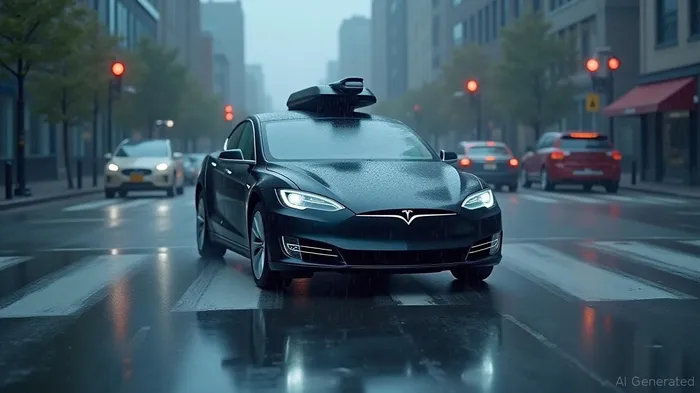
Technical Challenges: Tesla's Camera-Only Approach Faces Reality
While rivals like Waymo and Cruise rely on LiDAR and radar for 360-degree situational awareness, Tesla has bet big on a camera-and-neural-network-only system. This “simple” approach reduces costs but raises red flags about reliability. The NHTSA's focus on scenarios like low-light conditions or emergency vehicles is a direct challenge to Tesla's technology.
Waymo, for instance, has logged over 20 million miles in testing, with a safety record that includes zero fatalities. Tesla, by contrast, faces skepticism over its real-world performance. Investors must ask: Can Tesla's software evolve fast enough to match the scrutiny, or will its “beta” testing model—relying on customer data—backfire?
Market Differentiation: Tesla's All-In Strategy vs. Competitors' Playbook
Tesla's valuation assumes it can corner the AV market by being first to scale. But rivals are playing a smarter game. Waymo and Cruise have partnered with regulators early, invested in redundancy systems, and prioritized safety over speed. Tesla's delay in Austin isn't just about paperwork—it's about proving it can meet these standards.
The stakes extend beyond Tesla. If the NHTSA's findings dent confidence in Tesla's tech, it could create an opening for competitors. Meanwhile, Tesla's valuation—$650 billion, or roughly 10x its annual revenue—already factors in $1 trillion in future autonomous revenue. That's a big bet on a timeline that's now in doubt.
Safety vs. Innovation: Where's the Balance?
Tesla's ethos—“move fast and break things”—has served it well in electric vehicles but is a liability in autonomous tech. Investors must decide whether Tesla's vision of a software-driven future justifies its premium valuation. The NHTSA's investigation is forcing a reckoning: Can Tesla's systems handle edge cases, or is its “beta” model too risky?
The answer could redefine the AV market. If Tesla stumbles, Waymo and Cruise gain ground. If it succeeds, Tesla's lead in software and scale could be insurmountable.
Valuation: Is Tesla Overpriced for Uncertainty?
Tesla's stock has already faced volatility, dipping sharply after safety incidents and regulatory probes. The question now is whether investors have priced in the risks. A $230 billion market cap premium over Waymo and Cruise combined suggests they have—but only if Tesla can prove its systems are safe.
Investment Takeaway: Proceed with Caution—But Stay Alert
Tesla's Robotaxi ambitions are a “make-or-break” moment. If the NHTSA investigation concludes with minor adjustments, Tesla's stock could soar. But if regulators demand major overhauls, its valuation could crater.
For now, investors should:
1. Watch the NHTSA's findings closely—a negative outcome could trigger a sell-off.
2. Consider Waymo and Cruise as alternatives if Tesla's tech falters.
3. Avoid overpaying for Tesla's future—the stock's current price assumes no major setbacks.
In the end, the autonomous vehicle race isn't just about innovation—it's about trust. Tesla's ability to earn it, or lack thereof, will decide its fate.
Stay tuned, and remember: In investing, timing is everything—even for robots.





Comentarios
Aún no hay comentarios