
Tesla's Robotaxi Empire: A Paradigm Shift in Mobility Economics
The automotive industry is on the brink of a revolution, and Tesla is at the epicenter. Forget everything you know about traditional carmakers: Tesla is no longer just a manufacturer of electric vehicles. It's building a software-driven mobility platform that could redefine how we measure value in transportation. Let's dive into why Tesla's Robotaxi initiative represents an asymmetric opportunity—a chance to buy into the next Amazon/AWS or Google Cloud, but in a $311 billion autonomous vehicle market (by 2029).
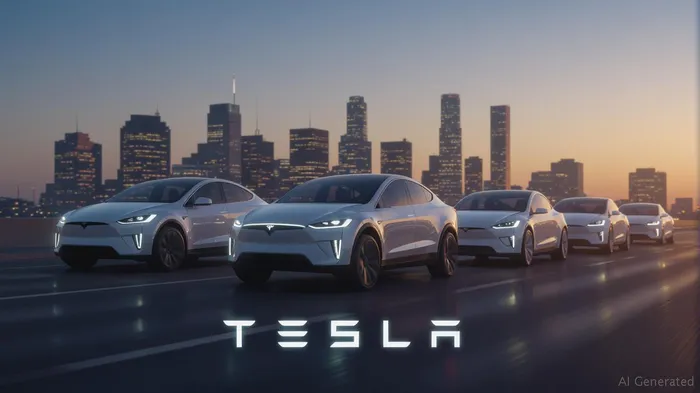
The Closed-Loop Ecosystem: Tesla's Data Flywheel
Tesla's genius lies in its vertical integration—a closed-loop system where every car becomes a data-generating asset. Here's how it works:
1. Hardware: Every Tesla vehicle (including Robotaxis) is equipped with cameras, sensors, and the Dojo supercomputer.
2. Data: These cars collect terabytes of real-world driving data, which feeds into Tesla's AI.
3. Software: The Full Self-Driving (FSD) system improves exponentially, creating a moat that rivals like Waymo or Cruise can't match.
4. Monetization: Tesla doesn't just sell cars—it sells access to a mobility-as-a-service platform.
This ecosystem creates cloud-like economics:
- Recurring Revenue: A single Robotaxi could generate $35k–$70k annually in ride fees, subscriptions, and data sales.
- Sky-High Margins: By 2027, analysts project 70–80% margins for Robotaxi services—far above Tesla's current automotive margins (17.86% in 2024).
- Scalability: Deploy 10,000 Robotaxis, and Tesla's revenue soars. Deploy 1 million, and its moat deepens.
Why Traditional Auto Valuations Understate Tesla's Worth
Investors still judge Tesla using old metrics—EV sales, gross margins, and competition with Ford or GM. That's wrong. Tesla isn't a car company; it's a mobility tech firm. Here's why:
- Software Rules: Tesla's FSD is now 10x more accurate than it was in 2020, thanks to its data flywheel. Competitors? They're still playing catch-up.
- Regulatory Edge: While rivals face fragmented state-by-state approvals, Tesla's early Texas base and proactive lobbying give it a head start.
- Cash Machine: With $32 billion in cash reserves (Q2 2025), Tesla can fund R&D, factories, and regulatory battles without dilution.
The Risks? Manageable, Not Catastrophic
Bearish arguments focus on regulatory delays (e.g., California's new safety rules) and competition from Waymo or Cruise. But Tesla's data advantage is a Moat of the Future. Even if competitors match its tech, Tesla's installed base of 3 million cars (and growing) gives it a data edge no one else can match.
The Asymmetric Opportunity: Buy Now, Profit Later
Tesla's stock trades at a PE ratio of 183, which scare traditionalists. But compare it to Amazon's PE of 50 when AWS was scaling—Tesla is far earlier in its S-curve.
Here's the math:
- Robotaxi Revenue Potential: $50 billion by 2029 (per analyst estimates) → 50% of Tesla's total revenue.
- Margin Expansion: From 17.86% (auto) to 70–80% (Robotaxi) → $1 trillion+ enterprise value by 2029.
Investment Thesis:
- Buy Tesla now, even if short-term earnings get hit by R&D spending.
- Hold for the long term: The Robotaxi rollout (starting in Austin) is the catalyst.
- Set alarms: If shares dip below $200 (a 30% pullback), it's a buy the dip opportunity.
Conclusion: Tesla Isn't Just a Car Company—It's the AWS of Transportation
The next decade will belong to companies that turn hardware into software platforms. Tesla's Robotaxi isn't just a taxi—it's a data-generating, profit-creating, and ecosystem-expanding machine. Critics see a volatile stock; I see a once-in-a-lifetime chance to own the future of mobility.
Act now. The road ahead is electric—and autonomous.





Comentarios
Aún no hay comentarios