
Tesla-Nissan: A Match Made in Heaven?
Generado por agente de IAWesley Park
viernes, 21 de febrero de 2025, 1:20 pm ET2 min de lectura
HMC--
In the ever-evolving world of electric vehicles (EVs), one name stands out as a beacon of innovation and success: Tesla. The company, led by the visionary Elon Musk, has not only revolutionized the automotive industry but also transformed the way we think about investing. Now, whispers of a potential Tesla-Nissan mash-up have started to circulate, leaving investors and enthusiasts alike wondering if this could be the next big thing. Let's dive into the potential synergies and strategic benefits of a Tesla-Nissan union.
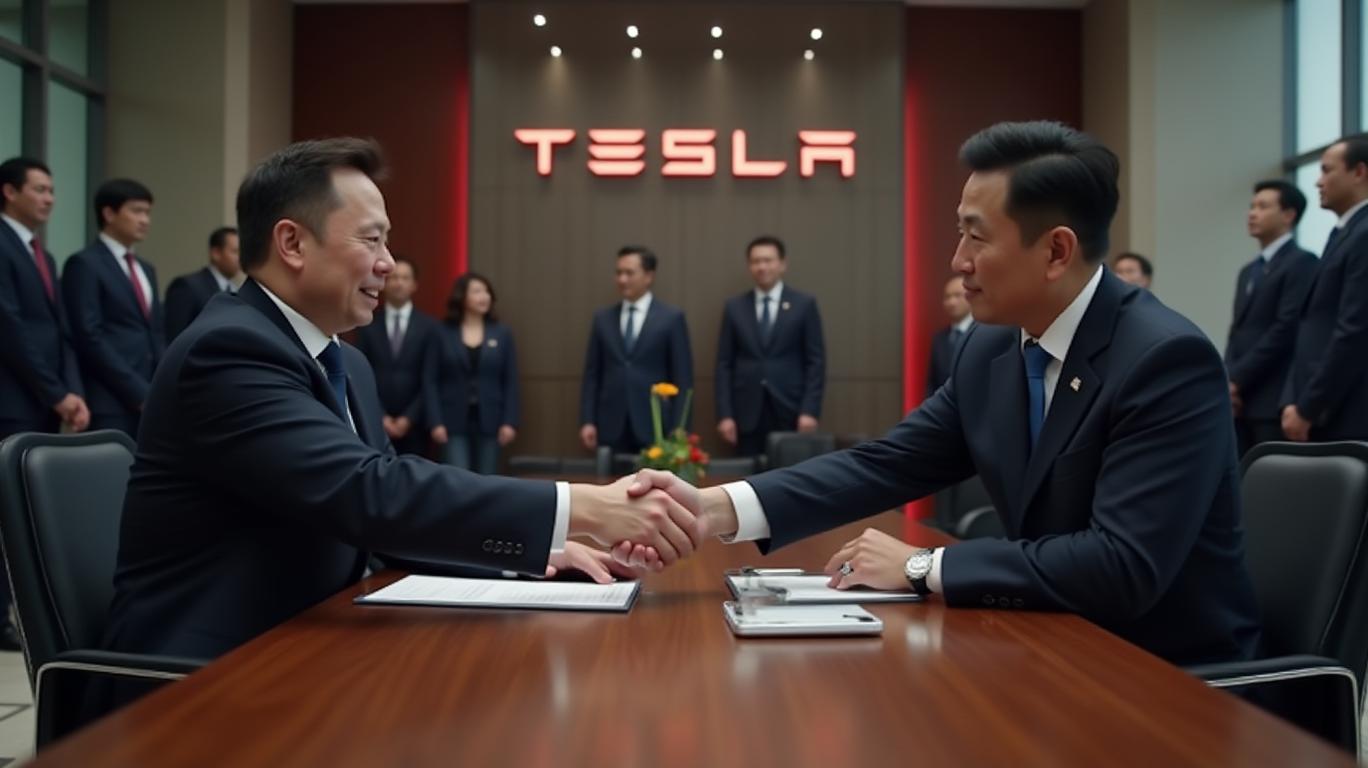
First and foremost, let's address the elephant in the room: Nissan's recent struggles. The Japanese automaker has been grappling with financial difficulties, leading to the collapse of its merger talks with Honda. In this context, a strategic investment from Tesla could be a game-changer for Nissan, providing much-needed capital and expertise to help it navigate the challenging automotive landscape.
One of the most compelling reasons for a Tesla-Nissan mash-up is the potential access to Nissan's US plants. As President Donald Trump continues to threaten tariffs on auto imports, having a larger domestic manufacturing base could be a significant advantage for Tesla. By acquiring Nissan's US plants, Tesla could boost its domestic production, potentially mitigating the impact of these tariffs on its operations and sales.
Moreover, a Tesla-Nissan union could unlock a treasure trove of technological synergies. Nissan's expertise in battery technology and electric powertrains, as demonstrated by its Leaf model, could be combined with Tesla's advanced battery technology to create more efficient and affordable EV batteries. This collaboration could help Tesla maintain its competitive edge in the EV market while also accelerating the development and deployment of autonomous driving features.
In addition to technological synergies, a Tesla-Nissan mash-up could open up new markets for Tesla. Nissan has a strong presence in various markets, including Japan and other Asian countries. By investing in Nissan, Tesla could gain access to these markets more quickly than if it were to enter them independently. This would align with Tesla's global expansion strategy and help it reach new customer segments across the world.
Furthermore, acquiring Nissan would allow Tesla to diversify its product portfolio, offering a wider range of vehicles to cater to different customer preferences and price points. This could help Tesla attract a broader range of customers and increase its market share, ultimately strengthening its position in the EV market.
However, the integration of Nissan's operations and workforce into Tesla's existing structure could present some challenges. Cultural differences, technological differences, workforce integration, supply chain and logistics, and branding and marketing could all pose initial hurdles. To address these issues, Tesla could establish cross-functional teams, provide training and upskilling opportunities, and develop a clear marketing strategy that leverages the strengths of both brands.
In conclusion, a Tesla-Nissan mash-up could make perfect sense, given the potential synergies in technology, innovation, and market expansion. By combining their strengths, Tesla and Nissan could create a powerful force in the EV market, ultimately contributing to Tesla's long-term growth. While there may be initial challenges to overcome, the strategic benefits of this union could be too compelling for Tesla to ignore. As investors and enthusiasts alike watch this potential partnership unfold, one thing is clear: the future of EVs is looking brighter than ever.
TSLA--
In the ever-evolving world of electric vehicles (EVs), one name stands out as a beacon of innovation and success: Tesla. The company, led by the visionary Elon Musk, has not only revolutionized the automotive industry but also transformed the way we think about investing. Now, whispers of a potential Tesla-Nissan mash-up have started to circulate, leaving investors and enthusiasts alike wondering if this could be the next big thing. Let's dive into the potential synergies and strategic benefits of a Tesla-Nissan union.
First and foremost, let's address the elephant in the room: Nissan's recent struggles. The Japanese automaker has been grappling with financial difficulties, leading to the collapse of its merger talks with Honda. In this context, a strategic investment from Tesla could be a game-changer for Nissan, providing much-needed capital and expertise to help it navigate the challenging automotive landscape.
One of the most compelling reasons for a Tesla-Nissan mash-up is the potential access to Nissan's US plants. As President Donald Trump continues to threaten tariffs on auto imports, having a larger domestic manufacturing base could be a significant advantage for Tesla. By acquiring Nissan's US plants, Tesla could boost its domestic production, potentially mitigating the impact of these tariffs on its operations and sales.
Moreover, a Tesla-Nissan union could unlock a treasure trove of technological synergies. Nissan's expertise in battery technology and electric powertrains, as demonstrated by its Leaf model, could be combined with Tesla's advanced battery technology to create more efficient and affordable EV batteries. This collaboration could help Tesla maintain its competitive edge in the EV market while also accelerating the development and deployment of autonomous driving features.
In addition to technological synergies, a Tesla-Nissan mash-up could open up new markets for Tesla. Nissan has a strong presence in various markets, including Japan and other Asian countries. By investing in Nissan, Tesla could gain access to these markets more quickly than if it were to enter them independently. This would align with Tesla's global expansion strategy and help it reach new customer segments across the world.
Furthermore, acquiring Nissan would allow Tesla to diversify its product portfolio, offering a wider range of vehicles to cater to different customer preferences and price points. This could help Tesla attract a broader range of customers and increase its market share, ultimately strengthening its position in the EV market.
However, the integration of Nissan's operations and workforce into Tesla's existing structure could present some challenges. Cultural differences, technological differences, workforce integration, supply chain and logistics, and branding and marketing could all pose initial hurdles. To address these issues, Tesla could establish cross-functional teams, provide training and upskilling opportunities, and develop a clear marketing strategy that leverages the strengths of both brands.
In conclusion, a Tesla-Nissan mash-up could make perfect sense, given the potential synergies in technology, innovation, and market expansion. By combining their strengths, Tesla and Nissan could create a powerful force in the EV market, ultimately contributing to Tesla's long-term growth. While there may be initial challenges to overcome, the strategic benefits of this union could be too compelling for Tesla to ignore. As investors and enthusiasts alike watch this potential partnership unfold, one thing is clear: the future of EVs is looking brighter than ever.

Divulgación editorial y transparencia de la IA: Ainvest News utiliza tecnología avanzada de Modelos de Lenguaje Largo (LLM) para sintetizar y analizar datos de mercado en tiempo real. Para garantizar los más altos estándares de integridad, cada artículo se somete a un riguroso proceso de verificación con participación humana.
Mientras la IA asiste en el procesamiento de datos y la redacción inicial, un miembro editorial profesional de Ainvest revisa, verifica y aprueba de forma independiente todo el contenido para garantizar su precisión y cumplimiento con los estándares editoriales de Ainvest Fintech Inc. Esta supervisión humana está diseñada para mitigar las alucinaciones de la IA y garantizar el contexto financiero.
Advertencia sobre inversiones: Este contenido se proporciona únicamente con fines informativos y no constituye asesoramiento profesional de inversión, legal o financiero. Los mercados conllevan riesgos inherentes. Se recomienda a los usuarios que realicen una investigación independiente o consulten a un asesor financiero certificado antes de tomar cualquier decisión. Ainvest Fintech Inc. se exime de toda responsabilidad por las acciones tomadas con base en esta información. ¿Encontró un error? Reportar un problema




Comentarios
Aún no hay comentarios