
Tesla's Indian Gambit: Premium Play or Regulatory Pitfall?
The Indian electric vehicle (EV) market is on fire. With a compound annual growth rate (CAGR) of 28.5% through 2029, it's a frontier automakers can't ignore. Yet Tesla's decision to enter India by importing high-tariff vehicles—despite no immediate plans for local manufacturing—has sparked debate. Is this a bold play to dominate premium demand, or a reckless leap into regulatory quicksand?
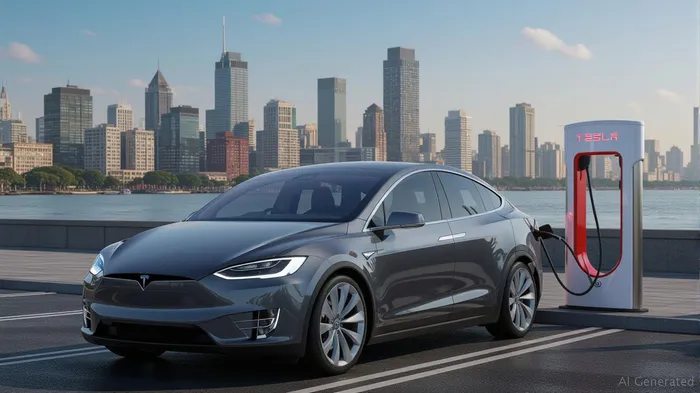
The Allure of India's Premium EV Market
India's premium EV segment is booming. By 2025, automakers will launch nearly a dozen new luxury models, targeting affluent buyers with rising disposable incomes. Tesla's absence from local assembly lines might seem puzzling, but its strategy hinges on brand prestige and first-mover advantage in a market hungry for cutting-edge tech.
Consider the numbers:
- The Indian EV market is projected to grow from $5.2B in 2024 to $18.3B by 2029, with premium vehicles capturing a disproportionate share of this expansion.
- 83% of Indian consumers are open to buying only new energy vehicles (NEVs) by 2030, driven by government subsidies and infrastructure investments like the PM E-Drive Scheme.
Tesla's Model S/X/Y variants, though priced 30–50% higher than locally produced rivals, could carve out a niche among tech-savvy elites. But the math is brutal: imports face a 110% customs duty, making a $60K Model Y retail at ~$140K—a price tag that even luxury buyers may balk at.
The Regulatory Gauntlet: Tariffs and Trade Tensions
Tesla's refusal to localize production puts it in a bind. To qualify for the SPMEPCI scheme's 15% duty, it must commit $500M to Indian manufacturing—a path it has openly rejected. The result? Sky-high import costs that erode margins and pricing power.
Meanwhile, U.S.-India trade relations loom large. India has recently imposed anti-dumping duties on Chinese EVs, and U.S. automakers could face similar scrutiny. A trade spat over semiconductors or lithium imports could escalate tariffs further, squeezing Tesla's already thin margins.
Competitive Risks: Local Giants Are Ready
Tesla's rivals aren't waiting. BYD, Tata, and Hyundai are ramping up local production, leveraging 40–60% lower costs via PLI schemes. BYD's Atto 3—priced at $24K—already undercuts Tesla's hypothetical $140K Model Y. Even luxury brands like Mercedes and Porsche are pivoting to India-specific models to avoid tariff traps.
Investment Implications: A High-Risk, High-Reward Gamble
For TeslaTSLA-- investors, India is a double-edged sword:
- Upside: A foothold in Asia's second-largest EV market could boost Tesla's global brand equity and diversify revenue.
- Downside: High costs may limit sales to a niche, while trade tensions and local competition could turn this into a money-losing endeavor.
Rival automakers like BYD or Nio stand to gain if Tesla stumbles. Their locally produced models offer similar tech at a fraction of the cost, appealing to India's price-sensitive market.
Conclusion: Balance Sheet vs. Market Share
Tesla's Indian play is a high-stakes bet. It could dominate premium demand but risks becoming a cautionary tale of overreach in a tariff-heavy market. Investors should weigh Tesla's long-term growth narrative against near-term execution risks. Meanwhile, local champions like BYD—already thriving under India's manufacturing incentives—present a safer, if less glamorous, investment.
As the EV race heats up, one thing's clear: India's market won't be won by Silicon Valley bravado alone. It'll require grit—local grit.





Comentarios
Aún no hay comentarios